Quick answer: Granada packs more into a small, walkable city than almost anywhere in Spain: the Alhambra palace-fortress, a whitewashed Moorish quarter facing it across the valley, cave houses with flamenco, a Renaissance cathedral, and a free-tapas culture that makes dinner the cheapest entertainment in Andalusia. Two full days is the minimum, three is better. Book Alhambra tickets before anything else, because they sell out weeks ahead. These are the 14 best things to do in Granada, in the order most visitors should tackle them.
1. The Alhambra
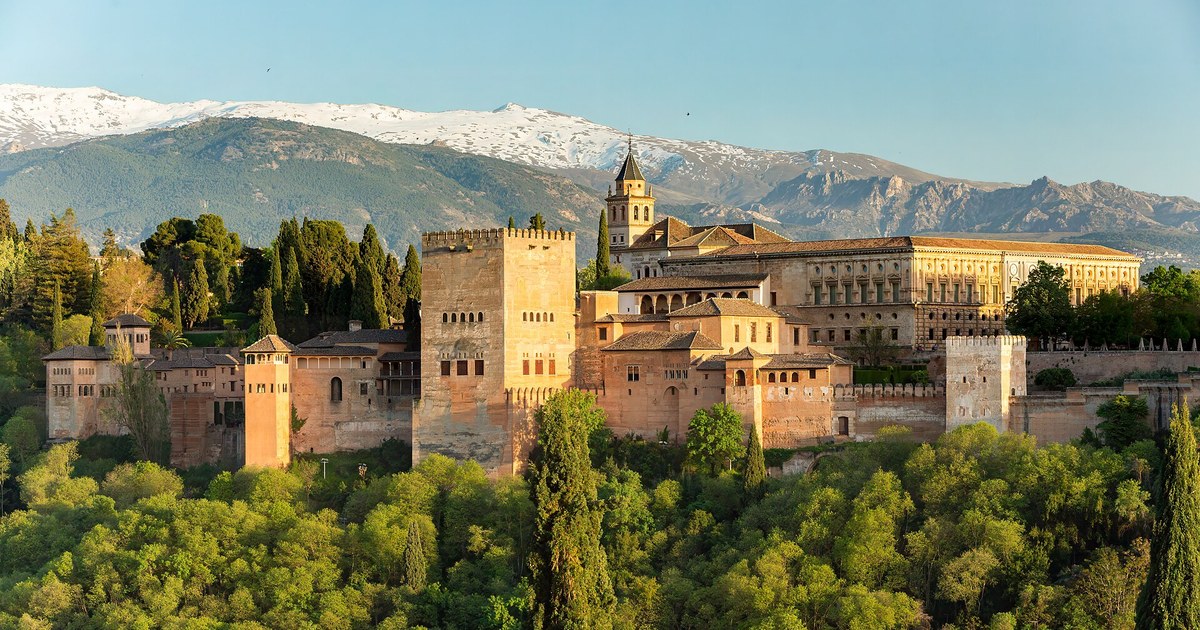
Spain’s most visited monument is a walled city on a hill: the Nasrid Palaces with their carved stucco and Court of the Lions, the Alcazaba fortress towers, the summer palace and gardens of the Generalife, and the Renaissance Palace of Charles V. A visit takes 3 to 4 hours. The critical detail: entry to the Nasrid Palaces is timed, with the slot printed on your ticket, and tickets are nominative, checked against your passport. A general ticket costs about €19 (checked October 2026, planning baseline). Buy only through the official Alhambra sales channel, book as early as your dates allow, and treat any site promising last-minute official tickets with suspicion.
2. Sunset at Mirador de San Nicolás
The classic Granada view: from this small square in the Albaicín, the Alhambra glows red at sunset with the Sierra Nevada behind it. Bill Clinton called it the most beautiful sunset in the world on a 1997 visit, and the square has been busy at dusk ever since. Arrive 45 minutes early in high season, and stop at the quieter Mirador de San Cristóbal or the San Miguel Alto viewpoint if the main square is packed.
3. Wander the Albaicín
Granada’s Moorish quarter is a UNESCO-listed hillside maze of whitewashed lanes, hidden squares and carmenes, the walled houses with gardens and Alhambra views. Walk it slowly: down Calle Calderería Nueva, the old silk-merchants’ street now full of tea houses, past the Bañuelo (below), and up to the Mirador as the light changes. It is the best free thing to do in granada spain after the Mirador itself.
4. Sacromonte’s Cave Houses and Flamenco
On the hill facing the Albaicín, families carved homes into the rock centuries ago, and Sacromonte is still a neighborhood of whitewashed cave houses. The Museo Cuevas del Sacromonte shows how people lived in them. At night the caves host zambra flamenco, an intense, close-up show in a single vaulted room. Book a reputable cave venue and walk up before dark for the valley views.
5. Granada Cathedral and the Royal Chapel
The cathedral is a Spanish Renaissance giant built over the city’s great mosque. Next door, the Royal Chapel (Capilla Real) holds the marble tombs of Ferdinand and Isabella, the Catholic Monarchs who conquered Granada in 1492 and are buried here by their own choice. The two buildings take separate tickets, roughly €5 to 6 each, and together need about 90 minutes.
6. Carrera del Darro and El Bañuelo
The prettiest street in Granada runs along the Darro river between the old town and the Alhambra hill, lined with old palaces and small bridges. Halfway along it, El Bañuelo is an 11th-century Arab bath house, among the best preserved in Spain, with its star-shaped skylights still intact. It is small, quick and usually covered by the same ticket family as other Andalusi monuments; check at the door.
7. Eat Free Tapas (It Is a System, Learn It)
Granada is one of the last Spanish cities where a drink comes with a free tapa, and the tapas often grow with each round. Order a caña or a local Alhambra beer in a traditional bar and food simply arrives: a small plate of jamón, a mini burger, fried fish. The rules: the tapa is the house’s choice, busy local bars do it best, and Calle Navas and the streets around Plaza Nueva are the classic hunting ground. Los Diamantes (fried seafood) and Bodegas Castañeda (old-school, generous) are the names locals give first. Lunch runs from about 2pm and dinner from 9pm; arrive at Spanish hours or the kitchen is shut.
8. Alcaicería and Corral del Carbón
Beside the cathedral, the Alcaicería is the recreated silk bazaar: a few lanes of small shops selling ceramics, lamps and inlaid taracea boxes. Two minutes away, the Corral del Carbón is a 14th-century Nasrid caravanserai, the oldest Moorish building of its kind in Spain, and free to enter. Together they take half an hour and sit right on the walk between the cathedral and Plaza Nueva.
9. Soak in a Hammam
Hammam Al Ándalus recreates the Arab bath experience near the Darro: warm and hot pools, steam and low light under tiled arches. It is the ideal recovery after an Alhambra morning. Sessions are timed and capped, so book a day or two ahead in season.
10. Carmen de los Mártires Gardens
Just below the Alhambra, this 19th-century estate garden of palms, ponds and peacocks is free, shady and almost always quiet while the crowds queue above it. Pair it with an Alhambra visit on the same hill.
11. San Jerónimo Monastery and the Cartuja
Granada’s two great monasteries reward anyone with a third day. San Jerónimo, near the center, has a serene cloister and a church dense with Renaissance art. The Cartuja, the Carthusian monastery on the city’s edge, hides one of Spain’s most extreme Baroque interiors behind a plain wall. Either one shows you the Christian city that replaced the Moorish one.
12. Parque de las Ciencias (Science Park)
Traveling with kids, this large interactive science museum with a planetarium and observation tower is the city’s best family half-day, and a good rainy-day plan in winter.
13. A Night of Flamenco Beyond the Caves
For a bigger stage than the Sacromonte caves, the peñas and tablaos in the center run nightly shows, and the Albaicín has small venues with Alhambra views from the terrace. Dinner-show packages are the touristy end; a late show with a drink is the better format.
14. Day Trip: The Sierra Nevada
Europe’s southernmost big ski resort sits about 45 minutes from the cathedral, and in summer the same road reaches high-mountain trailheads. Even non-skiers ride up for the views. The Alpujarras villages on the range’s southern side (Pampaneira, Bubión, Capileira) make the other classic day out, by car or a long bus ride.
Where to Stay (Overview)
Stay in the Centro or the Albaicín for a first visit: Centro is flat, practical and close to the cathedral and tapas streets; the Albaicín is romantic and view-rich but steep and car-free in places. The Realejo, the old Jewish quarter below the Alhambra, is the quiet middle ground locals suggest. Granada has good hotels at every level for noticeably less than Seville or Barcelona, which is half the answer to why the city feels cheap.
Getting There and Around
Most visitors arrive via Malaga airport, about 1.5 hours away by direct bus or train; Granada’s own airport is small with limited routes. Madrid is about 4.5 hours by train or bus. Inside the city, the center, Albaicín and Realejo are walkable if you accept hills; small buses (the C30 and C32) loop up to the Alhambra and Albaicín for everyone else.
Best Time to Visit and How Many Days
April to June and September to October are the sweet spots: warm days, cool evenings, and the Alhambra gardens at their best. July and August regularly pass 35°C and can touch 40°C; winter is cold at night but brings the Sierra Nevada ski season and the thinnest crowds. Give Granada 2 full days at minimum (Alhambra day, old-quarters day) and 3 if you add Sacromonte properly, a hammam and a day trip. That pacing covers the essential things to do in granada without rushing any of them.
FAQ
Is Granada worth visiting?
Yes, emphatically. The Alhambra alone justifies the trip, and the Albaicín, Sacromonte, free tapas and low prices make the city around it far better than a one-monument stop. On an Andalusia route it pairs with Seville and Cordoba as the third essential city.
Is Granada worth visiting without Alhambra tickets?
Yes, but it is a diminished trip. If tickets are sold out, check the official site for newly released slots, consider the night visit or a Granada Card, and know that the Alcazaba area views, Generalife and the free Palace of Charles V still reward the walk up. Then build the trip around the Albaicín, Sacromonte and the cathedral quarter. Book earlier next time; in high season the main slots go weeks ahead.
Why is Granada so cheap?
Three reasons: it is a big student city, which keeps bars and rents competitive; Andalusia’s price level sits below Madrid, Barcelona and the coast; and the free-tapas tradition means a round of drinks doubles as a light meal. Mid-range hotels and restaurant meals land well below Spanish big-city prices.
How many days do you need in Granada?
Two full days minimum, three ideally. One day for the Alhambra and the Centro, one for the Albaicín, Mirador and Sacromonte, and a third for the monasteries, a hammam or a Sierra Nevada day trip.
When should I book Alhambra tickets?
As soon as your travel dates are fixed. In spring and autumn the Nasrid Palaces slots can sell out a month or more ahead. Buy only from the official channel, and remember the ticket carries your name and a fixed palace entry time; bring the passport you booked with.
Is Granada safe for solo female travellers?
Granada is generally considered one of Spain’s safer cities for solo travelers, with a big student population keeping central streets busy late into the evening. Normal city awareness applies: watch bags in crowded tapas bars, and take a taxi back from Sacromonte after a late flamenco show rather than walking the dark lanes.