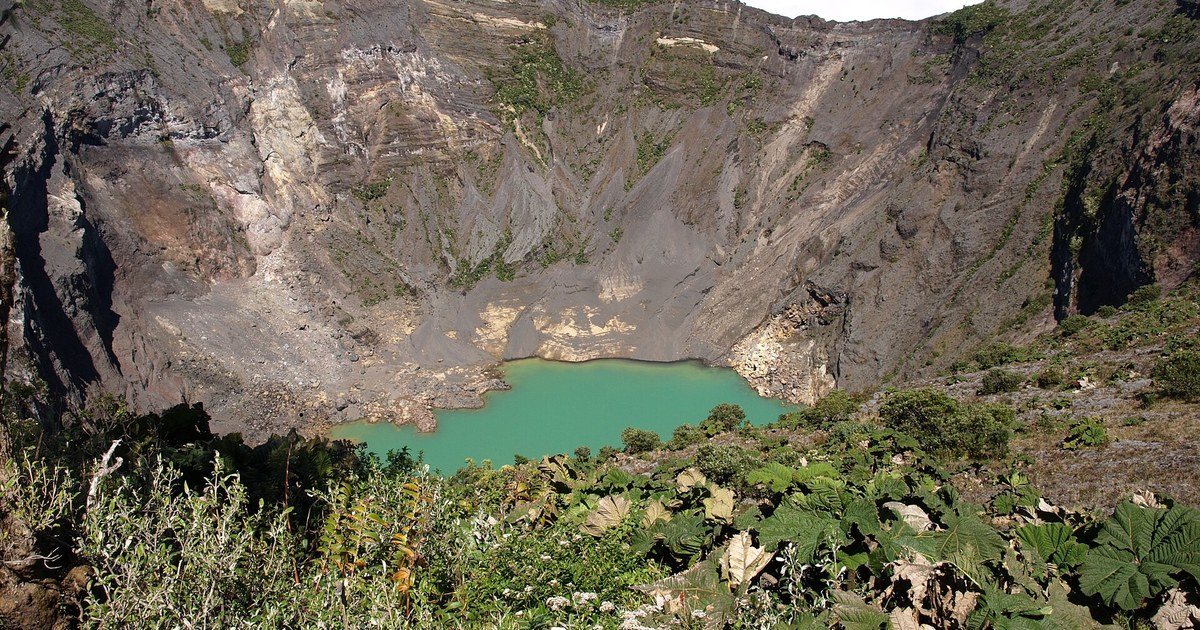
We got to Irazu Volcano by sticking out a thumb on the road out of Cartago. A produce truck, a teacher heading home, and a farmer who insisted we try his cheese later, we stood at the rim of Costa Rica’s tallest volcano staring into a turquoise crater lake. Hitchhiking in Costa Rica gave us the story. But you do not need to hitchhike to do this trip: Irazu is the easiest volcano day trip from San Jose, and this guide covers every way to get there, what it costs, and the one mistake that ruins it for most visitors.
The Volcano in 60 Seconds
Irazu (from the indigenous word “iztaru,” tremor and thunder mountain) rises 3,432 meters above sea level, making it the tallest volcano in Costa Rica. The national park spans 2,300 hectares with five craters: the Main Crater (Crater Principal) with its famous mineral-green lake, Diego de la Haya, Playa Hermosa, La Laguna, and the Pyroclastic crater. On exceptionally clear mornings you can see both the Pacific and the Caribbean from the summit. Those mornings are rare and worth planning for.
Getting to Irazu Volcano from San Jose
By car: Drive east from San Jose on the Florencio del Castillo Highway to Cartago, then follow the signed road climbing north through Cot, Tierra Blanca, and Potrero Cerrado to the summit. The trip takes 1 to 1.5 hours. The road is paved all the way and any standard sedan handles it. Gas up in Cartago: there are no stations near the park. If you are renting, our driving in Costa Rica guide covers the road rules you need.
By bus: One daily public bus leaves San Jose (Avenida 2, near the Gran Hotel Costa Rica) at 8:00 AM, arriving at the park around 9:40 to 10:15 AM. The return bus leaves the park at 12:30 PM. That gives you roughly two hours at the summit: tight but workable, and the cheapest way up.
By tour: Half-day tours from San Jose include transport and typically depart early morning. Worth it if you want the geology explained or want to combine Irazu with a coffee plantation or the Orosi Valley.
By thumb: Our way. Hitchhiking the Cartago road works because it is a well-traveled local route, and Costa Ricans are famously generous to travelers. It is slow and weather-dependent, so treat it as an adventure, not a schedule. We would do it again, but we would not promise a friend it works on a timetable.
Entry Fee and Park Hours
Foreign adult admission is around $15, paid at the gate. Tickets are sold through the SINAC online reservation system; book ahead in high season, though the gate has Wi-Fi for last-minute bookings. The park is open daily from 8:00 AM to 3:30 PM, and you should enter well before closing to allow time at the viewpoints.
The Timing Mistake Everyone Makes
Here is the thing that ruins Irazu for most visitors: the clouds. Fog rolls over the summit from late morning onward, and by noon the crater is often invisible. October and November are the cloudiest months; the dry season (December through April) gives the most reliably clear mornings. Arrive between 8:00 and 10:00 AM. The bus schedule is actually well designed for this. An afternoon visit is a gamble you will usually lose.
What to Wear and Bring
The summit sits above 3,400 meters and the temperature hovers between 5 and 15C year-round, with wind that makes it feel colder. Bring an insulating layer and a windproof shell, sturdy shoes (volcanic scree is loose underfoot), sunscreen and sunglasses (UV is fierce at altitude), and water. The main crater viewpoint is a short, mostly flat walk from the parking area, so this is not a hiking expedition, but the cold surprises everyone.
What You Will See at the Craters
The Crater Sector is where you will spend most of your time. The Main Crater viewpoint looks straight down into the vast bowl with its green lake, ringed by ash-gray ridges. Walk the short rim trails for different angles. Diego de la Haya crater sits nearby with its own smaller lake. Give yourself at least an hour; photographers will want two.
Don’t Skip the Prusia Sector
Most visitors see the craters and leave. Four kilometers before the summit turnoff, the Prusia sector offers forest trails through planted and native woodland, a completely different landscape from the moonscape above. It is quieter, cooler, and the best part of the park for birdwatching. If you drove yourself, add an hour here.
Make It a Full Day: Cartago and the Orosi Valley
If you took the morning bus back down or drove yourself, the afternoon pairs perfectly with Cartago, Costa Rica’s first capital. The Basilica of Our Lady of the Angels in Cartago is the country’s most important pilgrimage site, and the town’s central market is a good lunch stop. From there, the Orosi Valley loop offers coffee plantations, colonial churches, and hot springs. Tour operators sell this exact combination as a day trip from San Jose, and it is the best use of a full day in the Central Valley.
One practical note from our hitchhiking trip: the mountain weather changes fast. We started the climb in sunshine and stood at the rim in wind-driven mist within two hours. The crater appeared, vanished, and appeared again. That is Irazu. The visitors who looked disappointed were the ones who arrived at noon expecting a postcard. The ones who arrived at eight were already on their way down, grinning.
Frequently Asked Questions
How do I get to Irazu Volcano from San Jose?
Drive 1 to 1.5 hours via Cartago, take the daily 8:00 AM public bus, or join a half-day tour. The road is paved and any sedan handles it.
How much is the Irazu Volcano entrance fee?
Around $15 for foreign adults, booked through the SINAC system. Book ahead in high season.
What are the park hours?
Daily 8:00 AM to 3:30 PM. Enter early; the last entry should be well before closing.
What is the best time to visit Irazu Volcano?
Arrive between 8:00 and 10:00 AM for the clearest crater views. December through April (dry season) is most reliable.
Can you see both oceans from Irazu?
On exceptionally clear mornings, yes. It is rare, which is exactly why you go early.
Is it cold at Irazu Volcano?
Yes. Expect 5 to 15C with wind at the summit year-round. Bring layers even if San Jose is warm.
The Bottom Line
Irazu is the rare volcano you can visit on a morning from the capital, and the only hard part is the alarm clock. Go early, dress warm, and the crater delivers. We hitchhiked it and loved every minute, but the bus at 8 AM gets you the same view with less thumb cramp.