Hot Springs National Park is unlike any other national park in the United States. Instead of remote backcountry, it pairs natural thermal water with a historic downtown: 47 thermal springs flow from Hot Springs Mountain, and grand bathhouses line Central Avenue below them. This guide covers the springs, Bathhouse Row, the trails, and the practical details for a visit to Hot Springs, Arkansas.
Why these springs are special
The park protects 47 natural thermal springs that together produce more than 500,000 gallons of mineral water a day, emerging at an average temperature of 143 degrees Fahrenheit. Rainwater falling on the Ouachita Mountains sinks through sandstone more than a mile deep over some 4,000 years, warms from geothermal heat, and returns to the surface in a matter of weeks, which is why the water arrives hot and mineral-rich. Tests show high levels of silica, calcium, and bicarbonate, and notably, the water has no sulfur smell. Congress first set this land aside in 1832, making it the earliest federally protected thermal area in the nation, decades before the national park system itself. For the wider national picture, see our guide to the best hot springs in the US.
Bathhouse Row: the historic centerpiece
Eight grand bathhouses built between 1892 and 1923 line Central Avenue in Spanish Colonial, Renaissance Revival, and Neoclassical styles. Four are worth knowing by name.
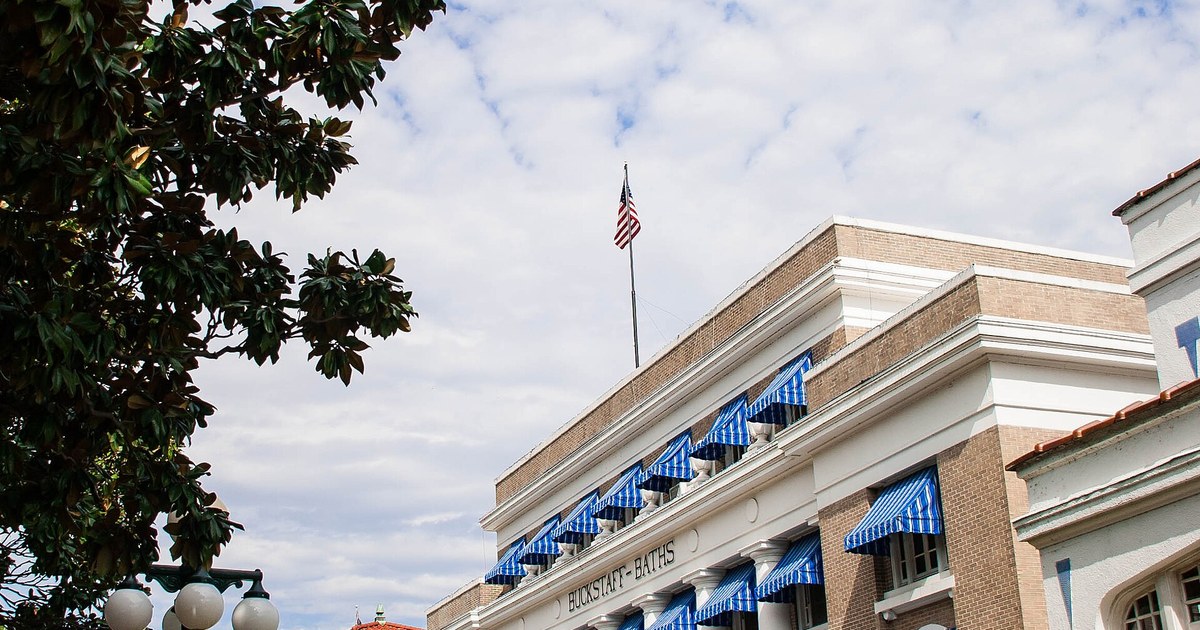
Buckstaff Bathhouse
Buckstaff has operated continuously since 1912, making it the place for a traditional thermal treatment: a soak in a private porcelain tub of hot mineral water, followed by a wrap in warm towels, time in a steam cabinet, and a needle shower, with massage available. Arriving early in the morning helps avoid waits, and walk-in guests are welcome.
Quapaw Baths and Spa
Built in 1922 under a colorful tiled dome, Quapaw offers modern communal bathing in four large mineral pools ranging from 98 to 104 degrees Fahrenheit, so bathers can pick their heat level. Fresh thermal water circulates constantly beneath a skylight, and the building includes a natural steam cave built over an active thermal fissure.
Fordyce Bathhouse Visitor Center
Built in 1915 and once the most luxurious bathhouse in town, Fordyce now serves as the park visitor center. Nobody bathes here anymore. Instead, visitors tour three floors of exhibits covering historic hydrotherapy equipment, stained glass ceilings, and a vintage gym, and rangers lead programs from the lobby. Start here if it is your first visit.
Superior Bathhouse Brewery
Built in 1916, Superior holds a national record: it is the only brewery inside a US national park, and the only commercial brewery that brews with thermal spring water. The taproom serves pub food along the promenade, making it an easy evening stop after a day of trails.
Beyond Bathhouse Row
The Grand Promenade is a shaded brick path, about a third of a mile long, running behind Bathhouse Row along the mountain base, with views of downtown on one side and steaming springs on the hillside on the other. Several hiking trails start directly from it. The Hot Springs Mountain Tower rises 216 feet above the summit, with an elevator to an open viewing deck giving a 360-degree view over the Ouachita Mountains, the surrounding lakes, and the town below. Ten miles south on Lake Hamilton, Garvan Woodland Gardens covers 210 acres of pine woods, footbridges, and seasonal flowers, including the glass-and-wood Anthony Chapel in the forest.
Hiking in Hot Springs National Park
The park protects more than 5,500 acres of forest with 26 miles of trails, mostly through oak and pine woodland that gives pleasant shade in warmer months. Three routes cover most visitors’ needs. The Peak Trail runs 0.6 miles one-way from the Grand Promenade to the mountain summit, climbing 400 feet through pine groves and stone outcrops, and it is the fastest walking route to the tower. The Goat Rock Trail runs 1.1 miles one-way along the upper ridges of North Mountain to a stone overlook built in the 1930s, climbing 280 feet. The Sunset Trail is a 10-mile loop for serious hikers, crossing three ridges and climbing Music Mountain, the highest point in the park, with 1,200 feet of elevation gain. Carry water and wear good shoes on all three.
Drinking the thermal water
Filling jugs from the springs is a local tradition hundreds of years old, and the National Park Service tests the water regularly against federal drinking standards. Free public jug stations include the Libbey Memorial station on Reserve Street for hot water, the visitor center fountain on Bathhouse Row, Happy Hollow Spring on Fountain Street for cold water, and Whittington Spring on Whittington Avenue, also cold. Bring your own jugs, and take care with hot-water stations, since the water comes out genuinely hot.
When to visit
Hot Springs National Park is a year-round destination, and the best season depends on what you want from the trip. Spring and autumn bring the most comfortable hiking weather, with mild temperatures on the trails and color in the forest in autumn. Summer is hot and humid, which makes the shaded trails and the bathhouses themselves more appealing than long exposed hikes, and it also brings the biggest crowds to Bathhouse Row. Winter is quiet, with cooler air that makes a hot mineral soak feel best of all, and the town moves at a slower pace. The springs flow at the same temperature all year, so there is no bad season for the bathing itself, only for the hiking around it.
One more planning note: the park and the town share the same streets, which is part of the charm and part of the logistics. Central Avenue carries both bathhouse visitors and regular town traffic, so parking near Bathhouse Row fills up on busy weekends. Arrive early for a bathhouse soak, walk the promenade and trails from downtown on foot, and save driving for the Garvan Woodland Gardens trip and the lakes. That pattern keeps the visit simple and avoids the most common frustration first-time visitors report.
Planning your visit
Hot Springs National Park works as a weekend trip or as a stop on a wider Arkansas route. Two days covers Bathhouse Row, the promenade, the tower, and one or two trails without rushing, and a third day adds Garvan Woodland Gardens and the lakes. Bathing availability, tour times, and any seasonal closures change, so check current park information before you travel rather than relying on a fixed schedule in a guide. The town itself is walkable around Central Avenue, and the park’s trails start close enough to downtown that a car is optional once you arrive.
Frequently asked questions
Can you actually soak in Hot Springs National Park? Yes, at Buckstaff and Quapaw on Bathhouse Row. The springs themselves are too hot for direct soaking at 143 degrees, so bathing happens in the bathhouses, where the water is cooled to comfortable pool temperatures.
What are the best Arkansas hot springs beyond the park? The park is the state’s thermal centerpiece, and most Arkansas hot spring trips start and end here. The national park’s bathhouses and jug stations are the experience, rather than a scattered list of wild springs elsewhere in the state.
How much time do you need? One full day covers Bathhouse Row and a trail. Two days lets you add the tower, the promenade, and Garvan Woodland Gardens at a relaxed pace.
Is the thermal water safe to drink? The park service tests it regularly, and the public jug stations are provided for that purpose. Use the marked stations, and handle hot-water fountains with care.