
Hot Springs / Alaska
Alaska Hot Springs: All 93 Springs
93 mapped thermal springs, from Fairbanks resort pools to remote Aleutian sources, with source temperatures, broad regions, and planning tips.
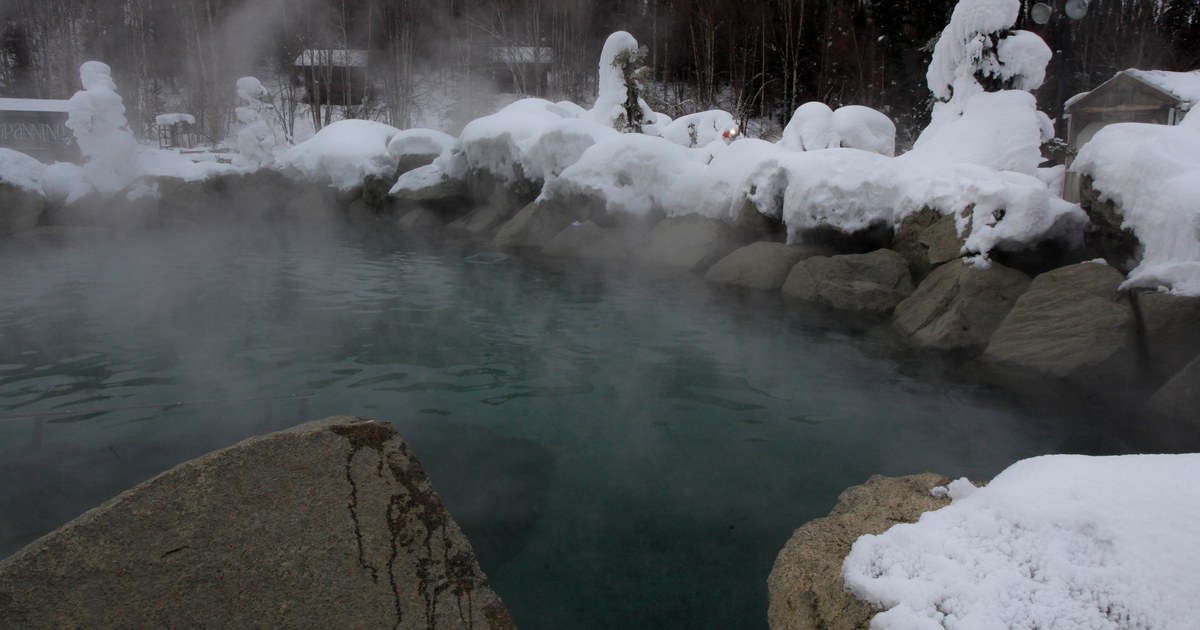
Alaska is the far-north hot springs state, and its map rewards visitors who read the temperature column before they book a flight. The state holds resort pools near Fairbanks, remote soaks on the Seward Peninsula, island springs in the Southeast, and very hot volcanic sources along the Alaska Peninsula and the Aleutian chain. This guide maps 93 Alaska thermal springs from USGS data and keeps one line clear throughout: a source temperature is not a pool temperature, and a mapped record is not automatically a soaking site.
We may earn a commission if you book through the links on this page, at no extra cost to you. That commission helps keep this guide free.
Planning an Alaska soak trip? Compare places to stay across the state before you pick a spring.
How to use this guide
Start with the table below for the best-known springs, then open the interactive US hot springs map to see every Alaska spring by location. Individual spring pages with directions, access notes, and photos will link from this hub as they publish. Base towns matter in Alaska more than in any other state in this guide: the Interior road system, the Seward Peninsula, the Southeast islands, and the Aleutian chain are separate trips, not stops on one loop. Areas in the table are broad regions, not driving distances, because the dataset groups springs by region rather than by road miles.
The counts behind this guide are plain. The dataset holds 108 Alaska records. Fifteen records are classed as hazards and are excluded from the mapped count, including the Makushin Volcano fumaroles and the hot springs near Geyser Bight. That leaves 93 mapped springs. Of those, 52 carry soakable status, 8 carry lukewarm status, and 33 carry no dataset temperature at all. This guide claims no temperature for the 33 unknown-temperature records, and it claims no pool temperature for any spring: every number here is a source temperature.
Read the soakable count with care. Alaska has more very hot sources than soaking pools. The hottest mapped source, Bailey Hot Spring, records 198 degrees at the source, and dozens of mapped records run above 150 degrees. A dataset status label does not make a very hot source safe to enter. Soak only in developed pools and tubs where the water temperature is managed, and treat every unmanaged hot source as a place to look at, not a place to soak. The springs in the table below are the names a first-time Alaska visitor should know, and the sections that follow explain which ones are pools and which ones are warnings.
Best-known Alaska hot springs
These twelve are the names a first-time Alaska visitor should know: Interior road-system soaks, Seward Peninsula wild soaks, Southeast island springs, and the hottest mapped source in the state. Temperatures are source temperatures from USGS data. Areas are broad regions from the dataset, not driving distances.
| Spring | Source temp | Area |
|---|---|---|
| Chena Hot Springs | 153°F | Fairbanks country, Interior Alaska |
| Circle Hot Springs | 135°F | Circle country, Interior Alaska |
| Tolovana Hot Springs | 140°F | Livengood country, Interior Alaska |
| Manley Hot Springs | 133°F | Tanana country, Interior Alaska |
| Tenakee Hot Springs | 109°F | Tenakee Inlet country, Southeast Alaska |
| Serpentine Hot Springs | 171°F | Bendeleben country, Seward Peninsula |
| Pilgrim Springs | 178°F | Bendeleben country, Seward Peninsula |
| Bailey Hot Spring | 198°F | Ketchikan country, Southeast Alaska |
| Bell Island Hot Springs | 165°F | Ketchikan country, Southeast Alaska |
| Goddard Hot Springs | 153°F | Port Alexander country, Southeast Alaska |
| Kanuti Hot Springs | 151°F | Bettles country, Interior Alaska |
| Clear Creek Hot Springs | 149°F | Solomon country, Seward Peninsula |
Interior Alaska: the road-system soaks
Chena, Circle, Tolovana, and Manley
Chena Hot Springs, at 153 degrees at the source, sits in the Fairbanks country, and it is the easy entry point in this guide. A 153 degree source feeds pools that run cooler, and the developed resort setting, with lodging and services on site, makes Chena the simplest Alaska soak for a first visit. Fairbanks is the base town for the whole Interior cluster, and Chena is the one spring in this guide with a resort pool you can drive to, soak in, and sleep beside. Check the operator’s current information for hours, fees, and pool temperatures before you set out, since this guide gives source temperatures only.
Circle Hot Springs, at 135 degrees at the source, sits in the Circle country, and Tolovana Hot Springs, at 140 degrees at the source, sits in the Livengood country. Circle was a resort in an earlier era, so check current access and conditions before planning a visit there. Tolovana is a rustic Interior soak, reached by trail from the road system. Manley Hot Springs, at 133 degrees at the source, sits in the Tanana country, a small community spring west of Fairbanks. Together, the four show the Interior range: one developed resort pool, and three rustic springs that demand a plan, a vehicle, and a check of current conditions first.
Kanuti and the far Interior
Kanuti Hot Springs, at 151 degrees at the source, sits in the Bettles country, and it is the far Interior name in this guide. Little Melozitna Hot Springs, at 176 degrees at the source, sits in the Melozitna country. Both are remote, and both run very hot at the source. The far Interior is not a day trip from Fairbanks: access is by air or by long bush travel, services are thin, and weather can close a plan with no warning. Treat these as expedition springs, not roadside stops, and go only with a plan that covers transport, shelter, and a way out.
Seward Peninsula: remote northern soaks
Serpentine, Pilgrim, and Clear Creek
Serpentine Hot Springs, at 171 degrees at the source, sits in the Bendeleben country, and it is the Seward Peninsula wild soak name in this guide. Pilgrim Springs, at 178 degrees at the source, sits in the same country, and Clear Creek Hot Springs, at 149 degrees at the source, sits in the Solomon country near Nome. All three are very hot sources that feed soaking pools only after the water has cooled, and all three sit far from roads and services.
The Seward Peninsula is reached by air, not by road, and that shapes every plan. Nome is the usual gateway, with small planes onward to the peninsula country. Weather moves fast, flights delay, and a spring visit can stretch from a day trip into a multi-day wait. Carry what you need, tell someone your plan, and check current access conditions before you leave Nome. Soak only in pools where the water temperature is managed or where experienced local guidance confirms a safe soaking temperature, test the water before getting in, and keep children close. If a peninsula spring has no managed pool, treat it as a place to look at, not a place to soak.
Southeast Alaska: island and coastal springs
Tenakee, Bailey, Bell Island, and Goddard
Tenakee Hot Springs, at 109 degrees at the source, sits in the Tenakee Inlet country, and it is the Southeast name closest to a classic soak. A village bathhouse serves the small community of Tenakee Springs, and the ferry or small plane in is part of the trip. Bailey Hot Spring, at 198 degrees at the source, sits in the Ketchikan country, and it is the hottest mapped source in the state: very hot water, not a soaking pool. Bell Island Hot Springs, at 165 degrees at the source, sits in the same country, and Goddard Hot Springs, at 153 degrees at the source, sits in the Port Alexander country near Sitka. All three run far too hot to enter at the source.
Southeast springs are reached by boat, ferry, or small plane, not by road, and the weather and the water set the schedule. The inside passage country is rain country: pack rain gear, expect delays, and plan around ferry and flight timetables rather than around a driving route. The Southeast lesson is the same one the whole guide teaches, only wetter: a hot source is not a hot pool, and the island sources run hotter than most visitors expect. Soak only where the water temperature is managed, and check the operator’s current information before you set out.
Famous names that are not soaks
The hazard list, stated plainly
Fifteen Alaska records are classed as hazards and excluded from the mapped count, and several carry names visitors already know from maps of the Aleutian chain. The Makushin Volcano fumaroles record 310 degrees at the source and are excluded; that is the hottest record in the Alaska dataset. The thermal springs in Okmok Caldera record 212 degrees and are excluded. Hot Springs on Great Sitkin Island records 210 degrees and is excluded. The hot springs near Geyser Bight record 214 and 216 degrees and are excluded. The fumaroles on Kanaga Island record 219 degrees and are excluded.
The hazard list also includes fumaroles on Gareloi Island and Little Sitkin Island, which are steam vents, not springs at all, and carry no soaking water and no safe approach. The point of listing these names is to stop a bad trip before it starts: a famous Alaska hot springs name on an old map or in a story is not a promise of a pool. If a name appears in this section, do not plan a soak around it. Plan around the table above, and around managed pools where the water temperature is controlled.
Planning an Alaska hot springs trip
Pick a cluster first
Pick your cluster first, then your springs. Fairbanks works for Chena Hot Springs and the Interior road-system springs, with Fairbanks as a base. The Seward Peninsula works for Serpentine, Pilgrim, and Clear Creek, with Nome as a gateway. The Southeast works for Tenakee, Bailey, Bell Island, and Goddard, with Ketchikan, Sitka, or Juneau as a base. Anchorage is the flight hub that connects the clusters, not a soak base on its own. Do not try to cover the Interior, the Seward Peninsula, and the Southeast in a single trip: the clusters are separate journeys, and Alaska travel runs on planes, boats, and ferries, not on highways.
Seasons and safety
Seasons change the experience more than most visitors expect. Winter is a classic soaking season, with cold air and hot pools, and Chena is best known as a winter soak, but daylight is short, roads ice over, and remote flights cancel. Summer brings long daylight, easier travel on pavement, and busy resort towns, but also mosquitoes in the Interior and rain in the Southeast, so soak early or late and carry extra water. Shoulder seasons, late spring and early fall, often give the best balance: manageable crowds, open roads, and comfortable soaking weather. No matter the season, check current conditions with the resort or managing agency before you leave, and carry what you need: remote sites have long gaps between services.
Safety follows the same rule across the state. Source temperatures above 115 degrees can scald, and many Alaska sources run far hotter than that, including Tenakee at 109 degrees, which is the mildest name in the table, Manley at 133 degrees, Circle at 135 degrees, Tolovana at 140 degrees, Clear Creek at 149 degrees, Kanuti at 151 degrees, Chena and Goddard at 153 degrees, Bell Island at 165 degrees, Serpentine at 171 degrees, Pilgrim at 178 degrees, and Bailey at 198 degrees. Never assume a source pool is safe to enter. Soak only in developed pools and tubs where the water temperature is managed, test the water before getting in, and keep children close. If a spring has no managed pool, treat it as a place to look at, not a place to soak.
Alaska hot spring temperature guide
Lukewarm sources
Source temperatures in this guide are grouped the way soakers actually feel them. Lukewarm sources under 95 degrees are pleasant on a hot day but will not feel like a hot soak, and they make up 8 of Alaska’s mapped springs, including Red Hill Spring at 91 degrees in the Mount Michelson country, Upper Klawasi Warm Springs at 86 degrees in the Gulkana country, Barnes Lake Hot Springs at 79 degrees in the Bradfield Canal country, and Twin Lakes Hot Springs at 70 degrees in the Petersburg country. If your goal is a hot soak, skip the lukewarm list and start with the soakable records instead.
The classic soaking range
The classic soaking range runs from the high 90s to about 110 degrees, and Tenakee Hot Springs at 109 degrees is the one name in the table that sits in it. Sources from 111 to 130 degrees feed the tubs and pools most visitors enjoy, once the water has cooled or been mixed, and Manley Hot Springs at 133 degrees sits just above this band. Most of the table sits above it: Circle at 135 degrees, Tolovana at 140 degrees, Clear Creek at 149 degrees, Kanuti at 151 degrees, Chena and Goddard at 153 degrees, Bell Island at 165 degrees, Serpentine at 171 degrees, Pilgrim at 178 degrees, and Bailey at 198 degrees.
Anything above 130 degrees at the source is very hot water that must be cooled before it is safe, and nearly every named Alaska spring sits in that range. The table above gives the source number for each spring; the pool you step into will read lower. That is why this guide names the source temperature every time: the number on the page is the number at the ground, not the number in the tub.
Unknown temperatures
Thirty-three Alaska records carry no dataset temperature, the largest unknown-temperature share of any state hub in this guide. This guide makes no temperature claim for any of them. A site can be a fine place to soak while its source temperature is simply not in one record, and a site can be a look-only feature while its temperature is missing. For those sites, the operator’s or the managing agency’s current information is the source to check, not this guide.
Etiquette and Leave No Trace
Hot springs etiquette is simple and it matters more at the popular wild sites, where a handful of pools serve a lot of visitors. Soak quietly, keep your visit to a reasonable length when others are waiting, and leave the pools as you found them. Pack out everything you bring in, including trash, and never leave glass, food waste, or personal items at a spring. At wild springs, stay on trails, respect closures, and remember that many Alaska springs sit on public, Native, or private land where the owner or managing agency sets the rules. Some sites sit near small communities or working land: do not cross fences, do not block gates, and leave wildlife and livestock alone. A clean, quiet soak is what keeps these places open.
Frequently asked questions
What is the best-known hot spring in Alaska?
Chena Hot Springs is the best-known Alaska pool in this guide: a Fairbanks country resort with a 153 degree source feeding pools that run cooler. Tenakee Hot Springs is the Southeast village bathhouse name, with a 109 degree source, and Serpentine Hot Springs is the Seward Peninsula wild soak name, with a 171 degree source.
Can you soak in the Makushin Volcano fumaroles or the Okmok Caldera springs?
No. The Makushin Volcano fumaroles record 310 degrees at the source and the Okmok Caldera springs record 212 degrees, and both are classed as hazards and excluded from the mapped count in this guide. They are volcanic features to respect from a distance, not pools. Soak only in managed pools where the temperature is controlled.
Which Alaska hot spring is best for families?
Families usually do best at developed pools, where the water temperature is managed, there are amenities, and the rules are clear. Chena Hot Springs is the developed resort option in this guide. Remote peninsula and island sites with unmanaged water and fly-in access suit adults who are comfortable with rustic conditions.
What is the hottest hot spring in Alaska?
Bailey Hot Spring records the hottest mapped source in the Alaska dataset at 198 degrees. That is a source temperature, not a pool temperature, and water that hot must never be entered. Soak only in managed pools where the temperature is controlled.
How many hot springs are in Alaska?
This guide maps 93 Alaska thermal springs from USGS data, from lukewarm Arctic Slope springs to very hot Aleutian sources. Fifteen further records are classed as hazards and excluded. Individual spring pages with directions and access notes will link from this hub as they publish.
Source temperatures are measured at the spring source; pools and developed areas usually run cooler. Always check current conditions before visiting.