
Hot Springs / Arizona
Arizona Hot Springs: 47 Soaks, Resorts & Wild Pools
47 mapped thermal springs from Verde River ruins to desert pools in the south, with source temperatures, base towns, and planning tips.
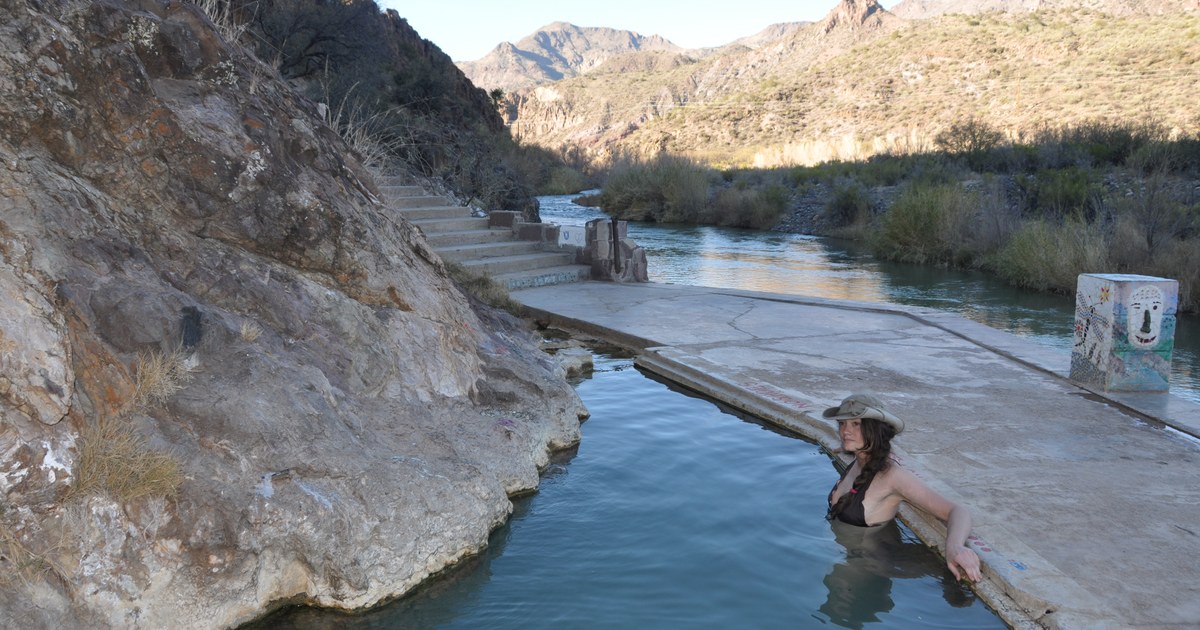
Arizona is a desert hot springs state, and that shapes every soak in it. The water comes out of the ground in a landscape of canyons, river valleys, and wide desert flats, and the springs here split into two clear groups: developed resorts and commercial soaks near the cities, and wild or primitive springs reached by rough roads, trails, and sometimes a river crossing. This guide maps 47 Arizona thermal springs from USGS data, from the Verde Valley in the north to the desert country near the Mexican border. No Arizona record in the dataset is classed as a hazard, so nothing is excluded on that ground, but not every mapped spring is a comfortable soak: many desert sources run lukewarm, and two commercial sites carry no dataset temperature at all.
The best-known Arizona soak is Verde Hot Springs, a set of natural pools beside the Verde River in the central part of the state, near Camp Verde. The site holds the ruins of a historic resort, and the pools sit in a canyon setting that feels a long way from the cities even though the drive starts from them. Reaching Verde takes effort: rough dirt roads and a river crossing are part of the trip, and conditions change with rain and river levels. That is the Arizona pattern in miniature. The famous springs reward planning, and the easy springs tend to be the developed ones.
One thing to know before you pick a spring: the temperatures in this guide are source temperatures, measured where the water comes out of the ground. Pools and tubs usually run cooler, because the water cools as it flows and mixes with cold water. A source listed at 180 degrees is not a 180-degree pool. Always check current conditions before you visit, since access, fees, and facilities change with the seasons.
We may earn a commission if you book through the links on this page, at no extra cost to you. That commission helps keep this guide free.
Planning an Arizona soak trip? Compare places to stay across the state before you pick a spring.
How to use this guide
Start with the table below for the best-known springs, then open the interactive US hot springs map to see every Arizona spring by location. Individual spring pages with directions, access notes, and photos will link from this hub as they publish. Base towns matter in Arizona: Phoenix covers the central springs, Tucson covers the southern desert springs, and Flagstaff covers the Verde Valley and the northern sites. Distances are long and services are thin once you leave the cities, so pick a base first and build outward from it.
Best-known Arizona hot springs
These twelve cover the full range of the state: river pools, resort springs, and hot desert sources. Temperatures are source temperatures from USGS data. Areas are broad regions from the dataset, not driving distances.
| Spring | Source temp | Area |
|---|---|---|
| Verde Hot Springs | 104°F | Flagstaff area, Verde Valley |
| Castle Hot Springs | 115°F | Phoenix area |
| Gillard Hot Springs | 180°F | Tucson area, eastern Arizona |
| Radium Hot Springs | 140°F | Phoenix area, western desert |
| Indian Hot Springs | 118°F | Tucson area |
| Hookers Hot Springs | 127°F | Tucson area |
| Agua Caliente Springs | 102°F | Phoenix area |
| Roosevelt Dam Springs | 118°F | Phoenix area |
| Clifton Hot Springs | 102°F | Tucson area, eastern Arizona |
| Coolidge Dam Warm Spring | 99°F | Tucson area |
| Spring (Hot) | 99°F | Phoenix area |
| Hannah Hot Spring | 133°F | Eastern Arizona |
The Verde Valley: Verde Hot Springs and the river pools
Verde Hot Springs is the spring most Arizona visitors ask about first, and it earns the attention. The pools sit beside the Verde River southeast of Camp Verde, in a canyon where the remains of an early resort still stand. The water at the source records 104 degrees, which puts it squarely in the classic soaking range, and the pools themselves run cooler as river water and air cool them. The setting is the draw: river, canyon walls, and a site that feels remote even though it is a day trip from the Phoenix area.
The trip to Verde is the trip itself, and it needs honest planning. The route involves rough dirt roads from the Camp Verde side and a crossing of the Verde River to reach the pools, so a high-clearance vehicle, water shoes, and a check of river levels are part of the plan, not extras. After rain, the river can run high and the roads can turn rough, so check current conditions with the Tonto National Forest before you set out. Verde is free to visit and open to the public, with no facilities at the site, so bring water, food, and everything you need, and pack it all out again.
Verde is not the only thermal water in the valley. Spring (Hot), at 99 degrees at the source, sits in the Phoenix area dataset grouping near the same central corridor, and the Verde Valley area holds several lukewarm sources that are better for a look than a soak. If Verde is inaccessible on the day, the developed resorts below are the sensible fallback, because a wild river site with no backup plan is how a day trip turns into a long drive to nowhere.
Phoenix area: Castle, Agua Caliente, and the central resorts
The Phoenix area is Arizona’s developed soaking corridor. Castle Hot Springs, at 115 degrees at the source, is the region’s resort name: a developed site in the desert hills northwest of the city, built around its thermal water. It is a resort experience with reservations and resort pricing, and it suits visitors who want a managed soak with amenities rather than a hike-in pool. Agua Caliente Springs, at 102 degrees at the source, sits in the western desert in the same broad Phoenix grouping, and Roosevelt Dam Springs, at 118 degrees, sits in the lake country east of the city.
The Phoenix grouping also holds the commercial day-use sites that carry no dataset temperature. El Dorado Hot Springs and Essence of Tranquility are both developed soaking sites in the dataset, but the dataset records no temperature for either, so this guide makes no temperature claim for them. That is worth stating plainly: a site can be a fine place to soak while its source temperature is simply not in the USGS record. For both, the operator’s current information is the source to check, not this guide.
One warning applies across the central corridor: several sources here run hot. Radium Hot Springs records a 140-degree source in the western desert, and Castle Hot Springs records 115 degrees. A hot source does not mean a hot pool, and it does not mean the source itself is safe to enter. Soak only in managed pools and tubs where the water temperature is controlled, and check the facility’s current hours and rules before you go.
Southern desert: Tucson area springs and the hot sources
South of Phoenix, the Tucson area holds the largest cluster of Arizona springs in the dataset, but it is also where the numbers need the most care. Many southern sources run lukewarm, in the 70s and 80s at the source, which is pleasant on a hot desert day but will not feel like a hot soak. The genuinely hot southern sources stand out precisely because they are the exception. Gillard Hot Springs records a 180-degree source in eastern Arizona, the hottest source in the state in this dataset, and it is far too hot to enter at the source. Indian Hot Springs, at 118 degrees, and Hookers Hot Springs, at 127 degrees, are the other named hot sources in the Tucson grouping, and Clifton Hot Springs, at 102 degrees, sits in the eastern part of the same grouping.
Coolidge Dam Warm Spring, at 99 degrees at the source, sits at the warm end of the southern list and shows how the state’s thermal water grades downward: from true hot sources in the 110s and above, through the high 90s and low 100s that make comfortable pools, down to the lukewarm seeps that dominate the southern count. Hannah Hot Spring, at 133 degrees in eastern Arizona, belongs with the hot group even though its broad area is the eastern border country rather than the Tucson corridor. In the southern desert alike, never assume an unmanaged pool is safe, and never enter water at or near a source.
Planning an Arizona hot springs trip
Pick your base first, then your springs. Phoenix works for the central resorts, Castle Hot Springs, and the Verde Valley as a long day trip. Tucson works for the southern desert springs and as a base for the eastern border country, though the drives there are long. Flagstaff works for the Verde Valley and the northern sites, and it pairs well with a Grand Canyon or Sedona trip. Camp Verde itself is the closest town to Verde Hot Springs, but it is a small base, so most visitors stage from Phoenix or Flagstaff.
Seasons change the experience more than most visitors expect. Winter and the shoulder seasons are the classic soaking seasons in the desert: mild air, comfortable water, and manageable river levels at Verde. Summer brings extreme desert heat, and a lukewarm pool in 110-degree air is a different experience from a winter soak, so summer visits belong at developed sites with shade, water, and staff. Monsoon season, roughly summer into early fall, can raise river levels fast and turn dirt roads into mud, so check forecasts and road conditions before any wild spring trip. No matter the season, check current conditions with the resort or managing agency before you leave, and carry what you need: remote desert sites have long gaps between services.
Safety follows the same rule across the state. Source temperatures above 115 degrees can scald, and several Arizona sources run hotter than that, including Gillard Hot Springs at 180 degrees, Radium Hot Springs at 140 degrees, Hannah Hot Spring at 133 degrees, and Hookers Hot Springs at 127 degrees. Never assume a source pool is safe to enter. Soak only in developed pools and tubs where the water temperature is managed, test the water before getting in, and keep children close. If a spring has no managed pool, treat it as a place to look at, not a place to soak.
Arizona hot spring temperature guide
Source temperatures in this guide are grouped the way soakers actually feel them. Lukewarm sources under 95 degrees are pleasant on a hot day but will not feel like a hot soak, and they make up the largest share of Arizona’s 47 mapped springs. The classic soaking range runs from the high 90s to about 110 degrees, and it covers Verde, Agua Caliente, Clifton, Coolidge Dam, and Spring (Hot) in the table above. Sources from 111 to 130 degrees feed the tubs and pools most visitors enjoy, once the water has cooled or been mixed, and Castle, Indian, Roosevelt Dam, and Hookers sit in this band. Anything above 130 degrees at the source is very hot water that must be cooled before it is safe, and Gillard, Radium, and Hannah fall in this range. The table above gives the source number for each spring; the pool you step into will read lower.
Etiquette and Leave No Trace
Hot springs etiquette is simple and it matters more at the popular river pools and the small wild sites, where a handful of pools serve a lot of visitors. Soak quietly, keep your visit to a reasonable length when others are waiting, and leave the pools as you found them. Pack out everything you bring in, including trash, and never leave glass, food waste, or personal items at a spring. At wild springs, stay on trails, respect closures, and remember that many Arizona springs sit on public land where the managing agency sets the rules. A clean, quiet soak is what keeps these places open.
Frequently asked questions
What is the best-known hot spring in Arizona?
Verde Hot Springs, beside the Verde River southeast of Camp Verde, is the best-known wild soak in the state: natural pools in a canyon setting among the ruins of a historic resort. Its source records 104 degrees. Reaching it takes rough dirt roads and a river crossing, so check river levels and road conditions before you go.
Are Arizona hot springs open in winter?
Developed resorts and commercial soaks stay open year round, and winter is a popular soaking season in the desert. Wild sites are harder after rain, when dirt roads turn rough and river crossings run high. Check road conditions and the managing agency’s current status before a winter trip.
Which Arizona hot spring is best for families?
Families usually do best at developed resort and commercial pools, where the water temperature is managed, there are amenities, and the rules are clear. Castle Hot Springs and the Phoenix area commercial soaks are resort-style options. Wild sites with unmanaged water, rough access, and river crossings suit adults who are comfortable with rustic conditions.
What is the hottest hot spring in Arizona?
Gillard Hot Springs records the hottest source in the Arizona dataset at 180 degrees, in eastern Arizona. That is a source temperature, not a pool temperature, and water that hot must never be entered at the source. Soak only in managed pools where the temperature is controlled.
How many hot springs are in Arizona?
This guide maps 47 Arizona thermal springs from USGS data, from lukewarm desert seeps to hot sources. No Arizona record is classed as a hazard, so nothing is excluded on that ground. Individual spring pages with directions and access notes will link from this hub as they publish.
Source temperatures are measured at the spring source; pools and developed areas usually run cooler. Always check current conditions before visiting.