
Hot Springs / Florida
Florida Hot Springs: The Only Warm One
2 dataset records led by the state’s only warm spring, with source temperatures, areas, and planning tips.
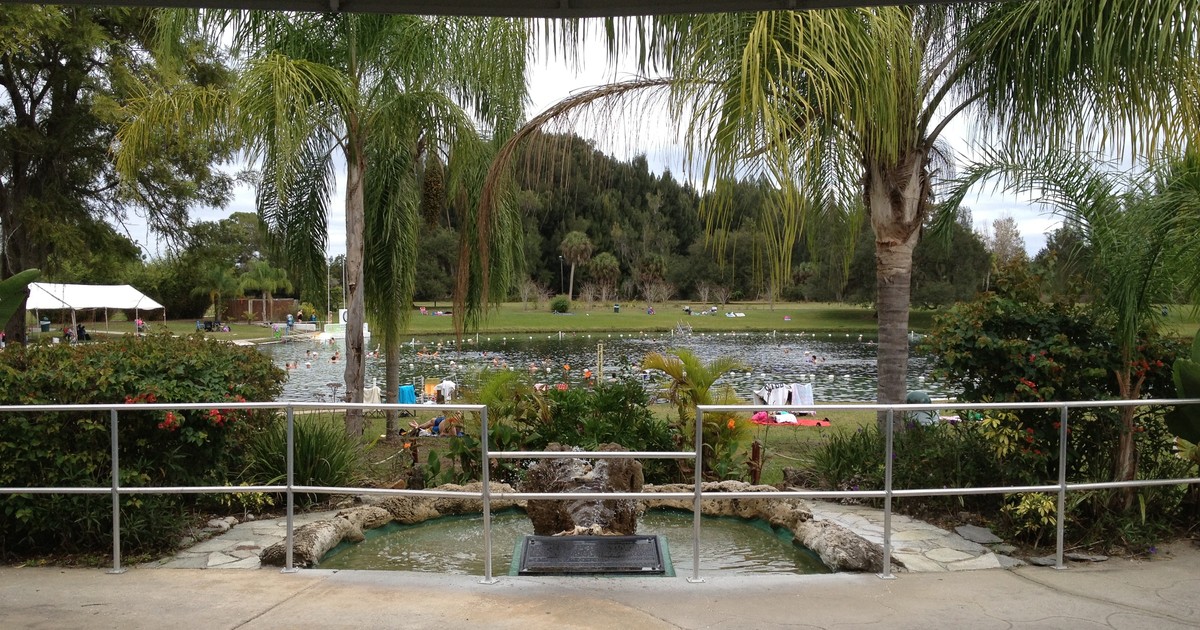
Florida is the one-spring state, and that is the honest starting point. The dataset holds 2 Florida records. One of them is the whole story. Warm Mineral Springs records 86 degrees at the source, and it is the only naturally warm spring in Florida. The other record is Little Salt Spring, at 81 degrees at the source. It is one of the most important archaeology sites in North America, and it is closed to the public. There is no second soak. There is no hidden chain of warm pools. In Florida you drive to one park in North Port, pay admission, and float in a sinkhole. This guide maps both records. A source temperature is not a pool temperature. A mapped record is not automatically a soaking site.
We may earn a commission if you book through the links on this page, at no extra cost to you. That commission helps keep this guide free.
How to use this guide
Start with the table below for both sites. Then open the interactive US hot springs map to see both Florida springs by location. Individual spring pages with directions, access notes, and photos will link from this hub as they publish. Areas in the table are broad regions, not driving distances. Warm Mineral Springs holds the only public soaking in the set. Base there first. Treat Little Salt Spring as a map entry rather than a stop on a trip.
The counts behind this guide need one honest note. The dataset holds 2 Florida records, and the two records are 2 distinct sites. Of those, 0 carry soakable status, 2 carry lukewarm status, and none carries an unknown temperature. No Florida source reaches 98 degrees, so no site in this guide is a true hot soak. Warm Mineral Springs is warm, not hot. This guide claims a dataset temperature for both sites. It claims no pool temperature for any spring. Every number here is a source temperature unless the text says otherwise.
Florida also has its own full destination guide on this site. The Florida destination guide covers the state visit in detail, and this hub covers the thermal set. The two do not repeat each other. Read this hub for the two springs and the one soak. Then read the destination guide for the beaches, the cities, and the trip plan.
Both Florida thermal sites
These two are the complete Florida set in this guide. They are one public warm spring and one closed archaeology site, about five miles apart in North Port. Temperatures are source temperatures from USGS data. Areas are broad regions from the dataset, not driving distances.
| Spring | Source temp | Area |
|---|---|---|
| Warm Mineral Springs | 86°F | North Port, Sarasota County |
| Little Salt Spring | 81°F | North Port, Sarasota County |
Warm Mineral Springs: the one warm soak in Florida
A sinkhole, not a hot spring
Warm Mineral Springs is a sinkhole, and the shape explains everything about it. Florida has no geothermal activity. Its groundwater sits near the average annual air temperature, about 72 degrees. That is why the famous swimming springs run cold all year. Warm Mineral Springs is the single exception. The dataset lists it as Warm Mineral Springs (Big Salt Spr), at 86 degrees at the source. Published guides put the water at about 85 degrees on average, so the dataset figure sits inside the published range. The spring is an hourglass-shaped sinkhole more than 200 feet deep. It holds about 9 million gallons of fresh water, and the water replenishes itself every two hours. The water carries more than 50 minerals, one of the highest mineral counts of any natural spring in the United States.
That mineral load is the reason the water looks and smells the way it does. The spring water is cloudy green rather than clear blue, and it carries a sulfur smell that surprises first-time visitors. The cloudiness comes from the minerals, not from dirt. The pool is ringed by palms and grass, with a roped swim area and a deep center. The two records in this guide sit about five miles apart, and both are sinkholes in the same North Port karst. Only one of them lets you in the water.
What the visit is like
Warm Mineral Springs is a public park at 12200 San Servando Avenue in North Port. It is open daily from 9 AM to 5 PM, with last admission at 4 PM. It is closed on Thanksgiving Day and Christmas Day. Admission is charged, and the rate differs for residents and non-residents. Children under 5 enter free. No reservations are needed for a regular day visit. Tickets are bought at the entrance and are valid for the same day only. Arrive when the gates open at 9 AM. That is the quietest hour, and the park fills up as the day goes on.
Inside, you swim or float in the roped area of the spring. The center of the sinkhole is more than 200 feet deep, so stay inside the ropes and do not dive. Pool noodles are sold at the park. Glassware and alcoholic beverages are not allowed. The park is still recovering from hurricane damage. The building complex is not currently available. It held the gift shop, the permanent showers, the restrooms, the changing facilities, and the lockers. Construction was underway as of June 2026. A modular admissions building stands on site in the meantime. Check the current facilities before you travel, because the rebuild moves faster than any guide can track.
The archaeology under the pool
The pool is older than the park, and the archaeology is part of the story. Warm Mineral Springs was identified as an archaeological site in 1958 or 1959. Diver Colonel William Royal had begun finding remains in the sinkhole. The site was placed on the US National Register of Historic Places in 1977. Divers have recovered prehistoric remains from the spring. The same anoxic water that preserves the finds at Little Salt Spring preserves them here. The spring has a reasonable claim to the same deep antiquity as its neighbor, about five miles away. The swimming happens on the surface. The history sits underneath it.
The Fountain of Youth story
Every guide to Warm Mineral Springs mentions the Fountain of Youth, and the legend deserves one honest paragraph. The story says Ponce de Leon searched Florida for a spring that would restore youth. The warm mineral water of North Port is often named as the spring he sought. That is legend, not history. No record ties Ponce de Leon to this sinkhole. What is real is the reputation the water has carried for decades. Visitors come for back pain, skin conditions, and general aches, drawn by the mineral content and the warm water. This guide makes no medical claim for the water. The draw is the warm float in a quiet park, the palms, and the strangeness of swimming in a 200-foot sinkhole. That is enough without a cure attached.
Little Salt Spring: 12,000 years, no public access
What was found there
Little Salt Spring is a sinkhole about 250 feet across and 250 feet deep. A run on its south side flows to Big Slough, a tributary of the Myakka River. The dataset records 81 degrees at the source. The temperature is the least interesting fact about it. In the late 1950s the same diver who identified Warm Mineral Springs, Colonel William Royal, found remains in the sinkhole. Excavations since then have made it one of the most important archaeology sites in North America.
The headline find is a sharpened wooden stake about 12,000 years old. It is the second-oldest dated artifact ever found in the southeast United States. Radiocarbon testing puts human activity at the site in the Paleo-Indian period, between 12,000 and 8,500 years ago. Activity continued into the Archaic period, between 8,500 and 5,200 years ago. During the Middle Archaic the spring was used as a mortuary pond. The water is anoxic, with almost no oxygen, so organic material survives there in a way it almost never does on land. Wood, textile fragments, and hair have been recovered alongside stone tools and human remains. The site holds some of the oldest cultural remains in the United States.
Why you cannot visit
Little Salt Spring is owned by the University of Miami. The 112-acre parcel was donated to the university by General Development in 1982, and the Rosenstiel School has run the research there. The site has no facilities for the public. There is no parking, no trail, and no entry. It sits off Price Boulevard between US 41 and I-75, next to Heron Creek Middle School in North Port, behind a fence. It was placed on the National Register of Historic Places on July 10, 1979. Archaeological artifacts and human remains there are protected by law, and the university has at times considered selling the parcel to Sarasota County for preservation. Do not try to enter. The value of the site is the record it holds, and the record survives because the water and the fence keep people out.
Springs that are not what they seem
Florida’s famous springs are cold
Florida has more freshwater springs than anywhere else on earth, more than a thousand of them, and about thirty first-magnitude springs. Almost all of them run at about 72 degrees all year. That is the deep groundwater temperature for the region, and it does not change with the season. Lithia Springs holds steady at 72 degrees. The Weeki Wachee spring holds steady at 72 degrees. Blue Spring holds steady at 72 degrees. Ginnie Springs and Silver Springs sit in the same cold class. In August the water feels icy. In January it feels warm against the cold air, and manatees crowd into the springs when the rivers drop below 68 degrees. None of them is thermal. They are beautiful swimming holes, and they are not hot springs.
Names that mislead
Two name traps deserve their own warning. The first is the name Warm Springs itself. Warm Springs, Georgia, is a different place: the Roosevelt pools at 88 degrees, a historic site that is not generally open for public soaking. Same warm name, different state, different water. The second trap is the word hot in Florida spring marketing. A spring billed as a hot spring escape is usually a 72-degree spring with a warm-sounding name. Warm Mineral Springs is the only Florida spring where the warmth is real and the swimming is open to the public. If a Florida spring does not name a temperature near 85 degrees, assume it is a 72-degree spring and plan accordingly.
Planning a Florida hot springs trip
Base in North Port or Sarasota
Base in North Port or Sarasota, then add the rest only if you have the days. Warm Mineral Springs sits about 45 minutes south of Sarasota, inside a North Port neighborhood off US 41. Stay in North Port for the shortest drive, or stay in Sarasota for the beaches, the restaurants, and the longer list of things to do. The spring is a half-day visit at most: arrive at opening, float for a couple of hours, and leave before the afternoon crowd. Little Salt Spring is not a stop on the trip. It is a fenced research site with no entry, and it should stay that way.
Pair the spring with the Gulf coast, not with a second spring. Sarasota has the beaches, the Ringling Museum, and the Siesta Key sand. North Port has the Myakka River State Park nearby, with its own wild Florida. The Florida destination guide on this site covers the state trip in detail. The spring is the morning. The coast is the rest of the day.
Seasons and safety
The park runs year round, so there is no wrong season for the soak itself. Summer is the busiest season, with warm days and full water. Winter is the quiet season, and the 85-degree water feels warmest when the air turns cool. Spring and fall often give the best balance: manageable heat, thin crowds, and comfortable walking weather. No matter the season, check the park’s current alerts before you leave. Hours, closures, and the hurricane rebuild move faster than any guide can track.
Safety follows the same rule as everywhere else on this site. The center of the sinkhole is more than 200 feet deep, so stay in the roped swim area and never dive. Test the water before getting in, and keep children close. The water is warm, not hot, so it will not scald, but the depth is the real hazard. At Little Salt Spring, stay out entirely. It is private research land, and the fence is the rule.
Florida hot spring temperature guide
Lukewarm sources
Source temperatures in this guide are grouped the way visitors actually feel them. Lukewarm sources under 98 degrees are pleasant on a warm day but will not feel like a hot soak. They make up both of Florida’s 2 mapped records. The warmer of the two is Warm Mineral Springs at 86 degrees. The cooler is Little Salt Spring at 81 degrees. Only one of the two is a public soak.
The classic soaking range
The classic soaking range runs from the high 90s to about 110 degrees. No Florida source reaches it. Warm Mineral Springs at 86 degrees sits below the range, and that gap matters for expectations. In summer the water feels refreshing rather than hot. In winter it feels warm against cool air, which is why the park draws its steadiest crowd in the cooler months. It is a warm float, not a hot soak, and visitors who expect a hot tub will be disappointed. Visitors who expect a warm mineral pool will not be.
Hot sources and unknown temperatures
No Florida site records a source above 100 degrees. The hottest mapped source in the state is Warm Mineral Springs at 86 degrees. No Florida site carries an unknown dataset temperature. Every record in the set carries a temperature, and this guide claims no temperature it cannot source.
Etiquette and Leave No Trace
Hot springs etiquette is simple. It matters most at a small park like Warm Mineral Springs, where a handful of visitors share one pool. Visit quietly. Keep your visit to a reasonable length when others are waiting, and leave the pool as you found it. Glassware and alcoholic beverages are not allowed in the park. Pack out everything you bring in, including trash, and never leave glass, food waste, or personal items at the spring. Remember that the pool is also an archaeology site on the National Register. Do not collect, do not dig, and do not disturb the bottom. At Little Salt Spring, the rule is simpler still: do not enter. It is private research land, and the fence is there to protect a 12,000-year record. A clean, quiet visit is what keeps these places open.
Frequently asked questions
What is the hottest hot spring in Florida?
Warm Mineral Springs carries the hottest mapped source in the Florida dataset at 86 degrees. That is a source temperature, not a pool temperature. Published guides put the water at about 85 degrees on average. No Florida source reaches 98 degrees.
Can you swim in Warm Mineral Springs?
Yes. Warm Mineral Springs is a public park in North Port, open daily from 9 AM to 5 PM, with last admission at 4 PM. It is closed on Thanksgiving Day and Christmas Day. Admission is charged. Swim inside the roped area, because the center of the sinkhole is more than 200 feet deep.
Is there really only one hot spring in Florida?
One naturally warm spring you can visit: Warm Mineral Springs. Little Salt Spring is the only other mapped thermal record in the state, and it is closed to the public. The rest of Florida’s famous springs, including Lithia Springs, Weeki Wachee, and Blue Spring, run at about 72 degrees all year.
Can you visit Little Salt Spring?
No. Little Salt Spring is owned by the University of Miami and run as a research facility, with no public access and no public facilities. It sits off Price Boulevard in North Port, behind a fence. It is on the National Register of Historic Places, and its artifacts and human remains are protected by law.
How many hot springs are in Florida?
This guide maps 2 Florida records. The two records are 2 distinct sites, both near North Port. Neither carries soakable status, both are lukewarm, and neither carries an unknown dataset temperature.
Source temperatures are measured at the spring source; pools and developed areas usually run cooler. Always check current conditions before visiting.