
Hot Springs / Georgia
Georgia Hot Springs: All 10 Springs
9 distinct thermal sites from 10 dataset records, led by the historic Warm Springs pools, with source temperatures, areas, and planning tips.
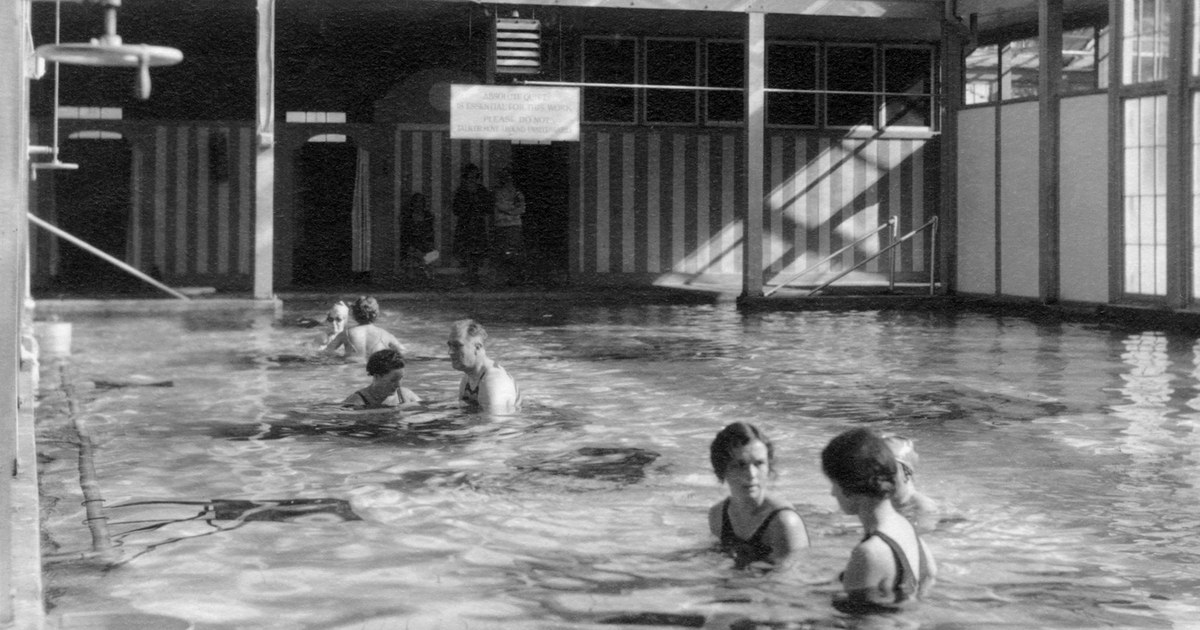
Georgia is the history state in this guide, and that is the honest starting point. The dataset holds 10 Georgia records. They describe 9 distinct sites, and none of them is a true hot soak. The warmest source in the state records 88 degrees. Warm Springs, the town and the spring, is the whole story: a president came here for healing, built a retreat, and died here. The rest are quiet lukewarm springs and two famous parks where you look at the water instead of entering it. This guide maps all nine. A source temperature is not a pool temperature. A mapped record is not automatically a soaking site.
We may earn a commission if you book through the links on this page, at no extra cost to you. That commission helps keep this guide free.
How to use this guide
Start with the table below for all nine sites, then open the interactive US hot springs map to see every Georgia spring by location. Individual spring pages with directions, access notes, and photos will link from this hub as they publish. Areas in the table are broad regions, not driving distances, because the dataset groups springs by region rather than by road miles. Warm Springs holds the only developed site in the set, so base there first and treat the rest as day-trip look-ins rather than stops on one loop.
The counts behind this guide are plain. The dataset holds 10 Georgia records. Two records describe the same site. The USGS record named Warm Springs, at 88 degrees at the source, and the manual record named Warm Springs sit on the same ground in the town of Warm Springs. They share the same coordinates, and both point at the Roosevelt pools. That leaves 9 distinct sites. Of those, none carries soakable status, 7 carry lukewarm status, and 2 carry no dataset temperature. This guide claims a dataset temperature for seven sites. It claims no pool temperature for any spring. Every number here is a source temperature unless the text says otherwise.
Read the soakable count with care. No Georgia site carries soakable status, because no Georgia source reaches 98 degrees. The warmest source, Warm Springs at 88 degrees, is still 10 degrees below the classic soaking range. Georgia’s springs are warm-water springs, not hot springs in the soaking sense. The historic pools at Warm Springs were therapeutic because the water stayed warm year round and the exercise helped, not because the water was hot. Treat the lukewarm label as the truth of this state, not as a disappointment to argue with.
All nine Georgia thermal sites
These nine are the complete Georgia set in this guide. They are one historic pool site, six quiet wild springs, and two famous parks built around mineral water. Temperatures are source temperatures from USGS data. Areas are broad regions from the dataset, not driving distances.
| Spring | Source temp | Area |
|---|---|---|
| Warm Springs (Roosevelt Warm Springs) | 88°F | Warm Springs, Meriwether County |
| Lifsey Spring | 79°F | Near Zebulon, Pike County |
| Parkman Spring | 77°F | Near Shiloh, Meriwether County |
| Thundering Spring | 75°F | Near Hannahs Mill, Meriwether County |
| Taylor Spring | 75°F | Near Zebulon, Pike County |
| Barker Spring | 73°F | Near Hannahs Mill, Meriwether County |
| Tom Brown Spring | 68°F | Near Manchester, Meriwether County |
| Indian Springs | No dataset temp | Flovilla, Butts County |
| Radium Springs | No dataset temp (68°F in published guides) | Albany, Dougherty County |
Warm Springs: the pools that made Georgia famous
Franklin D. Roosevelt and the pools
Warm Springs is the reason this guide exists. The spring delivers 914 gallons of 88-degree water per minute to a catch basin at the base of Pine Mountain, according to the Georgia Historical Society marker at the site. The springs had been used for recreation and healing for centuries before Roosevelt arrived. Muscogee (Creek) people brought their sick and injured to the waters. A resort had grown around the springs by 1832, and the town, once called Bullochville, took the name Warm Springs around the time Roosevelt bought the resort in 1927.
Roosevelt first visited in October 1924, three years after polio paralyzed him from the waist down. He had heard of a boy who regained the use of his legs after exercising in the warm water, and he came to try it himself. He visited Warm Springs 41 times between 1924 and 1945. In 1927 he bought the declining resort and founded the Georgia Warm Springs Foundation to treat polio patients. He built his Little White House in the town in 1932 and used it as his presidential retreat. He died there on April 12, 1945.
The pools today
The historic pools are not a public soak. They sit inside the Roosevelt Warm Springs Institute for Rehabilitation, a working treatment center, and the pool buildings are part of a National Historic Landmark district. The Georgia Department of Natural Resources stabilized and renovated the pools complex in 1994 and 1995. Reports say the waters open to the public once a year on Labor Day weekend. Do not plan a trip around soaking here. Plan around the history instead: the Little White House is open to visitors as a state historic site, and the pools complex can be viewed from the grounds.
That is the honest limit of the Warm Springs soak. The water is real, the history is real, and the swim is not open to the public. Anyone who tells you to show up and get in the pools is working from old information. Check the state parks site before you travel, and treat a soak as a rare event, not a plan.
F.D. Roosevelt State Park
F.D. Roosevelt State Park, on Pine Mountain just outside Warm Springs, is Georgia’s largest state park. It is the natural base for a Warm Springs visit: hiking along the Pine Mountain ridge, a lake, camping, and the mountain views Roosevelt himself sought out. The park does not hold a thermal soak of its own. Its value is the setting around the springs, not a second pool.
Pair the park with the town in a single day. Walk the ridge in the morning, visit the Little White House in the afternoon, and eat in the small downtown. That is the Warm Springs trip as it actually works. The spring itself is the anchor, and everything else in town orbits it.
The Warm Springs cluster: six quiet wild springs
Lifsey, Parkman, and the Zebulon springs
Six of the nine Georgia sites are small wild springs in the same country around Warm Springs, in Meriwether and Pike counties. Lifsey Spring, at 79 degrees at the source, is the warmest of the six. Parkman Spring records 77 degrees. Thundering Spring and Taylor Spring each record 75 degrees. Barker Spring records 73 degrees. Tom Brown Spring records 68 degrees. None of the six has a developed pool claimed in this guide, and none of them is a resort or a bathhouse.
Treat these six as map entries, not as destinations. They show how the warm water runs through the Pine Mountain foothills around Warm Springs. Most of them sit on private land with no public entry, and none of them offers a managed soak. Do not assume access, and do not enter water you cannot verify is managed. Their value is the map, not a swim.
Why the cluster matters anyway
The cluster is the proof that Warm Springs was not a single lucky seep. The whole Warm Springs country carries warm water: six named springs within a short drive of the Roosevelt pools, all between 68 and 79 degrees at the source. That is why the resort builders of the 1800s, and then Roosevelt, believed the water was worth building around. The town got the famous spring. The countryside kept the quiet ones.
If you drive the back roads around Warm Springs, you are driving through that country. Enjoy the drive and the small towns, and leave the springs themselves alone unless you can confirm public access first. A spring on private land is a neighbor’s water, not a public pool.
Indian Springs State Park: the oldest spring park
Indian Springs State Park, at Flovilla in Butts County, is one of the oldest state parks in the United States. It opened in 1825. The park is built around a sulfur mineral spring that Creek people held sacred for centuries before European settlers arrived and built a resort community around the same waters.
Swimming is not permitted in the spring. You can taste the mineral water at the stone Spring House, and that is the whole of the water experience here. The spring carries no dataset temperature, so this guide claims none for it. Published lists put it in the high 60s to low 70s. That is not a dataset figure, and it does not change the rule. Look, taste, and do not swim.
Think of Indian Springs as a history stop, not a soak. It pairs well with a Warm Springs day as a second stop on the drive back toward Atlanta, about 60 miles southeast of the city. The park is the oldest spring park in the state, and its story is the reason to go.
Radium Springs, Albany: the blue spring you cannot swim in
Radium Springs, in Albany, is the largest natural spring in Georgia. It pumps 70,000 gallons of clear blue-green water per minute from a deep limestone cavern into the Flint River. The water holds a steady 68 degrees in published guides. The site was once counted among the Seven Natural Wonders of Georgia, and visitors came from across the country to see the blue water.
The spring carries no dataset temperature, so this guide claims none from the dataset. The 68-degree figure comes from published guides, and it is given here as a published figure, not a dataset reading. Radium was detected in the water in 1925, the springs were renamed for it, and the healing claims around the water were disproved. Major floods in 1994 and 2000 devastated the site, and restoration work has gradually brought the gardens back.
Swimming is not allowed at Radium Springs. The site today is a garden park: walk the grounds, look at the blue water, and keep out of it. Radium Springs is a separate drive to south Georgia, not a stop on a Warm Springs day. Do not bundle it with the Warm Springs cluster in one day.
Springs that are not what they seem
Callaway Gardens, Magnolia Springs, and the cool springs
Readers will meet three names in other Georgia spring lists that do not belong in a hot springs table, so this section answers them plainly. Callaway Gardens, near Pine Mountain, is a resort garden attraction with a beach and pools. It is not a natural spring. Magnolia Springs State Park, near Millen, is a clear-water spring park. Its spring is cool water, not thermal water, and it is not in the thermal dataset this guide maps. The many cool springs scattered across Georgia, including the Blue Hole swimming holes, run below 65 degrees and are cold-water springs, not thermal ones.
None of the three appears in the thermal dataset this guide maps. Georgia has one historic warm spring town, a cluster of quiet wild springs, and two famous mineral-water parks. This guide keeps that small, honest set apart from resort pools and cool-water swimming holes. Nobody should drive to the wrong place expecting a natural hot soak.
The other Taylor Springs, and the other Georgia
Two name traps deserve their own warning. Other lists name a Taylor Springs in the Pigeon Mountain country near Dalton, in north Georgia. That is a different spring from the dataset Taylor Spring near Zebulon, in Pike County, which is the one in this guide. Do not mix them up. And most search results for Georgia hot springs describe the country of Georgia, not this state. If a result mentions Tbilisi, Borjomi, or Tskaltubo, it is about sulfur baths in the Caucasus, not about Warm Springs.
Planning a Georgia hot springs trip
Base in Warm Springs first
Base in Warm Springs first, then add the rest only if you have the days. The town sits about an hour southwest of Atlanta. The Little White House, the pools complex, and F.D. Roosevelt State Park are all within a short drive of each other. Book a room in town or in Pine Mountain and give the history a full day. The wild springs around town are not stops on a schedule, so do not build a day around them.
The rest of the set is a separate drive, not a stop on one loop. Indian Springs sits near Flovilla, about 60 miles southeast of Atlanta, on the other side of the city from Warm Springs. Radium Springs sits in Albany, in south Georgia, hours from Warm Springs. Do not try to cover Warm Springs, Indian Springs, and Radium Springs in a single day. Pick one cluster, give it the time, and save the rest for another trip.
Seasons and safety
Seasons change the experience more than most visitors expect. Summer is the best season for Georgia’s cool and lukewarm water: warm days make a 68-degree spring feel refreshing, and the parks are at their greenest. Winter is the quiet season, with thin crowds at the Little White House and the parks. Spring and fall often give the best balance: manageable heat, open roads, and comfortable walking weather. No matter the season, check current conditions with the state parks before you leave. Hours, closures, and access move faster than any guide can track.
Safety follows the same rule across the state. No Georgia source is hot enough to scald, which is unusual for this guide, but that does not make wild water safe to enter. Never assume a wild spring is safe to enter. Soak only in developed pools where the water temperature is managed, test the water before getting in, and keep children close. At wild springs, stay on public roads and trails. Respect fences and private land. Treat every unmanaged source as a place to look at, not a place to soak. If a spring has no managed pool, the answer is the view, not the water.
Georgia hot spring temperature guide
Lukewarm sources
Source temperatures in this guide are grouped the way visitors actually feel them. Lukewarm sources under 98 degrees are pleasant on a warm day but will not feel like a hot soak. They make up 7 of Georgia’s 9 distinct sites. The warmer four are Warm Springs at 88 degrees, Lifsey Spring at 79 degrees, Parkman Spring at 77 degrees, and Thundering Spring at 75 degrees. The cooler three are Taylor Spring at 75 degrees, Barker Spring at 73 degrees, and Tom Brown Spring at 68 degrees. If your goal is a hot soak, Georgia has no site for you, and this guide says so plainly.
The classic soaking range
The classic soaking range runs from the high 90s to about 110 degrees, and no Georgia site reaches it. The warmest source in the state, Warm Springs at 88 degrees, sits 10 degrees below the bottom of the range. The historic pools were therapeutic because the water stayed warm year round and patients exercised in it for hours, not because the water was hot. Georgia’s story is a warm-water story. Any guide that promises a hot soak in this state is selling a different state.
Hot sources and unknown temperatures
No Georgia site records a source above 100 degrees. The hottest mapped source in the state is Warm Springs at 88 degrees. Two sites carry no dataset temperature: Indian Springs and Radium Springs. Published guides put Radium Springs at 68 degrees, and that figure is given here as a published figure, not a dataset reading. This guide claims no temperature it cannot source.
Etiquette and Leave No Trace
Hot springs etiquette is simple and it matters most at the small historic pools, where a handful of visitors share a small space. Visit quietly, keep your visit to a reasonable length when others are waiting, and leave the pools as you found them. Pack out everything you bring in, including trash, and never leave glass, food waste, or personal items at a spring. At wild springs, stay on trails, respect closures, and remember that many Georgia springs sit on private land where the owner sets the rules. Do not cross fences, do not block gates, and leave wildlife and livestock alone. A clean, quiet visit is what keeps these places open.
Frequently asked questions
What is the hottest hot spring in Georgia?
Warm Springs records the hottest mapped source in the Georgia dataset at 88 degrees. That is a source temperature, not a pool temperature. The spring delivers 914 gallons of 88-degree water per minute, according to the Georgia Historical Society marker at the site.
Can you soak at Warm Springs, Georgia?
Not generally. The historic pools sit inside the Roosevelt Warm Springs Institute for Rehabilitation, a working treatment center, and they are not open for public soaking. Reports say the waters open to the public once a year on Labor Day weekend. Visit the Little White House and view the pools complex instead, and check the state parks site before you travel.
Can you swim at Radium Springs?
No. Swimming is not allowed at Radium Springs in Albany. The site is a garden park today. Walk the grounds and look at the blue water. It flows at 70,000 gallons per minute and holds about 68 degrees in published guides.
Can you swim at Indian Springs State Park?
No. Swimming is not permitted in the spring at Indian Springs State Park. You can taste the mineral water at the stone Spring House. The park opened in 1825 and is one of the oldest state parks in the United States.
How many hot springs are in Georgia?
This guide maps 9 distinct Georgia thermal sites from 10 dataset records. Two records describe the same site: the USGS Warm Springs record and a manual Warm Springs record share the same coordinates. None of the nine carries soakable status, seven are lukewarm, and two carry no dataset temperature.
Source temperatures are measured at the spring source; pools and developed areas usually run cooler. Always check current conditions before visiting.