
Hot Springs / Hawaii
Hawaii Hot Springs: The Only One Left
11 dataset records led by the one surviving soak at Pohoiki, with source temperatures, areas, and planning tips.
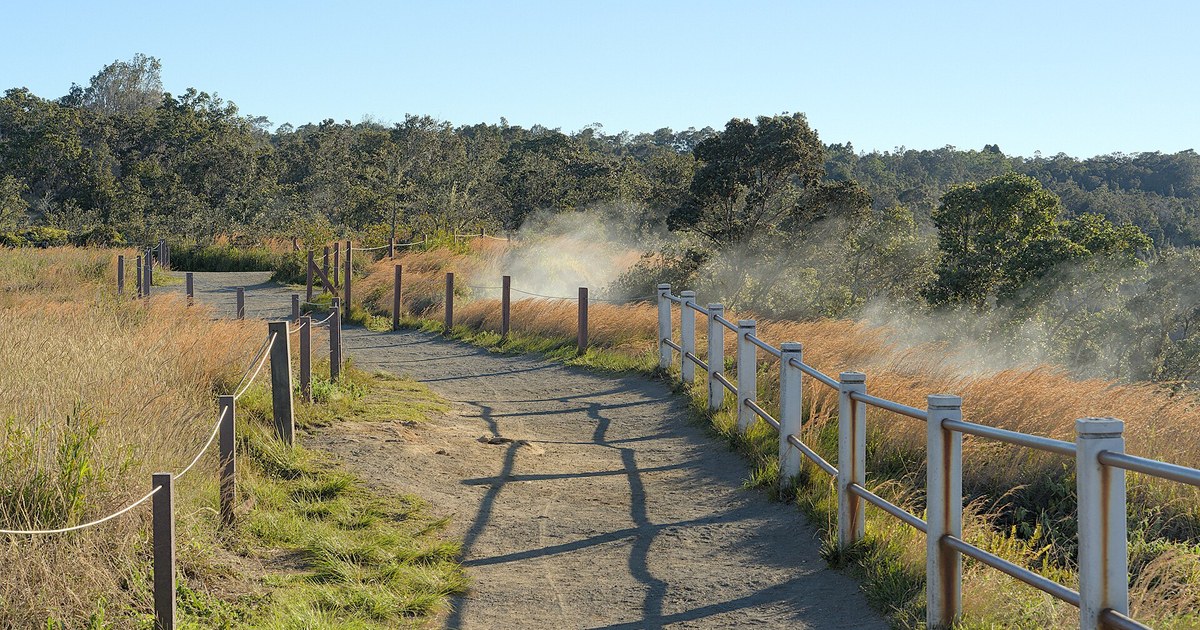
Hawaii is the one-surviving-soak state, and that is the honest starting point. The dataset holds 11 Hawaii records. Four of them are springs you can map, and seven of them are steam vents you can only look at. One place lets you soak in public: the Pohoiki warm ponds at Isaac Hale Beach Park, on the Big Island near Pahoa. The other three mapped springs have no verified public access. The seven vents sit in and around Hawaii Volcanoes National Park, where the ground itself is the hazard. This guide maps all 11 records. A source temperature is not a pool temperature. A mapped record is not automatically a soaking site.
We may earn a commission if you book through the links on this page, at no extra cost to you. That commission helps keep this guide free.
How to use this guide
Start with the table below for the four soakable springs. Then open the interactive US hot springs map to see all 11 Hawaii records by location. Individual spring pages with directions, access notes, and photos will link from this hub as they publish. Areas in the table are broad regions, not driving distances. Pohoiki holds the only public soaking in the set. Base there first. Treat the other three springs as map entries rather than stops on a trip. Treat the seven steam vents as a national park walk, not a soak.
The counts behind this guide need one honest note. The dataset holds 11 Hawaii records. They split into 4 soakable springs and 7 steam vents. Of the 4 springs, 0 carry soakable status at or above 98 degrees, 3 carry lukewarm status, and 1 carries an unknown temperature. No Hawaii source reaches 98 degrees. No site in this guide is a true hot soak by the dataset figures. The Pohoiki pools run hotter than the dataset figure today. The guide labels the published figures as published figures. Every number here is a source temperature unless the text says otherwise.
Hawaii also has its own full destination guide on this site. The Hawaii destination guide covers the state visit in detail, and this hub covers the thermal set. The two do not repeat each other. Read this hub for the 11 records and the one soak. Then read the destination guide for the islands, the beaches, and the trip plan.
The four Hawaii thermal springs
These four are the soakable set in this guide. The other seven records are steam vents, covered in their own section below. They are not in this table because no one soaks in a steam vent. Temperatures are source temperatures from USGS data. Areas are broad regions from the dataset, not driving distances.
| Spring | Source temp | Area |
|---|---|---|
| Isaac Hale Park Spring | 97°F | Pohoiki Bay, Puna District, Big Island |
| Waiwelawela Point Spring | 90°F | South coast near Pahala, Big Island |
| Akins Spring | 84°F | Near Pahoa, Big Island |
| Warm Vapor | No temp recorded | Near Pahoa, Big Island |
Pohoiki: the one soak left
What survived the 2018 eruption
Pohoiki is the only publicly accessible hot spring in Hawaii. It survived by a few hundred feet. The 2018 lower Puna eruption ran from May 3 to August 4, 2018, along the East Rift Zone of Kilauea. Fissure 8 poured lava across the Puna coast, covering 13.7 square miles and destroying about 700 homes. The lava buried the Ahalanui Warm Pond and the Kapoho Tide Pools under lava dozens of feet thick. It flowed over the eastern edge of Isaac Hale Beach Park and stopped a few hundred feet short of the warm ponds and the boat ramp.
When the eruption wound down, ocean currents pushed sand and broken lava into Pohoiki Bay. The sand filled the old protected bay and buried the boat ramp under a new black sand beach. That beach impounded new geothermal pools behind it. The park kept its ponds and gained a beach. The coast around it did not.
Isaac Hale Beach Park sits at 13-101 Kalapana Kapoho Beach Road in Pahoa, on the Big Island. The park is named for Private Isaac Kepo’okalani Hale, a soldier killed in the Korean War. The new black sand beach is the Big Island’s newest, formed entirely by the 2018 eruption. The beach itself is not for swimming. The currents off Pohoiki are strong, the surf runs high, and the shore drops fast. The soaking happens in the ponds behind the beach, not in the ocean.
The pools today
The ponds are a small set. Guides count them differently because the count depends on the tide and on what you call a pond. The three that every visitor finds are the flooded boat ramp pond, a middle pond, and the collapsed lava tube pool tucked into the forest. The boat ramp pond is the deepest and the coolest. It holds about 90 degrees year round. The middle pond runs warmer and shallower. The lava tube pool is the smallest and the hottest. It is the one pool that existed before the eruption.
The lava tube pool measured in the upper 90s before the eruption. Published guides put it at about 100 to 106 degrees now. Other ponds in the wider area run 75 to 85 degrees, depending on the tide and the time of day. The dataset record for this place, Isaac Hale Park Spring at 97 degrees, is the pre-2018 source figure. The pool figures above are post-2018 guide figures. This guide does not blend the two.
Finding the pools takes a short walk from the parking lot, not a hike. The boat ramp pond sits to the right of the parking area, where the ramp used to meet the bay. A short, well-marked path leads to the other ponds. The lava tube pool sits a few minutes down the path, under a canopy of green. Go early: the ponds are small, and a crowd changes the feel of the place fast. There is no entry fee, and there are no lifeguards at the ponds. Check the park’s current status before you go. The coast here is still an active volcanic landscape, and access can change with conditions.
What the water is
The Pohoiki water is not a freshwater thermal spring. It is brackish, a mix of two waters. Rain falls on the volcanic ground, soaks down through hot rock, and comes back up heated by the volcano. Cool seawater seeps in through the sand and cools it to a soaking temperature. That mix is why the ponds sit at different temperatures. It is also why the temperature shifts with the tide. The bottom is rock covered in algae. The water looks clear until you step in, and then the stirred algae clouds it.
That same still water is the reason for the warning signs. The ponds are small and enclosed, with little flow to flush them out. Signs at the springs warn about bacteria in the water. Do not soak if you have open cuts or wounds, and do not put your head under. The risk is not the heat. It is the warm, still, brackish water itself. Keep it short if you have any break in the skin.
The boat ramp fight
The ponds nearly disappeared a second time, on paper. The state planned to dredge a channel through the new beach to restore the Pohoiki boat ramp, the only one on the Puna coastline. The original plan would have filled in the hot pond beside the ramp. Public pressure changed the plan. The county’s February 2025 update says filling of the hot pond was removed from the project scope. The US Army Corps of Engineers permit issued in May 2025 forbids filling in any of the ponds as part of the dredging.
Seven of the eight thermal ponds were protected under the revised plan. Reporting from late 2025 says one pond was nevertheless filled with dredged material. The dredging has not started, and the timeline depends on permits that were still pending in early 2025. Check the current park status before you travel: this is the one soak in the state, and its future is still being argued.
The seven steam vents
Where they are
Seven of the 11 Hawaii records are Steam Vents. All seven are hazards, not springs. Five sit in the Kilauea summit country inside Hawaii Volcanoes National Park. Two more sit near Puna. None of them carries a temperature in the dataset. None of them is soakable. None of them should be approached as a bathing place. They are in this guide because the dataset lists them, and a traveler who finds them on the map needs to know what they are.
What you will see
The vents you can visit are the ones in the national park. They are Kūkamāhuākea, the Steam Vents parking area, Wahinekapu, known as Steaming Bluff, and Ha’akulamanu, the Sulphur Banks. Groundwater seeps down to hot rock and rises back as steam. The Sulphur Banks add volcanic gases to the steam: carbon dioxide, sulfur dioxide, and hydrogen sulfide, the gas that smells like rotten eggs. The gases leave yellow sulfur crystals and red iron-tinged clay on the ground. The temperature underground runs above 200 degrees, hot enough to cook the rock.
A boardwalk trail runs through the banks from the Kilauea Visitor Center. It is about 1.6 miles as a loop with the Crater Rim Trail, past Steaming Bluff and back through rainforest. It is a walk through an active hydrothermal area.
Why you stay on the trail
Stay on the marked trail and the boardwalk. The ground at the Sulphur Banks can be thin over scalding steam. Stepping off the path can cause a serious burn. The National Park Service advises visitors with heart or respiratory conditions such as asthma, pregnant women, infants, and young children to avoid the walk. Check the park conditions page before you go. Parts of the Sulphur Banks Trail were reported closed during 2026, and closures change with volcanic activity. There is no soaking anywhere in this area. The vents are look-only: the steam that makes them beautiful is the same steam that makes them dangerous.
The mapped springs you cannot visit
Waiwelawela Point Spring
Waiwelawela Point Spring records 90 degrees at the source, on a remote point of the south coast about six miles from Pahala. It appears in the NOAA thermal springs list and in the USGS world thermal springs survey from 1965. That is the whole public record. No visitor guide describes reaching it. No trail is published for it. No soaking pool is documented there. The coast below Pahala is rough lava and open ocean. This guide lists the record and gives no directions: no verified public access exists.
Akins Spring
Akins Spring records 84 degrees at the source, about three miles from Hawaiian Paradise Park near Pahoa. It appears in the NOAA thermal springs list. That is the whole public record. No visitor guide describes reaching it. No trail is published for it. No soaking pool is documented there. The Puna coast around Pahoa mixes private land, lava flows, and forest reserve. This guide lists the record and gives no directions: no verified public access exists.
Warm Vapor
Warm Vapor is the fourth mapped spring, and it is the thinnest record in the set. The dataset carries no temperature for it, so its status is unknown temperature. It sits near Pahoa in the Pahoa South quadrangle. One registry’s nearby-springs table lists 83 degrees for Warm Vapor, but that figure is not in the dataset, so this guide does not state it as the source temperature. No visitor guide describes reaching it, and no soaking pool is documented there.
Do not confuse it with the Pahoa Steam Caves, a separate known feature in the Keauohana Forest Reserve off Highway 130 southeast of Pahoa. Steam rises there from splatter cones in the woods, and visitors have used the caves as natural saunas. That feature is not this record, and access to the caves is uncertain. This guide lists the Warm Vapor record because the dataset holds it, and claims nothing more for it.
Springs that are not what they seem
Ahalanui and the ponds the lava took
Before 2018, the Puna coast held three publicly accessible hot springs: Pohoiki, Ahalanui, and the Kapoho Tide Pools. The eruption took two of them. Ahalanui Warm Pond at Pualaa County Park, on Highway 137 near Pahoa, was a spring-fed brackish pool of about 90 degrees. It was ringed by a cement sea wall and known locally as Millionaires Pond. The lava covered it in the summer of 2018. It is permanently closed.
The Kapoho Tide Pools, a set of warm tide pools on the Kapoho coast, were buried under the same flow. The Champagne Pond, a warm coastal inlet in a private residential community near Kapoho, was destroyed with them. Search results still show all three. Do not drive to them. They are gone, and Pohoiki is the only public soak that remains.
Queen’s Bath is not a hot spring
Queen’s Bath, on the north shore of Kauai near Princeville, appears in Hawaii hot springs roundups. It is not a hot spring at all. It is a lava-rock ocean pool filled by waves, with no geothermal heat in it, and one of the most dangerous swimming spots in Hawaii. Sudden waves can wash over the rocks and sweep people out to sea, even on calm days.
Ocean Safety Bureau records list 10 deaths there from January 1999 to December 2018, and a warning sign at the site claims 28. The county closes the access gate through the winter season, when the surf runs high. There are no lifeguards, no restrooms, and no facilities. Visit only in summer, only when the waves are under four feet, and never go around a closed gate.
Pools of Ohe’o and the private retreats
The Pools of Ohe’o on Maui, also called the Seven Sacred Pools, appear in Hawaii hot springs lists too. They are waterfall-fed pools on a stream running to the ocean, not thermal springs. The water is as cold as the stream that feeds it. They are worth a visit as pools, and they are not a soak. The same caution applies to the private geothermal retreats in Puna, which run reservation-only soaking tubs on private land. They are real geothermal water, and they are not public springs. They are not in the mapped dataset, and this guide does not list them as places to visit. Hawaii’s public hot springs story starts and ends at Pohoiki. Everything else in the search results is either gone, private, or not thermal.
Planning a Hawaii hot springs trip
Base in Pahoa or Hilo
Base in Pahoa or Hilo, then add the rest only if you have the days. Pohoiki sits at the end of the road southeast of Pahoa, about an hour from downtown Hilo. Stay in Pahoa for the shortest drive, or in Hilo for the restaurants and hotels. The ponds are a half-day visit at most. Arrive early and leave before the afternoon crowd.
The steam vents are a separate day, or a separate morning, inside Hawaii Volcanoes National Park, about an hour west of Pahoa by road. The park is open around the clock, but the visitor center keeps its own hours. The vents are best seen in daylight. Pair the soak with the volcano, not with a second spring, because there is no second public spring. The park holds the vents and the lava landscapes that explain why the ponds are warm at all. The ponds are the morning. The volcano is the rest of the day.
Seasons and safety
The ponds run year round, so there is no wrong season for the soak itself. Summer is busiest. Winter is quietest, and the warm water feels warmest when the air turns cool. The ocean at Pohoiki is rough in every season, and the winter surf is the roughest. Never treat the beach as a swimming beach. No matter the season, check the park’s current status before you leave. Conditions here move faster than any guide can track.
Safety follows the same rule as everywhere else on this site, with one Hawaii addition. Test the water before getting in, keep children close, and do not soak with open cuts or wounds. Do not swim in the ocean at Pohoiki. At the steam vents, stay on the marked trail and the boardwalk. Skip the walk if you have a heart or respiratory condition, or if you are pregnant or carrying an infant. At Waiwelawela, Akins, and Warm Vapor, stay out entirely. A quiet, careful visit keeps the one public soak open.
Hawaii hot spring temperature guide
Lukewarm sources
Source temperatures in this guide are grouped the way visitors actually feel them. Lukewarm sources under 98 degrees are pleasant on a warm day but will not feel like a hot soak. They make up 3 of Hawaii’s 4 mapped springs. The warmer of the three is Isaac Hale Park Spring at 97 degrees. Then comes Waiwelawela Point Spring at 90 degrees, and Akins Spring at 84 degrees. Only one is a public soak.
The classic soaking range
The classic soaking range runs from the high 90s to about 110 degrees. No Hawaii source reaches it by the dataset figures. Isaac Hale Park Spring at 97 degrees sits just below the range, and that gap matters for expectations. The Pohoiki pools themselves run hotter than the dataset figure, with published guide figures of about 90 to 106 degrees across the ponds. The lava tube pool sits inside the range. The boat ramp pond sits below it. Pick the pond that matches the heat you want.
Hot sources and unknown temperatures
No Hawaii site records a source above 100 degrees. The hottest mapped source in the state is Isaac Hale Park Spring at 97 degrees. One Hawaii site carries an unknown dataset temperature: Warm Vapor, with no temperature recorded. The seven steam vents carry no temperature either. Every record in the set carries the temperature the dataset gives it, and this guide claims no temperature it cannot source.
Etiquette and Leave No Trace
Hot springs etiquette is simple. It matters most at a small place like Pohoiki, where a handful of visitors share a few small ponds. Visit quietly, and leave each pond as you found it. Pack out everything you bring in.
The ponds sit in a county park on land that is still sacred to many Hawaii residents, and the volcano that made them is still active. Do not collect, do not dig, and do not disturb the bottom. At the steam vents, stay on the trail and do not touch the mineral deposits. At Waiwelawela, Akins, and Warm Vapor, do not go. A clean, quiet visit is what keeps the one public soak in Hawaii open.
Frequently asked questions
What is the hottest hot spring in Hawaii?
Isaac Hale Park Spring carries the hottest mapped source in the Hawaii dataset at 97 degrees. That is a source temperature from before the 2018 eruption, not a pool temperature. Published guides put the Pohoiki pools at about 90 to 106 degrees today, depending on the pond. No Hawaii source reaches 110 degrees.
Can you soak at Pohoiki?
Yes. The warm ponds at Isaac Hale Beach Park near Pahoa are open to the public as part of a county park. There is no entry fee for the park. Do not soak with open cuts or wounds, because warning signs at the springs note a bacteria risk. Do not swim in the ocean at Pohoiki; the currents are strong.
Are there hot springs on the other Hawaiian islands?
No public hot springs are mapped on any island but the Big Island. The pools people call hot springs on Kauai and Maui, including Queen’s Bath and the Pools of Ohe’o, are ocean and waterfall pools, not thermal springs.
Can you still visit Ahalanui Warm Pond?
No. Ahalanui Warm Pond was buried under lava during the 2018 Kilauea eruption and is permanently closed. The park around it was destroyed with it. Pohoiki, a short drive away, is the only public soak left.
How many hot springs are in Hawaii?
This guide maps 11 Hawaii records: 4 soakable springs and 7 steam vents. Of the 4 springs, 3 are lukewarm and 1 carries an unknown dataset temperature. The 7 vents are hazards, not soaking sites, and none of them carries a temperature.
Source temperatures are measured at the spring source; pools and developed areas usually run cooler. Always check current conditions before visiting.