
Hot Springs / Nevada
Nevada Hot Springs: All 239 Springs
239 mapped thermal springs, from Carson City pools to remote desert sources, with source temperatures, broad regions, and planning tips.
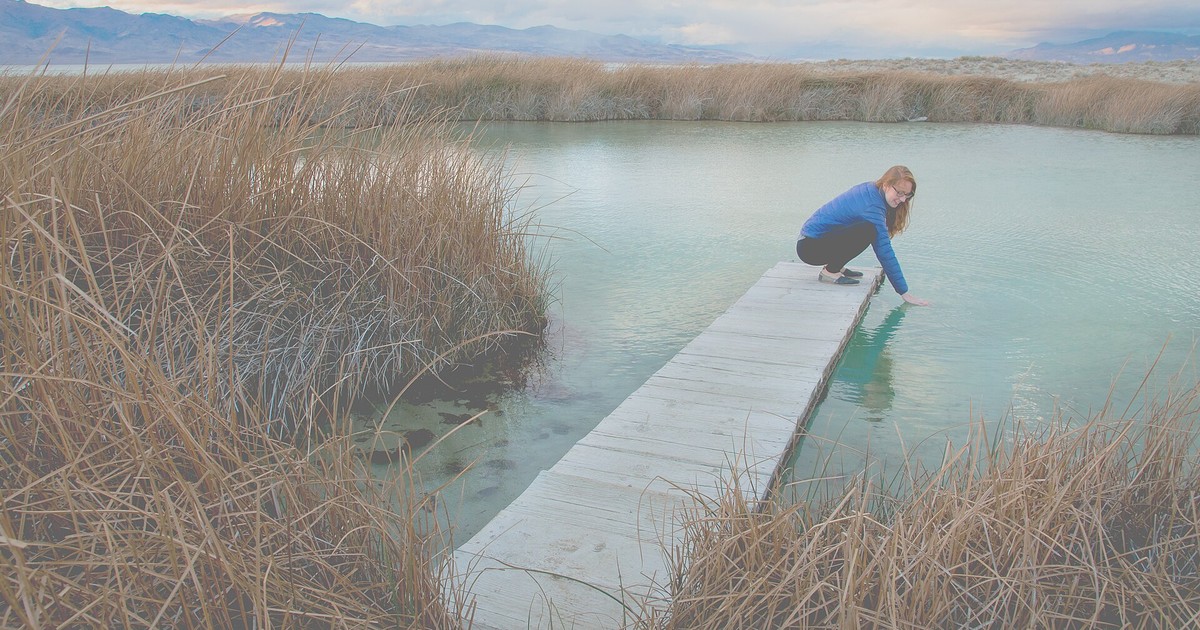
Nevada is the desert hot springs state, and its map rewards visitors who read the temperature column before they drive. The state holds resort pools near Carson City, remote wild soaks in the central desert, warm springs in the south, and very hot sources in the north that no one should enter. This guide maps 239 Nevada thermal springs from USGS data and keeps one line clear throughout: a source temperature is not a pool temperature, and a mapped record is not automatically a soaking site.
We may earn a commission if you book through the links on this page, at no extra cost to you. That commission helps keep this guide free.
Planning a Nevada soak trip? Compare places to stay across the state before you pick a spring.
How to use this guide
Start with the table below for the best-known springs, then open the interactive US hot springs map to see every Nevada spring by location. Individual spring pages with directions, access notes, and photos will link from this hub as they publish. Base towns matter in Nevada because the clusters are far apart: Carson City, the central desert country, the northern counties, and the southern valleys are separate trips, not stops on one loop. Areas in the table are broad regions, not driving distances, because the dataset groups springs by region rather than by road miles.
The counts behind this guide are plain. The dataset holds 257 Nevada records. Eighteen records are classed as hazards and are excluded from the mapped count, including Steamboat Springs, Bradys Hot Springs, the Beowawe geysers, and Great Boiling Spring near Gerlach. That leaves 239 mapped springs. Of those, 113 carry soakable status, 104 carry lukewarm status, and 22 carry no dataset temperature at all. This guide claims no temperature for the 22 unknown-temperature records, and it claims no pool temperature for any spring: every number here is a source temperature.
Read the soakable count with care. Nevada has more very hot sources than soaking pools. The hottest mapped sources, Moana Springs and Pinto Hot Springs, each record 199 degrees at the source, and dozens of mapped records run above 150 degrees. A dataset status label does not make a very hot source safe to enter. Soak only in developed pools and tubs where the water temperature is managed, and treat every unmanaged hot source as a place to look at, not a place to soak. The springs in the table below are the names a first-time Nevada visitor should know, and the sections that follow explain which ones are pools and which ones are warnings.
Best-known Nevada hot springs
These twelve are the names a first-time Nevada visitor should know: a Carson City pool, central desert wild soaks, northern hot sources, and a southern town spring. Temperatures are source temperatures from USGS data. Areas are broad regions from the dataset, not driving distances.
| Spring | Source temp | Area |
|---|---|---|
| Carson Hot Springs | 120°F | Carson City country |
| Walleys Hot Springs | 160°F | Minden country |
| Spencer Hot Springs | 162°F | Spencer Hot Springs country, central Nevada |
| Dixie Hot Springs | 162°F | Dixie Hot Springs country, central Nevada |
| Bartine Hot Springs | 108°F | Bartine Ranch country, central Nevada |
| Hot Creek Springs | 151°F | Hot Creek country, central Nevada |
| Alkali Hot Spring | 140°F | Alkali country, central Nevada |
| Bog Hot Springs | 131°F | Railroad Point country, northern Nevada |
| Dyke Hot Springs | 158°F | Duffer Peak country, northern Nevada |
| Buffalo Valley Hot Springs | 174°F | Buffalo Springs country, northern Nevada |
| Caliente Hot Springs | 118°F | Caliente country, southern Nevada |
| Black Rock Hot Spring | 136°F | Black Rock Desert country, northern Nevada |
Carson City and the northwest: the easy entry point
Carson, Walleys, and the Reno country
Carson Hot Springs, at 120 degrees at the source, sits in the Carson City country, and it is the easy entry point in this guide. A 120 degree source feeds pools that run cooler, and the town setting, with lodging and services nearby, makes Carson City the simplest Nevada soak for a first visit. Walleys Hot Springs, at 160 degrees at the source, sits in the Minden country south of Carson City, and it is a warning as much as a draw: a 160 degree source is far too hot to enter, and any pool fed by it must be cooled and mixed first. Check the operator’s current information for hours, fees, and pool temperatures before you set out, since this guide gives source temperatures only.
The Reno country adds the hottest mapped sources in the state, and none of them are soaking pools. Moana Springs records 199 degrees at the source in the Mount Rose country, and Pinto Hot Springs records 199 degrees at the source in the Pinto Mountain country, with West Pinto Hot Spring close behind at 198 degrees. These are very hot sources, not pools. Visitors basing in Reno or Carson City should treat the northwest cluster as one managed pool town, Carson City, plus hot desert sources to admire from a distance, not a set of pools to try in turn.
Central Nevada: wild soaks in the open desert
Spencer, Dixie, Bartine, and Hot Creek
Spencer Hot Springs, at 162 degrees at the source, sits in the Spencer Hot Springs country, and it is the central Nevada wild soak name in this guide. Dixie Hot Springs, at 162 degrees at the source, sits in the Dixie Hot Springs country, and both are very hot sources that feed soaking tubs only after the water has cooled. Bartine Hot Springs, at 108 degrees at the source, sits in the Bartine Ranch country, and it is the central Nevada spring closest to the classic soaking range. Hot Creek Springs, at 151 degrees at the source, sits in the Hot Creek country, and Alkali Hot Spring, at 140 degrees at the source, sits in the Alkali country. Together, the five show the central desert range: one near-classic soak, and four hot sources that demand caution.
Central Nevada is the most remote cluster in this guide, and remoteness is part of the appeal and part of the risk. Services are far apart, dirt roads can turn rough after rain, and cell coverage is unreliable in the open desert. Carry water, fuel, and a spare tire, tell someone your plan, and check current road and access conditions before you leave pavement. Soak only in tubs and pools where the water temperature is managed or where experienced local guidance confirms a safe soaking temperature, test the water before getting in, and keep children close. If a central desert spring has no managed pool, treat it as a place to look at, not a place to soak.
Northern Nevada: hot sources and wide country
Bog, Dyke, Buffalo Valley, and Black Rock
Bog Hot Springs, at 131 degrees at the source, sits in the Railroad Point country, and it is the northern Nevada name closest to a manageable soak, once the water has cooled. Dyke Hot Springs, at 158 degrees at the source, sits in the Duffer Peak country, and Buffalo Valley Hot Springs, at 174 degrees at the source, sits in the Buffalo Springs country. Black Rock Hot Spring, at 136 degrees at the source, sits in the Black Rock Desert country, and it is the desert playa name in this guide. The northern lesson is the same one the whole guide teaches, only sharper: a hot source is not a hot pool, and the northern sources run hotter than most visitors expect.
The north also holds famous names that this guide deliberately leaves out of the soaking list. Great Boiling Spring near Gerlach records 208 degrees at the source and is classed as a hazard, Beowawe Hot Springs, known as the Geysers, records 208 degrees and is classed as a hazard, and Bradys Hot Springs records 209 degrees and is classed as a hazard. These are geothermal features to respect from a distance, not pools. Elko Hot Spring, at 190 degrees at the source in the Elko West country, and Hot Sulphur Springs near Tuscarora, at 194 degrees, belong in the same look-only set. If a northern Nevada spring records above 150 degrees at the source and has no managed pool, do not enter it.
Southern Nevada: warm springs and a town soak
Caliente, Ash Springs, Moapa, and Panaca
Caliente Hot Springs, at 118 degrees at the source, sits in the Caliente country, and it is the southern Nevada town name in this guide. Caliente works as a destination on its own, not as a detour from Las Vegas: the southern valleys are a separate trip, with their own base town and their own pace. The town soak pattern is the same as Carson City: a hot source, pools that run cooler, and services nearby. Check the operator’s current information for hours, fees, and pool temperatures before you set out, since this guide gives source temperatures only.
Southern Nevada also holds the warm end of the mapped count. Ash Springs, at 97 degrees at the source, sits in the Ash Springs country and is the warm spring name in the south. Moapa Warm Springs, at 90 degrees at the source, sits in the Moapa country, Panaca Spring, at 88 degrees at the source, sits in the Panaca country, and Big Warm Spring, at 93 degrees at the source, sits in the Duckwater country. These are lukewarm names, pleasant on a hot day but not hot soaks. If your goal is a hot soak in the south, start with Caliente and check the operator’s current information, rather than driving to a lukewarm record and expecting a hot pool.
Famous names that are not soaks
The hazard list, stated plainly
Eighteen Nevada records are classed as hazards and excluded from the mapped count, and several carry names visitors already know. Steamboat Springs records 205 degrees at the source in the Steamboat country and is excluded. Bradys Hot Springs records 209 degrees at the source and is excluded. Beowawe Hot Springs, the Geysers, records 208 degrees and is excluded. Great Boiling Spring near Gerlach records 208 degrees and is excluded. Darroughs Hot Springs records 203 degrees, Wabuska Hot Springs records 201 degrees, Leach Hot Springs records 207 degrees, and the Needle Rocks hot springs record 208 degrees, and all are excluded. The Soda Lake area record, at 210 degrees, is the hottest record in the Nevada dataset, and it is excluded too.
The hazard list also includes fumaroles, which are steam vents, not springs at all. Senator Fumaroles and the Fumaroles record in the Humboldt Salt Marsh country carry no soaking water and no safe approach. The point of listing these names is to stop a bad trip before it starts: a famous Nevada hot springs name on an old map or in a story is not a promise of a pool. If a name appears in this section, do not plan a soak around it. Plan around the table above, and around managed pools where the water temperature is controlled.
Planning a Nevada hot springs trip
Pick a cluster first
Pick your cluster first, then your springs. Carson City works for Carson Hot Springs and Walleys Hot Springs, with Carson City as a base. The central desert works for Spencer, Dixie, Bartine, Hot Creek, and Alkali, with a central Nevada base and a full day set aside for dirt roads. The north works for Bog, Dyke, Buffalo Valley, and Black Rock, with a northern base. The south works for Caliente, Ash Springs, Moapa, and Panaca, with Caliente or a southern valley town as a base. Do not try to cover Carson City, the central desert, the north, and the south in a single weekend: the clusters are separate trips, and Nevada driving distances are long.
Seasons and safety
Seasons change the experience more than most visitors expect. Winter is a classic soaking season, with cold air and hot pools, but mountain passes and desert dirt roads can turn rough, and some remote sites are unreachable. Summer brings easy driving on pavement, busy resort towns, and desert heat that makes a hot soak unappealing by midday, so soak early or late and carry extra water. Shoulder seasons, late spring and early fall, often give the best balance: manageable crowds, open roads, and comfortable soaking weather. No matter the season, check current conditions with the resort or managing agency before you leave, and carry what you need: remote sites have long gaps between services.
Safety follows the same rule across the state. Source temperatures above 115 degrees can scald, and many Nevada sources run far hotter than that, including Carson at 120 degrees, Bog at 131 degrees, Black Rock at 136 degrees, Alkali at 140 degrees, Hot Creek at 151 degrees, Dyke and Spencer and Dixie at 158 to 162 degrees, Buffalo Valley at 174 degrees, and Moana and Pinto at 199 degrees. Never assume a source pool is safe to enter. Soak only in developed pools and tubs where the water temperature is managed, test the water before getting in, and keep children close. If a spring has no managed pool, treat it as a place to look at, not a place to soak.
Nevada hot spring temperature guide
Lukewarm sources
Source temperatures in this guide are grouped the way soakers actually feel them. Lukewarm sources under 95 degrees are pleasant on a hot day but will not feel like a hot soak, and they make up 104 of Nevada’s mapped springs, including Moapa Warm Springs at 90 degrees, Panaca Spring at 88 degrees, and Big Warm Spring at 93 degrees. If your goal is a hot soak, skip the lukewarm list and start with the soakable records instead.
The classic soaking range
The classic soaking range runs from the high 90s to about 110 degrees, and it covers Ash Springs at 97 degrees, Bartine Hot Springs at 108 degrees, and the low end of the managed resort pools. Sources from 111 to 130 degrees feed the tubs and pools most visitors enjoy, once the water has cooled or been mixed, and Carson Hot Springs at 120 degrees, Caliente Hot Springs at 118 degrees, and Bog Hot Springs at 131 degrees sit in or near this band.
Anything above 130 degrees at the source is very hot water that must be cooled before it is safe, and Black Rock at 136 degrees, Alkali at 140 degrees, Hot Creek at 151 degrees, Dyke at 158 degrees, Walleys at 160 degrees, Spencer and Dixie at 162 degrees, Buffalo Valley at 174 degrees, and Moana and Pinto at 199 degrees sit in that range. The table above gives the source number for each spring; the pool you step into will read lower.
Unknown temperatures
Twenty-two Nevada records carry no dataset temperature, including Dixie Comstock Mine in the Dixie Hot Springs country and several ranch springs in the Carlin country. This guide makes no temperature claim for any of them. A site can be a fine place to soak while its source temperature is simply not in one record, and a site can be a look-only feature while its temperature is missing. For those sites, the operator’s or the managing agency’s current information is the source to check, not this guide.
Etiquette and Leave No Trace
Hot springs etiquette is simple and it matters more at the popular wild sites, where a handful of pools serve a lot of visitors. Soak quietly, keep your visit to a reasonable length when others are waiting, and leave the pools as you found them. Pack out everything you bring in, including trash, and never leave glass, food waste, or personal items at a spring. At wild springs, stay on trails, respect closures, and remember that many Nevada springs sit on public or private land where the owner or managing agency sets the rules. Many central and northern sites sit on ranch land or near working ranches: do not cross fences, do not block gates, and leave livestock alone. A clean, quiet soak is what keeps these places open.
Frequently asked questions
What is the best-known hot spring in Nevada?
Carson Hot Springs is the best-known Nevada pool in this guide: a Carson City country site with a 120 degree source feeding pools that run cooler. Spencer Hot Springs is the central desert wild soak name, with a 162 degree source, and Caliente Hot Springs is the southern town name, with a 118 degree source.
Can you soak in Steamboat Springs or the Beowawe geysers?
No. Steamboat Springs records 205 degrees at the source and the Beowawe geysers record 208 degrees, and both are classed as hazards and excluded from the mapped count in this guide. They are geothermal features to respect from a distance, not pools. Soak only in managed pools where the temperature is controlled.
Which Nevada hot spring is best for families?
Families usually do best at developed pools, where the water temperature is managed, there are amenities, and the rules are clear. Carson Hot Springs and Caliente Hot Springs are town options in this guide. Wild desert sites with unmanaged water and rough dirt road access suit adults who are comfortable with rustic conditions.
What is the hottest hot spring in Nevada?
Moana Springs and Pinto Hot Springs each record the hottest mapped source in the Nevada dataset at 199 degrees. That is a source temperature, not a pool temperature, and water that hot must never be entered. Soak only in managed pools where the temperature is controlled.
How many hot springs are in Nevada?
This guide maps 239 Nevada thermal springs from USGS data, from lukewarm southern valley springs to very hot northern sources. Eighteen further records are classed as hazards and excluded. Individual spring pages with directions and access notes will link from this hub as they publish.
Source temperatures are measured at the spring source; pools and developed areas usually run cooler. Always check current conditions before visiting.