
Hot Springs / New Mexico
New Mexico Hot Springs: 65 Soaks, Resorts & Wild Pools
65 mapped thermal springs from the Jemez Mountains to the Rio Grande valley, with source temperatures, base towns, and planning tips.
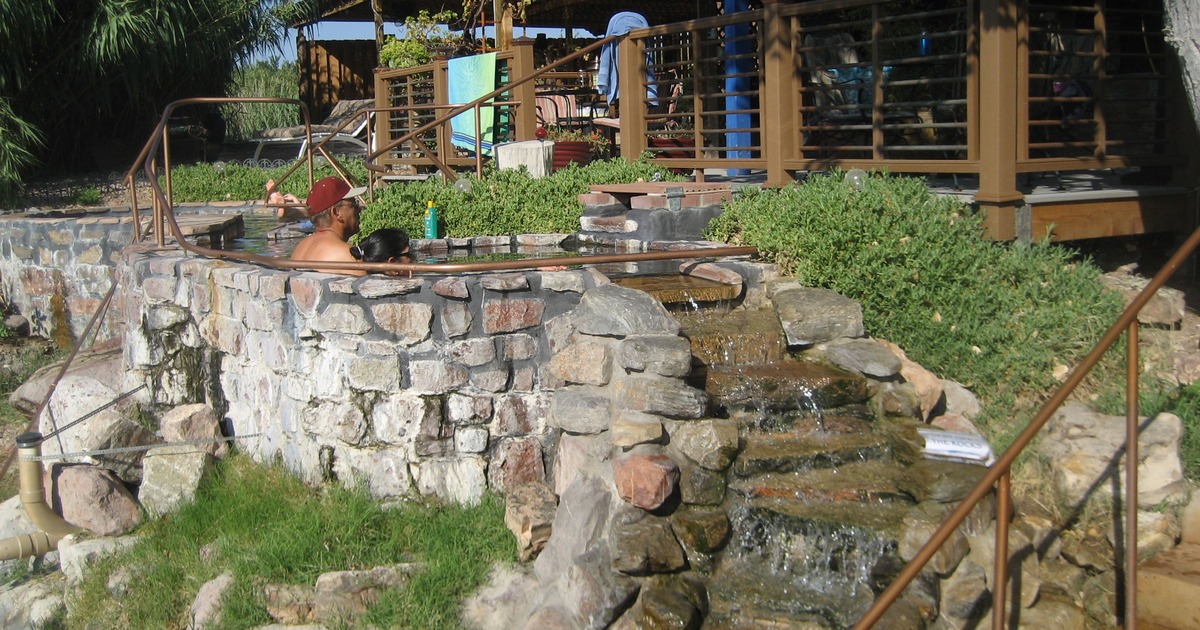
New Mexico is a hot springs state with a split personality, and that split is the key to planning a trip here. In the south, the town of Truth or Consequences is built around its thermal water, with commercial soaking pools in the middle of town. In the north, the Jemez Mountains hold forest pools and resort springs in a high, pine-covered landscape. In the southwest, the Gila country holds remote river springs reached by rough roads and trails. This guide maps 65 New Mexico thermal springs from USGS data, from the northern mountains to the southern desert. No New Mexico record in the dataset is classed as a hazard, so nothing is excluded on that ground, but not every mapped spring is a comfortable soak: 34 records carry lukewarm status, and 7 carry no dataset temperature at all, including the commercial Riverbend and Black Rock entries.
The best-known New Mexico soak depends on what kind of trip you want. Truth or Consequences is the easy answer: a small desert town where several soaking businesses sit within walking distance of each other, and where the water at the source records 113 degrees. Faywood Hot Springs, at 129 degrees at the source, is the southwestern resort name, set in the desert country near the Gila foothills. Jemez Springs, at 169 degrees at the source, is the northern mountain name, and its source temperature is a reminder that a hot source is not a hot pool: the water must be cooled and managed before anyone soaks in it.
One thing to know before you pick a spring: the temperatures in this guide are source temperatures, measured where the water comes out of the ground. Pools and tubs usually run cooler, because the water cools as it flows and mixes with cold water. A source listed at 189 degrees is not a 189-degree pool. Always check current conditions before you visit, since access, fees, and facilities change with the seasons.
We may earn a commission if you book through the links on this page, at no extra cost to you. That commission helps keep this guide free.
Planning a New Mexico soak trip? Compare places to stay across the state before you pick a spring.
How to use this guide
Start with the table below for the best-known springs, then open the interactive US hot springs map to see every New Mexico spring by location. Individual spring pages with directions, access notes, and photos will link from this hub as they publish. Base towns matter in New Mexico: Truth or Consequences covers the southern springs, Santa Fe and Albuquerque cover the Jemez and central springs, Taos covers the northern springs, and the southwestern Gila springs need a base in the Silver City area or a long day trip with a full tank and supplies. Areas in the table are broad regions, not driving distances, because the dataset groups springs by region rather than by road miles.
Best-known New Mexico hot springs
These twelve cover the full range of the state: town soaking pools, mountain resorts, and wild river springs. Temperatures are source temperatures from USGS data. Areas are broad regions from the dataset, not driving distances.
| Spring | Source temp | Area |
|---|---|---|
| Faywood Hot Springs | 129°F | Southwestern New Mexico |
| Truth Or Consequences | 113°F | Truth or Consequences area |
| Jemez Springs | 169°F | Jemez Mountains, Santa Fe area |
| Ojo Caliente (Arsenic Spring) | 111°F | Northern New Mexico, Taos area |
| Gila Hot Springs | 151°F | Gila area, southwestern New Mexico |
| San Francisco Hot Springs | 120°F | Gila area, western New Mexico |
| Spence Hot Springs | 100°F | Jemez Mountains, Santa Fe area |
| Montezuma Hot Springs | 138°F | Santa Fe area |
| Manby Hot Springs | 100°F | Taos area |
| Radium Springs | 127°F | Southern New Mexico |
| San Antonio Hot Spring | 129°F | Jemez Mountains, Santa Fe area |
| Mimbres Hot Springs | 136°F | Southwestern New Mexico |
Truth or Consequences: the town built on hot water
Truth or Consequences is the most approachable hot springs destination in New Mexico, and it is the place to start if you have never soaked in the state. The town sits on the Rio Grande in the southern part of the state, and its thermal water has supported soaking businesses for generations. The dataset records the Truth Or Consequences source at 113 degrees, which is hot water that must be cooled to a comfortable soaking temperature in the managed pools. That is the point of the town: the pools do that work for you, with set hours, set prices, and staff on site.
The town also makes a good base for the southern springs. Radium Springs, at 127 degrees at the source, sits in the southern New Mexico grouping, and the wider southern count includes many lukewarm sources that are better for a look than a soak. Riverbend Hot Springs is a commercial site in the town grouping, but the dataset records no temperature for it, so this guide makes no temperature claim for it: the operator’s current information is the source to check. For a first trip, the sensible plan is simple: book a room in town, soak at two or three pools, and treat the wild southern sources as a second trip, not a first day add-on.
Seasons are kind to the southern springs. Winter and the shoulder seasons are the classic soaking seasons in the desert, with mild air and comfortable water. Summer brings serious desert heat, so summer soaks belong at developed sites with shade, water, and staff, and the lukewarm southern sources will not feel like a hot soak in high summer air. No matter the season, check current hours and prices with the pool you plan to visit before you go.
The Jemez Mountains: forest pools and resort springs
The Jemez Mountains, northwest of Santa Fe, hold the densest cluster of well-known New Mexico springs in the dataset, and they feel like a different state from the southern desert. The landscape is pine forest and canyon country, the air is cooler, and the springs range from developed resort pools to short-hike forest pools. Jemez Springs itself records a 169-degree source, which is very hot water at the source and must never be entered as it comes out of the ground. Spence Hot Springs, at 100 degrees at the source, sits in the same Jemez grouping and is the classic forest pool in this range: warm enough to soak, reached by a trail, and best visited with a plan for parking and crowds.
San Antonio Hot Spring, at 129 degrees at the source, also sits in the Jemez grouping, and it shows the same pattern: a hot source feeding pools that run cooler once the water has flowed and mixed. Montezuma Hot Springs, at 138 degrees at the source, sits in the Santa Fe area grouping to the east of the Jemez, and it is the resort-style name in this section, with managed pools rather than a hike-in site. Soda Dam Hot Springs, at 117 degrees, and Mccauley Hot Springs, at 99 degrees, round out the Jemez list in the dataset, and both belong in the same planning conversation: a Jemez trip works best as a Santa Fe or Albuquerque day trip with one or two springs, not a race through five pools in one day.
Access is the honest warning for the Jemez. Forest roads can be rough, winter snow can close routes, and popular trail pools fill up on weekends. Check road and forest conditions before you set out, carry water and warm layers even in summer, and never assume a forest pool is staffed or that its water temperature is checked for you. Test the water before getting in, and keep children close at any unmanaged site.
The Gila country: remote river springs in the southwest
Southwestern New Mexico is the wild end of this guide. Gila Hot Springs, at 151 degrees at the source, sits in the Gila area, and San Francisco Hot Springs, at 120 degrees, sits in the western part of the same country. Faywood Hot Springs, at 129 degrees, is the developed resort in the southwest, and Mimbres Hot Springs, at 136 degrees, sits in the same broad southwestern grouping. The pattern here is distance: the springs are spread out, services are thin, and the drives between them are long. That is also the appeal, for visitors who want a quiet soak far from a town.
The Gila springs need more planning than the town pools or the Jemez day trips. Check road conditions, carry a full tank of fuel, food, and water, and confirm that the site you are heading for is open and reachable on the day. Several southwestern sources run hot at the source, including Gila at 151 degrees and Mimbres at 136 degrees, so soak only in managed pools and tubs where the water temperature is controlled. If a spring has no managed pool, treat it as a place to look at, not a place to soak. The Gila country rewards patience and punishes rushing, so build one spring per day into the plan and leave room for a slow drive back.
Faywood is the exception that proves the southwestern rule: a resort site where the soaking is managed, the hours are set, and the trip can be planned around a stay rather than a hike. If the Gila back roads feel like too much for a first southwestern trip, Faywood is the sensible base, with the wilder Gila springs as a day trip once you know the roads.
Northern New Mexico: Taos, Ojo Caliente, and Manby
Northern New Mexico holds the third cluster in this guide, grouped around Taos and the country to its southwest. Ojo Caliente (Arsenic Spring), at 111 degrees at the source, sits in the Taos area grouping, and it is the resort name in the north: a developed mineral springs resort with managed pools, set in a high desert landscape. Manby Hot Springs, at 100 degrees at the source, sits near Taos in the same grouping, and it is the wild counterpart: a riverside site reached on foot, with no facilities and no staff to manage the water for you.
The north also holds Black Rock Hot Springs, a commercial entry in the Taos grouping for which the dataset records no temperature, so this guide makes no temperature claim for it. The same plain rule applies as in the south: a site can be a fine place to soak while its source temperature is simply not in the USGS record. For both Ojo Caliente and Manby, the operator or managing agency information is the source to check, not this guide, and the difference between them is the whole northern lesson: managed resort pools and wild riverside pools are different trips, even when they sit in the same part of the state.
Taos itself is the best base for the north, with rooms, food, and fuel, and it pairs well with a mountain or art trip. Winter brings snow to the northern mountains, so winter trips need road checks and warm layers, and summer brings crowds to the popular riverside sites. As in the Jemez, test the water before getting in at any unmanaged pool, and never enter water at or near a hot source.
Planning a New Mexico hot springs trip
Pick your base first, then your springs. Truth or Consequences works for the southern town pools and as a base for the southern desert springs. Santa Fe and Albuquerque work for the Jemez Mountains and the central springs, with Santa Fe the closer base for the Jemez itself. Taos works for the northern springs, including Ojo Caliente and Manby. The southwestern Gila springs need a Silver City area base or a long, well-supplied day trip, and they should not be tacked onto a Truth or Consequences day as an afterthought.
Seasons change the experience more than most visitors expect. Winter and the shoulder seasons are the classic soaking seasons across the state: mild air in the south, cool mountain air in the Jemez and the north, and manageable conditions at the developed sites. Summer brings desert heat in the south and monsoon storms that can raise river levels and turn dirt roads to mud, so check forecasts and road conditions before any wild spring trip. No matter the season, check current conditions with the resort or managing agency before you leave, and carry what you need: remote desert and forest sites have long gaps between services.
Safety follows the same rule across the state. Source temperatures above 115 degrees can scald, and several New Mexico sources run hotter than that, including Sulphur Springs at 189 degrees, Jemez Springs at 169 degrees, Turkey Creek Hot Spring at 165 degrees, and Gila Hot Springs at 151 degrees. Never assume a source pool is safe to enter. Soak only in developed pools and tubs where the water temperature is managed, test the water before getting in, and keep children close. If a spring has no managed pool, treat it as a place to look at, not a place to soak.
New Mexico hot spring temperature guide
Source temperatures in this guide are grouped the way soakers actually feel them. Lukewarm sources under 95 degrees are pleasant on a hot day but will not feel like a hot soak, and they make up the largest share of New Mexico’s 65 mapped springs, with 34 records in that status. The classic soaking range runs from the high 90s to about 110 degrees, and it covers Spence, Manby, and Mccauley in the table and sections above. Sources from 111 to 130 degrees feed the tubs and pools most visitors enjoy, once the water has cooled or been mixed, and Faywood, Truth or Consequences, Ojo Caliente, San Francisco, Radium Springs, and San Antonio Hot Spring sit in this band. Anything above 130 degrees at the source is very hot water that must be cooled before it is safe, and Jemez Springs, Gila Hot Springs, Montezuma Hot Springs, and Mimbres Hot Springs fall in this range. The table above gives the source number for each spring; the pool you step into will read lower.
Etiquette and Leave No Trace
Hot springs etiquette is simple and it matters more at the popular forest pools and the small wild sites, where a handful of pools serve a lot of visitors. Soak quietly, keep your visit to a reasonable length when others are waiting, and leave the pools as you found them. Pack out everything you bring in, including trash, and never leave glass, food waste, or personal items at a spring. At wild springs, stay on trails, respect closures, and remember that many New Mexico springs sit on public land where the managing agency sets the rules. A clean, quiet soak is what keeps these places open.
Frequently asked questions
What is the best-known hot spring in New Mexico?
Truth or Consequences is the best-known hot springs town in the state: a small desert town on the Rio Grande where several soaking businesses sit within walking distance of each other. Its source records 113 degrees, and the managed pools cool the water to a comfortable soaking temperature.
Are New Mexico hot springs open in winter?
Developed resorts and commercial soaks stay open year round, and winter is a popular soaking season in the desert south. Mountain and forest sites are harder in winter, when snow can close roads in the Jemez and the north. Check road conditions and the managing agency’s current status before a winter trip.
Which New Mexico hot spring is best for families?
Families usually do best at developed resort and commercial pools, where the water temperature is managed, there are amenities, and the rules are clear. Truth or Consequences town pools, Faywood Hot Springs, and Ojo Caliente are resort-style options. Wild sites with unmanaged water, rough access, and river crossings suit adults who are comfortable with rustic conditions.
What is the hottest hot spring in New Mexico?
Sulphur Springs records the hottest source in the New Mexico dataset at 189 degrees, in the Jemez area grouping. That is a source temperature, not a pool temperature, and water that hot must never be entered at the source. Soak only in managed pools where the temperature is controlled.
How many hot springs are in New Mexico?
This guide maps 65 New Mexico thermal springs from USGS data, from lukewarm desert seeps to hot sources. No New Mexico record is classed as a hazard, so nothing is excluded on that ground. Individual spring pages with directions and access notes will link from this hub as they publish.
Source temperatures are measured at the spring source; pools and developed areas usually run cooler. Always check current conditions before visiting.