
Hot Springs / Texas
Texas Hot Springs: Big Bend Soaks
9 distinct thermal sites from 10 dataset records, from the Big Bend riverside soak to remote desert pools, with source temperatures, regions, and planning tips.
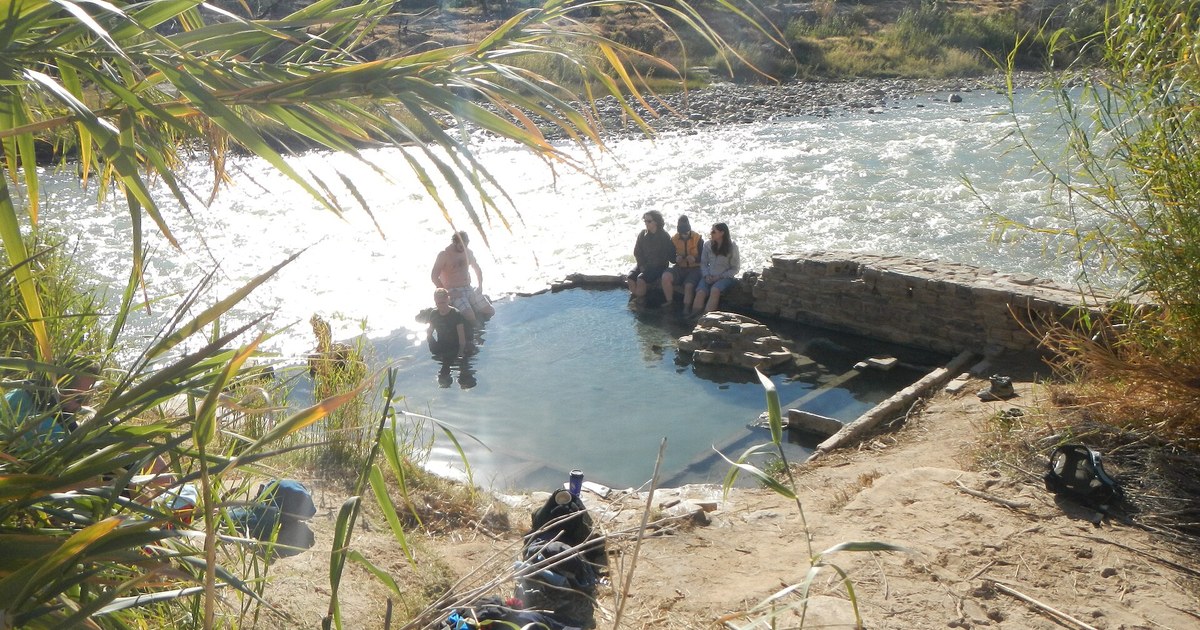
Texas is the small-set state in this guide, and that is the honest starting point. The dataset holds 10 Texas records, and they describe 9 distinct sites, every one of them in far West Texas. There is one true riverside hot soak, in Big Bend National Park, a handful of remote desert sources, and one famous cool pool that is not a hot soak at all. This guide maps all nine, and it keeps one line clear throughout: a source temperature is not a pool temperature, and a mapped record is not automatically a soaking site.
We may earn a commission if you book through the links on this page, at no extra cost to you. That commission helps keep this guide free.
Planning a Texas soak trip? Compare places to stay across the state before you pick a spring.
How to use this guide
Start with the table below for all nine sites, then open the interactive US hot springs map to see every Texas spring by location. Individual spring pages with directions, access notes, and photos will link from this hub as they publish. Areas in the table are broad regions, not driving distances, because the dataset groups springs by region rather than by road miles. West Texas runs on long drives between small towns, so pick one cluster per trip rather than trying to cover the whole set in a single run.
The counts behind this guide are plain. The dataset holds 10 Texas records. Two of them describe the same site: the USGS record named Hot Springs, at 106 degrees at the source, and the manual record named Boquillas Hot Springs are both the riverside soak in Big Bend National Park that is also called Langford Hot Springs. The National Park Service says the natural springs at the site are known as Boquillas Hot Springs. That leaves 9 distinct sites. Of those, 5 carry soakable status, 3 carry lukewarm status, and 1, Balmorhea State Park, carries no dataset temperature at all. This guide claims no dataset temperature for Balmorhea, and it claims no pool temperature for any spring: every number here is a source temperature unless the text says otherwise.
Read the soakable count with care. Only one of the five soakable sites has a developed riverside pool in this guide: Boquillas Hot Springs, at 106 degrees at the source. The other four are wild desert sources with no developed pool claimed here. The hottest mapped source, Indian Hot Springs, records 117 degrees at the source, which is too hot to enter. A dataset status label does not make a very hot source safe to enter. Soak only in developed pools where the water temperature is managed, and treat every unmanaged hot source as a place to look at, not a place to soak.
All nine Texas thermal sites
These nine are the complete Texas set in this guide: one Big Bend riverside soak, five remote desert sources, two warm riverbank springs, and one famous cool pool. Temperatures are source temperatures from USGS data. Areas are broad regions from the dataset, not driving distances.
| Spring | Source temp | Area |
|---|---|---|
| Boquillas Hot Springs (Langford Hot Springs) | 106°F | Big Bend National Park, Brewster County |
| Indian Hot Springs | 117°F | Hudspeth County, West Texas |
| Ruidosa Hot Springs | 113°F | Chinati country, Presidio County |
| Capote Springs | 99°F | Capote Falls country, Presidio County |
| Red Bull Spring | 99°F | Indian Hot Springs country, Hudspeth County |
| Rio Grande Village Spring | 97°F | Rio Grande Village country, Big Bend National Park |
| Nixon Spring | 90°F | Capote Falls country, Presidio County |
| Springs (Las Cienegas) | 86°F | Cerro Orona country, Presidio County |
| Balmorhea State Park | No dataset temp (pool 72-76°F) | Reeves County, West Texas |
Big Bend: the one true riverside soak
Langford Hot Springs: the bathhouse on the Rio Grande
Boquillas Hot Springs, also called Langford Hot Springs, is the one Texas soak most visitors should plan around. It sits in Big Bend National Park where Tornillo Creek enters the Rio Grande, about two miles west of Rio Grande Village and about four miles upriver from Boquillas Canyon. The dataset records 106 degrees at the source, and published guides usually cite 105 degrees at the pool itself. The spring is contained by the foundation remains of the old bathhouse, on the north bank of the river, with the Chisos Mountains in view and Mexico on the far bank.
The site carries more history than any other spring in this guide. J. O. Langford bought the land and springs in 1909, hoping the waters would help his health, and built a bathhouse and a small resort there. The settlement was called Hot Springs, and a post office by that name was established at the site in July 1914. The bathhouse is long gone, and the site was placed on the National Register of Historic Places in 1974. What remains is the foundation pool, the ruins of the resort, and the river beside it. A short walk from the trailhead parking area reaches the pool, and the trail passes petroglyphs and resort ruins on the way in.
Plan this soak around the river, not around a timetable. The pool is frequently submerged by the Rio Grande, so a high river can cover it completely, and desert storms can close the trail with little warning. Check current park conditions before you set out, and check them again on arrival. When the pool is open and the river is low, it is a shallow riverside soak, not a deep tub: sit in the foundation pool, watch the water level, and leave the ruins as you found them. This is the only Texas spring in this guide with a developed soaking pool you can plan a trip around.
Rio Grande Village Spring and the river springs
Rio Grande Village Spring, at 97 degrees at the source, sits in the same river country, and it is a warm spring, not a hot one. The National Park Service notes that along a stretch beginning upstream of Rio Grande Village, a series of thermal springs emerge adjacent to the Rio Grande, all believed to be related to normal faults. These are riverbank seeps, not developed pools, and several small springs line the river in this stretch.
Do not plan a soak around a riverbank seep. The Langford pool is the one managed riverside soak in the park, and the other river springs are places to notice on a river trip, not destinations on their own. If you are floating the Rio Grande or walking the river trails, the warm seeps are part of the landscape. If you want a soak, walk to the Langford pool instead, and only when the park says it is open.
West Texas desert springs
The hottest sources: Indian and Ruidosa
Indian Hot Springs, at 117 degrees at the source, sits in the Hudspeth County desert, and it is the hottest mapped source in Texas. Ruidosa Hot Springs, at 113 degrees at the source, sits in the Chinati country of Presidio County. Both are very hot sources that feed no developed pool in this guide, and both sit in remote desert country far from services.
Water at 113 degrees and 117 degrees at the source can scald, and neither site offers a managed pool where the temperature is controlled. Treat both as look-only features: remote desert sources to know about, not places to enter. The desert around them is the other half of the plan. Carry water, carry fuel, tell someone your route, and check access before you set out, because much of this country is private ranch land and the roads are long, rough, and thinly signed.
The Capote Falls and Las Cienegas country
Capote Springs, at 99 degrees at the source, and Nixon Spring, at 90 degrees at the source, sit in the Capote Falls country of Presidio County. Red Bull Spring, at 99 degrees at the source, sits in the Indian Hot Springs country of Hudspeth County. Springs (Las Cienegas), at 86 degrees at the source, sits in the Cerro Orona country of Presidio County. Capote and Red Bull sit in the classic soaking range at the source, while Nixon and Las Cienegas are lukewarm to warm.
All four are wild sources with no developed pool claimed in this guide. Their value is the map, not a soak: they show how the thermal water runs through the West Texas desert, from the Capote Falls country to the Rio Grande. Visit them as desert country, not as resorts. Check access first, because private land and rough roads shape every plan out here, and carry what you need: the gaps between services in Presidio and Hudspeth counties are long.
Balmorhea: the cool pool that is not a hot soak
Balmorhea State Park holds the most visited spring-fed pool in Texas, and it is not a hot soak. The pool covers 1.3 acres and holds about 3.5 million gallons of water fed by San Solomon Springs, which pushes more than 15 million gallons of fresh water through the pool every day. The water holds steady between 72 and 76 degrees all year, and the pool is described as the largest spring-fed swimming pool in the world. The Civilian Conservation Corps built the park in the 1930s, and it sits in Reeves County near Toyahvale.
The dataset carries no temperature for Balmorhea, so this guide claims no dataset temperature for it. The 72 to 76 degree figure is the pool’s published range, not a source temperature, and it is the reason Balmorhea belongs in this guide as a clearly labelled exception: a cool swim, not a hot soak. On a summer day when the desert air runs past 100 degrees, that cool water is the relief. In winter it feels bracing, and it is still swimmable year-round. The park often reaches capacity, so check the park’s current reservation information before you go, and plan warm-up breaks in the sun for children, because 72 degree water chills fast on a breezy day.
Famous Texas springs that are not hot springs
Barton Springs and Krause Springs, stated plainly
Readers will ask where Barton Springs is, so this guide answers plainly. Barton Springs Pool, in Zilker Park in Austin, holds 68 to 70 degrees year-round, fed by underground springs from the Edwards Aquifer, according to the City of Austin. It is a cold spring-fed pool, not a thermal spring, so it is not in the thermal dataset this guide maps. It is one of the great swimming pools in Texas, and it is not a hot spring.
Krause Springs, near Spicewood, is the same story: a collection of cool spring-fed pools and a natural swimming hole, not a thermal source. Neither site appears in the dataset, and neither belongs in a hot springs table. Texas has famous spring water and very little hot water, and this guide keeps the two apart so nobody drives to Austin expecting a hot soak.
Planning a Texas hot springs trip
Base in Big Bend country first
Base in Big Bend country first, then add the rest only if you have the days. Alpine, Marfa, and Terlingua are the usual bases for the Big Bend country, and the Langford pool is the reason to go. The desert sources and Balmorhea are separate drives, not stops on one loop: the Hudspeth County sources sit toward El Paso, Balmorhea sits near Toyahvale in Reeves County, and the Presidio County sources sit in ranch country of their own. Do not try to cover Big Bend, the Hudspeth desert, and Balmorhea in a single day.
Big Bend is a long drive from every Texas city, and that shapes the whole trip. Plan fuel and water before you enter the park, because services inside it are few and far between, and cell service is thin in the park. Check current park conditions before you set out, and check them again on arrival, because river levels, trail closures, and weather move faster than any guide can track. The desert rewards a slow plan: one cluster, one base, and time to wait out a closed trail.
Seasons and safety
Seasons change the experience more than most visitors expect. Summer brings desert air past 100 degrees, and the cool Balmorhea pool is the relief, while the Langford pool feels hottest when the air is hottest. Winter brings mild days and cold desert nights, and it is the best soaking season at Boquillas, but daylight is short and desert mornings are cold. Spring and fall often give the best balance: manageable heat, open trails, and comfortable soaking weather. No matter the season, check current conditions with the park before you leave, and carry what you need: remote sites have long gaps between services.
Safety follows the same rule across the state. Source temperatures above 115 degrees can scald, and Indian Hot Springs at 117 degrees and Ruidosa Hot Springs at 113 degrees sit in that range. Never assume a source pool is safe to enter. Soak only in developed pools where the water temperature is managed, test the water before getting in, and keep children close. At the Langford pool, watch the river level: a rising Rio Grande can cover the pool, and a flooded trail is a reason to turn back, not to push on. If a spring has no managed pool, treat it as a place to look at, not a place to soak.
Texas hot spring temperature guide
Lukewarm sources
Source temperatures in this guide are grouped the way soakers actually feel them. Lukewarm sources under 98 degrees are pleasant on a hot day but will not feel like a hot soak, and they make up 3 of Texas’s 9 distinct sites: Nixon Spring at 90 degrees, Springs (Las Cienegas) at 86 degrees, and Rio Grande Village Spring at 97 degrees. If your goal is a hot soak, skip the lukewarm list and start with the soakable records instead.
The classic soaking range
The classic soaking range runs from the high 90s to about 110 degrees, and three Texas sites sit in it: Capote Springs at 99 degrees, Red Bull Spring at 99 degrees, and Boquillas Hot Springs at 106 degrees. Boquillas is the only one of the three with a developed riverside pool in this guide, and it is the only classic-range soak most visitors will actually use. Capote and Red Bull are wild sources at the right temperature with no developed pool claimed here, so their numbers describe the ground, not a tub you can step into.
Hot sources and unknown temperatures
Anything above 110 degrees at the source is very hot water that must be cooled before it is safe, and two Texas sites sit in that range: Ruidosa Hot Springs at 113 degrees and Indian Hot Springs at 117 degrees. Both are look-only features in this guide, with no managed pool and no safe entry at the source. Balmorhea is the one unknown-temperature record: the dataset carries no temperature for it, and the 72 to 76 degree figure is the pool’s published range, not a source temperature. For Balmorhea, the park’s current information is the source to check, not this guide.
Etiquette and Leave No Trace
Hot springs etiquette is simple and it matters more at the popular wild sites, where a handful of pools serve a lot of visitors. Soak quietly, keep your visit to a reasonable length when others are waiting, and leave the pools as you found them. Pack out everything you bring in, including trash, and never leave glass, food waste, or personal items at a spring. At wild springs, stay on trails, respect closures, and remember that many Texas springs sit on public, park, or private land where the owner or managing agency sets the rules. Do not cross fences, do not block gates, and leave wildlife and livestock alone. A clean, quiet soak is what keeps these places open.
Frequently asked questions
What is the best-known hot spring in Texas?
Boquillas Hot Springs, also called Langford Hot Springs, is the best-known Texas soak in this guide: a riverside pool in the old bathhouse foundation in Big Bend National Park, at 106 degrees at the source, where Tornillo Creek meets the Rio Grande.
Can you swim at Balmorhea State Park?
Yes. Balmorhea State Park holds a 1.3-acre spring-fed pool fed by San Solomon Springs, holding 72 to 76 degrees year-round. It is a cool swim, not a hot soak, and the dataset carries no temperature for it.
Why is Barton Springs not in this guide?
Barton Springs Pool in Austin holds 68 to 70 degrees year-round, fed by underground springs from the Edwards Aquifer. It is a cold spring-fed pool, not a thermal spring, so it is not in the thermal dataset this guide maps.
What is the hottest hot spring in Texas?
Indian Hot Springs records the hottest mapped source in the Texas dataset at 117 degrees. That is a source temperature, not a pool temperature, and water that hot must never be entered.
How many hot springs are in Texas?
This guide maps 9 distinct Texas thermal sites from 10 dataset records: two records describe the same Boquillas Hot Springs site. Five carry soakable status, three are lukewarm, and one, Balmorhea, carries no dataset temperature.
Source temperatures are measured at the spring source; pools and developed areas usually run cooler. Always check current conditions before visiting.