
Hot Springs / Virginia
Virginia Hot Springs: All 13 Springs
11 distinct thermal sites from 13 dataset records, led by the historic Bath County pools, with source temperatures, areas, and planning tips.
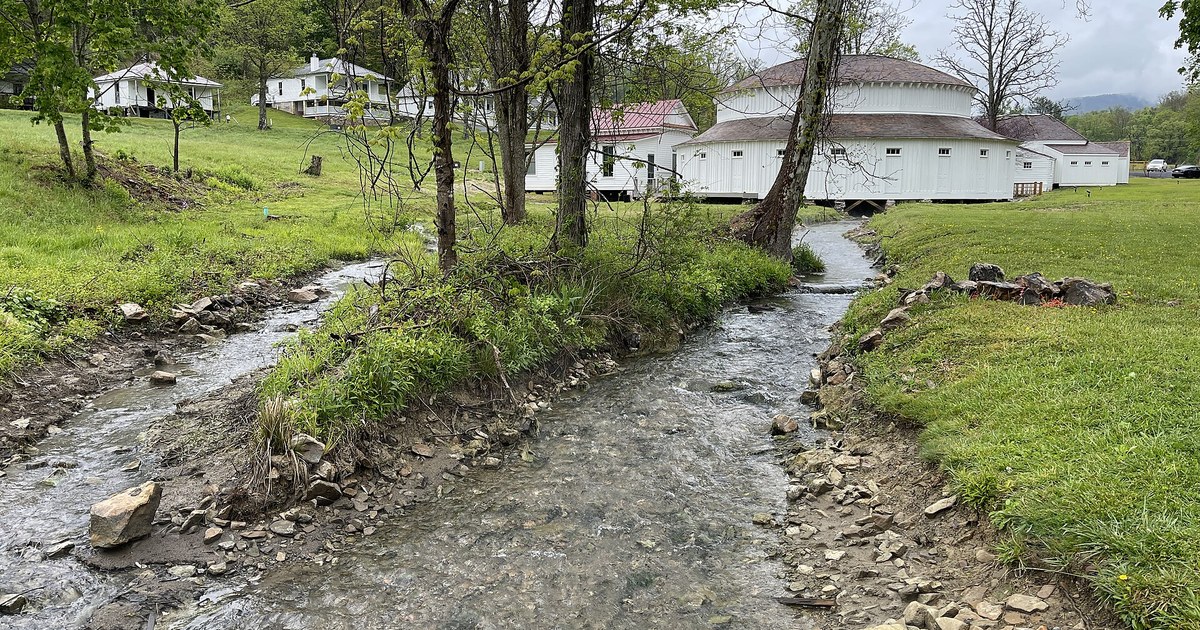
Virginia is the historic-set state in this guide, and that is the honest starting point. The dataset holds 13 Virginia records. They describe 11 distinct sites, nearly all of them in Bath County, in the Alleghany Mountains of western Virginia. There is one true hot soak: the Bath County pools that have drawn visitors since the 1700s. The rest are quiet lukewarm springs, better for looking than for soaking. This guide maps all eleven. A source temperature is not a pool temperature. A mapped record is not automatically a soaking site.
We may earn a commission if you book through the links on this page, at no extra cost to you. That commission helps keep this guide free.
How to use this guide
Start with the table below for all eleven sites, then open the interactive US hot springs map to see every Virginia spring by location. Individual spring pages with directions, access notes, and photos will link from this hub as they publish. Areas in the table are broad regions, not driving distances, because the dataset groups springs by region rather than by road miles. Bath County holds most of the set, so base there first and treat the rest as day-trip look-ins rather than stops on one loop.
The counts behind this guide are plain. The dataset holds 13 Virginia records. Two pairs of records describe the same site. The USGS record named Hot Springs, at 106 degrees at the source, and the manual record named The Omni Homestead sit on the same ground in the town of Hot Springs. They share the same coordinates, and the resort was built around these springs in 1766. The USGS record named Warm Springs, at 95 degrees at the source, and the manual record named Jefferson Pools are the same site in the town of Warm Springs. The pools were called Jefferson Pools through the 20th century. The name returned to Warm Springs Pools in 2021, and the pools are fed by the Warm Springs source.
That leaves 11 distinct sites. Of those, 1 carries soakable status and 10 carry lukewarm status, and none carries an unknown temperature after the two merges. This guide claims a dataset temperature for every site. It claims no pool temperature for any spring. Every number here is a source temperature unless the text says otherwise.
Read the soakable count with care. Only one site carries soakable status: Hot Springs, at 106 degrees at the source, the source that feeds The Omni Homestead Resort. The resort pools run cooler than the source, and published guides put the resort pools near 98 degrees. The Warm Springs Pools are the other developed soak in this guide. The dataset records 95 degrees at the Warm Springs source, while the resort publishes a steady 98 degrees for the pools themselves. The two numbers describe two different points, the source and the pool, and both are given here so neither is mistaken for the other. A dataset status label does not make a very hot source safe to enter. Soak only in developed pools where the water temperature is managed. Treat every unmanaged source as a place to look at, not a place to soak.
All eleven Virginia thermal sites
These eleven are the complete Virginia set in this guide. They are one historic resort soak, one historic poolhouse soak, and nine quiet lukewarm springs. One of the nine is a waterfall, not a soak at all. Temperatures are source temperatures from USGS data. Areas are broad regions from the dataset, not driving distances.
| Spring | Source temp | Area |
|---|---|---|
| Hot Springs (The Omni Homestead) | 106°F | Hot Springs, Bath County |
| Warm Springs (Warm Springs Pools, formerly Jefferson Pools) | 95°F (pools 98°F) | Warm Springs, Bath County |
| Healing Springs | 86°F | Near Warm Springs, Bath County |
| New River White Sulphur Springs | 85°F | New River country, Giles County |
| Falling Spring | 77°F | Near Covington, Alleghany County |
| Bragg Spring | 75°F | Bath County |
| Sweet Chalybeate Spring | 75°F | Alleghany County |
| Bolar Spring | 73°F | Near Warm Springs, Bath County |
| Rockbridge Baths | 72°F | Goshen country, Rockbridge County |
| Layton Spring | 72°F | Near Covington, Alleghany County |
| Alum Springs | 72°F | Fredericksburg |
Bath County: the historic pools
The Omni Homestead: the resort on the Hot Springs source
The Omni Homestead Resort, in the town of Hot Springs, is the reason most visitors come to Virginia for hot water. It was built in 1766 around the mineral springs, it is a National Historic Landmark, and it is described as America’s first resort. It has hosted more than 20 United States presidents, and its mineral waters have been celebrated for their healing properties for over 250 years. The dataset records 106 degrees at the Hot Springs source, and the resort pools run cooler than that, near 98 degrees in published guides.
The resort is a full stay, not a day-use soak. The grounds hold a spa, a spring-fed garden pool, and a Serenity Garden with an infinity pool. The Allegheny Springs water park is fed by the area’s natural hot springs. The Warm Springs Pools, about five miles north of the resort, are part of the same property. They run on separate reservations, with a shuttle between the two. Book the resort first and the pools second. Check current pricing and availability with the resort before you travel: rooms and pool sessions both sell out in peak season.
Warm Springs Pools: the oldest spa structures in America
The Warm Springs Pools, in the town of Warm Springs, are the oldest spa structures in America. The Gentlemen’s Pool House was built in 1761 around an octagonal stone basin. It is described as the oldest European-style spa structure in the United States. The pools hold a steady 98 degrees. They are fed by mineral springs that flow at about 1.7 million gallons a day. The water carries magnesium sulfate, iron, silica, and other minerals. Thomas Jefferson bathed here three times a day for three weeks and called the waters of the first merit in a letter to his daughter.
The pools were called Jefferson Pools through the 20th century, and the name returned to Warm Springs Pools in 2021. Bath County ordered the pools closed in October 2017 because the wooden structures had deteriorated. The resort spent about 4 million dollars on a 14-month rehabilitation. The pools reopened to the public in December 2022. Soaks are ticketed and timed, about 35 dollars a session on weekdays. Some sessions are single-sex and clothing-optional. Others are co-ed and require bathing suits. Check the resort for current pricing and book ahead, because sessions are limited and the pools are small.
Healing Springs and the quiet Bath County springs
Healing Springs, at 86 degrees at the source, sits about seven miles south of Warm Springs. It is the warmest of the quiet Bath County springs. Bolar Spring, at 73 degrees, and Bragg Spring, at 75 degrees, sit in the same Bath County country near Warm Springs. All three are wild springs with no developed pool claimed in this guide, and none of them is a resort or a bathhouse.
Treat these three as look-ins on a Bath County drive, not as soaking destinations. They show how the thermal water runs through the Warm Springs valley. It runs from the hot source at Hot Springs to the warm source at Warm Springs, then to the cooler seeps around them. The valley holds about 100 thermally warmed springs along the Virginia and West Virginia border, according to the state tourism office. Most of them are small, undeveloped, and on private land. Do not assume access, and do not enter water you cannot verify is managed.
The rest of the Virginia set
Falling Spring: a waterfall, not a soak
Falling Spring is the one entry in this guide that is not a soaking spring at all. The spring, at 77 degrees at the source, feeds an 80-foot waterfall just off Route 220, about five miles north of Covington. The falls are one of the most photographed roadside stops in the region. The water drops over a rock face into the valley below, and there is no pool to enter.
Stop for the view and keep driving. The falls are a scenic attraction in Virginia’s historic hot springs region, not a hot spring destination. This guide lists the site only because the dataset records it as a thermal spring. Do not plan a soak here, and do not climb the falls.
The Alleghany and Rockbridge springs
Sweet Chalybeate Spring, at 75 degrees at the source, sits in Alleghany County. Layton Spring, at 72 degrees, sits near Covington. Rockbridge Baths, at 72 degrees, sits in the Goshen country of Rockbridge County. New River White Sulphur Springs, at 85 degrees, sits in the New River country of Giles County. All four are lukewarm wild sources with no developed pool claimed in this guide.
These four are the quiet end of the Virginia set. Their value is the map, not a soak. They show the thermal water running east from the Bath County valley into the Alleghany highlands and the New River country. Visit them as countryside, not as resorts. Check access first: springs in this part of Virginia often sit on private land with no public entry.
Alum Springs: the Fredericksburg outlier
Alum Springs, at 72 degrees at the source, is the outlier of the Virginia set: the only site east of the mountains, in Fredericksburg. It sits in Alum Spring Park, a 34-acre wooded park on the edge of town. The spring’s cool, clear water runs through a forested hollow. The water holds a steady 72 degrees year-round.
Think of Alum Springs as a cool park spring, not a hot soak. On a hot summer day it is a shady walk and a cold-water wade. It is the easiest Virginia spring in this guide to reach without a mountain drive. It is also the clearest proof that Virginia’s thermal set is small and scattered. There is one historic resort valley in the west, and one cool park spring in the east.
Springs that are not what they seem
Blowing Springs, Massanutten, and Bedford Springs
Readers will meet three names in other Virginia hot springs lists that do not belong in this guide, so this section answers them plainly. Blowing Springs, in Highland County, is a natural curiosity where cool air blows out of underground rocks at a steady 58 degrees. It is an air vent, not a spring, and there is no soaking water there. The Massanutten Resort’s Shenandoah Hot Springs are temperature-controlled resort pools, not natural thermal springs. They run at 102 to 104 degrees because the resort heats them. The Omni Bedford Springs Resort is a historic resort, but it stands in Pennsylvania, not Virginia, and it appears in Virginia lists by mistake.
None of the three appears in the thermal dataset this guide maps, and none belongs in a Virginia hot springs table. Virginia has one real historic hot springs valley and a handful of lukewarm sources. This guide keeps that small, honest set apart from resort pools and out-of-state names. Nobody should drive to the wrong place expecting a natural soak.
Planning a Virginia hot springs trip
Base in Bath County first
Base in Bath County first, then add the rest only if you have the days. Hot Springs and Warm Springs are two small villages on Route 220, about five miles apart. The Homestead is the base for the whole valley. Book the resort and the Warm Springs Pools sessions before you travel, because both are limited and both sell out. Healing Springs, Bolar Spring, and Bragg Spring are short drives from the same base. Falling Spring is a roadside stop on the way in or out through Covington.
The rest of the set is a separate drive, not a stop on one loop. Rockbridge Baths and the Alleghany springs sit in their own country to the east and south. New River White Sulphur Springs sits in Giles County. Alum Springs sits in Fredericksburg, hours from Bath County. Do not try to cover the valley, the Alleghany springs, and Fredericksburg in a single day. Pick one cluster, give it the time, and save the rest for another trip.
Seasons and safety
Seasons change the experience more than most visitors expect. Winter is the best soaking season at the Bath County pools: cold mountain air, steaming water, and thin crowds. Summer brings warm days when the cool springs are the relief, and the pools feel hottest when the air is hottest. Spring and fall often give the best balance: manageable heat, open roads, and comfortable soaking weather. No matter the season, check current conditions with the resort before you leave. Pool sessions, road work, and weather move faster than any guide can track.
Safety follows the same rule across the state. Source temperatures above 104 degrees can scald. The Hot Springs source at 106 degrees sits in that range, so never assume a source pool is safe to enter. Soak only in developed pools where the water temperature is managed, test the water before getting in, and keep children close. At wild springs, stay on public roads and trails. Respect fences and private land. Treat every unmanaged source as a place to look at, not a place to soak. If a spring has no managed pool, the answer is the view, not the water.
Virginia hot spring temperature guide
Lukewarm sources
Source temperatures in this guide are grouped the way soakers actually feel them. Lukewarm sources under 98 degrees are pleasant on a warm day but will not feel like a hot soak. They make up 10 of Virginia’s 11 distinct sites. The warmer five are Warm Springs at 95 degrees, Healing Springs at 86 degrees, New River White Sulphur Springs at 85 degrees, Falling Spring at 77 degrees, and Bragg Spring at 75 degrees. The cooler five are Sweet Chalybeate Spring at 75 degrees, Bolar Spring at 73 degrees, Rockbridge Baths at 72 degrees, Layton Spring at 72 degrees, and Alum Springs at 72 degrees. If your goal is a hot soak, skip the lukewarm list and start with the two Bath County pools instead.
The classic soaking range
The classic soaking range runs from the high 90s to about 110 degrees, and Virginia’s two developed soaks sit in it. The Warm Springs Pools hold a steady 98 degrees. The Hot Springs source records 106 degrees, with the resort pools running cooler than the source. Both are managed pools where the water temperature is controlled, and they are the only two classic-range soaks in this guide. Every other Virginia site is lukewarm, wild, or both, so the pools are the whole soaking story in this state.
Hot sources and unknown temperatures
Only one Virginia site records a source above 100 degrees: Hot Springs, at 106 degrees, the source that feeds The Omni Homestead Resort. That is a source temperature, not a pool temperature. Water that hot must be cooled before it is safe, which is exactly what the resort pools do. There is no unknown-temperature site left in this guide. After the two merges, every Virginia site carries a dataset temperature. This guide claims no temperature it cannot source.
Etiquette and Leave No Trace
Hot springs etiquette is simple and it matters most at the small historic pools, where a handful of bathers share a small space. Soak quietly, keep your visit to a reasonable length when others are waiting, and leave the pools as you found them. Pack out everything you bring in, including trash, and never leave glass, food waste, or personal items at a spring. At wild springs, stay on trails, respect closures, and remember that many Virginia springs sit on private land where the owner sets the rules. Do not cross fences, do not block gates, and leave wildlife and livestock alone. A clean, quiet soak is what keeps these places open.
Frequently asked questions
What is the best-known hot spring in Virginia?
The Warm Springs Pools, in the town of Warm Springs, are the best-known Virginia soak in this guide. The historic bathhouses hold a steady 98 degrees, and the Gentlemen’s Pool House was built in 1761. It is the oldest European-style spa structure in the United States. The Omni Homestead Resort, about five miles south in Hot Springs, is the historic resort built around the 106-degree Hot Springs source.
Can you soak at the Warm Springs Pools?
Yes. The Warm Springs Pools reopened to the public in December 2022 after a 14-month rehabilitation. Soaks are ticketed and timed, about 35 dollars a session on weekdays. Some sessions are single-sex and clothing-optional. Others are co-ed and require bathing suits. Check the resort for current pricing and book ahead.
Why is Falling Spring not a soak?
Falling Spring is an 80-foot waterfall fed by a 77-degree spring, just off Route 220 near Covington. It is a roadside scenic stop with no pool to enter, so this guide lists it as a waterfall, not a soaking spring.
What is the hottest hot spring in Virginia?
Hot Springs records the hottest mapped source in the Virginia dataset at 106 degrees. That is a source temperature, not a pool temperature: the source feeds The Omni Homestead Resort, and the resort pools run cooler than the source.
How many hot springs are in Virginia?
This guide maps 11 distinct Virginia thermal sites from 13 dataset records. Two pairs of records describe the same site: the Hot Springs source with The Omni Homestead, and the Warm Springs source with the Warm Springs Pools. One site carries soakable status and ten are lukewarm.
Source temperatures are measured at the spring source; pools and developed areas usually run cooler. Always check current conditions before visiting.