An Isle of Skye road trip is best done slowly, with a car, a base, and a plan for the roads as much as for the sights. Skye is not a place to rush through in a day. The island is large, the roads are narrow in places, the weather changes fast, and the most famous stops are busy in summer. Done right, a Skye road trip is a loop of mountains, coast, castles, waterfalls, and quiet single track roads, with time to stop, walk, and eat along the way. This guide gives you a sensible route order, practical driving tips, and the stops that matter most, without turning into a list of every place on the island.
Getting to Skye
Most visitors drive to Skye over the Skye Bridge, which connects the mainland at Kyle of Lochalsh with Kyleakin on the island. It is the main road access, it is free to cross, and it makes Skye a straightforward extension of a Highlands road trip. From Edinburgh, the usual driving route runs north through the Highlands, past Loch Ness and the Great Glen, and on to Kyle of Lochalsh. From Inverness, the route is shorter, running west through the Highlands to Kyle of Lochalsh. Both routes are scenic in their own right, so allow a full day for the drive in either direction rather than treating it as a quick transfer. Ferries are an alternative: services run to Skye from the mainland, including from Mallaig to Armadale in the south of the island, and from other Hebridean islands. Ferries suit travellers who are already on the west coast or island hopping, but check current services before you travel, as timetables change by season. This guide gives no ferry times or prices, as they change, and the bridge remains the simplest option for most road trips.
Planning your trip
How many days you need depends on how much walking you want to do, but two to three full days on the island is a good minimum for a road trip. One day is not enough: you would spend most of it driving and queuing for parking, and you would miss the walks that make Skye special. Three days lets you do the north, the west, and the south at a sensible pace, with a spare half day for weather. Skye weather is changeable all year, with rain, wind, and low cloud possible even in summer, so pack waterproofs, warm layers, and sturdy walking shoes, and keep a backup plan for wet days. The best time to visit for most travellers is late spring to early autumn, when days are long and most facilities are open, but that is also when Skye is busiest. Summer brings crowds at Old Man of Storr and the Fairy Pools, so start early, and consider visiting the busiest stops first thing in the morning. Winter is quieter and moodier, with short days and a higher chance of road disruption, so it suits experienced drivers who are happy with a slower trip.
The route, in order
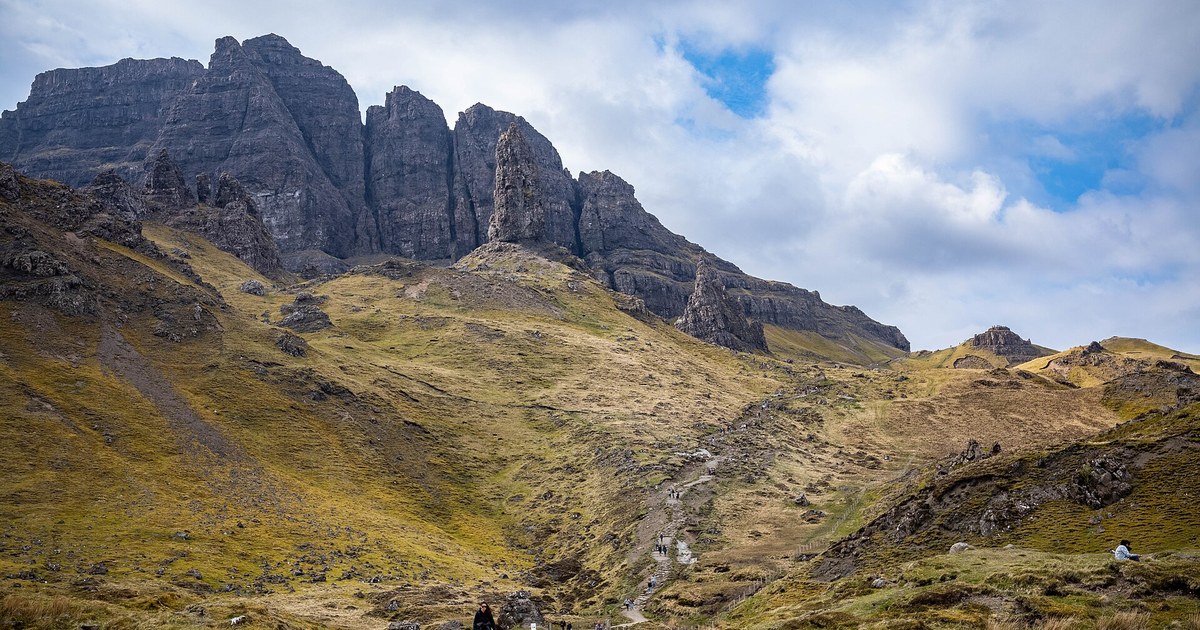
Start from the bridge at Kyleakin and head north to Portree, the island’s main town and the best base for a road trip. Portree has the most accommodation, food, and fuel options, and it sits in the middle of the island, which makes day loops easier. From Portree, the north loop is the classic Skye day. Head north to Old Man of Storr, the famous rock pinnacle above the Trotternish ridge, and walk up for the views if the weather allows. Continue north to the Quiraing, a landslip landscape of cliffs, pinnacles, and hidden valleys, with a road through it and walks of different lengths. From there, follow the north coast past Kilt Rock, a sea cliff named for its striped rock, and on to the northern tip of the island. This loop is the heart of a Skye road trip, and it deserves a full day, not a rushed afternoon.
Next, head west to Dunvegan and the west coast. Dunvegan Castle, home of Clan MacLeod, sits on the west side of the island, with gardens and a loch setting, and it is one of the few historic houses on Skye that is open to visitors. From Dunvegan, drive on to Neist Point Lighthouse, at the westernmost tip of the island, where a walk leads out to the lighthouse above steep cliffs and the sea. The west coast is quieter than the north, and it suits a slower day, with time for walks, wildlife watching, and a stop for food in Dunvegan or nearby villages. Keep an eye out for Highland cattle in fields along the road, and for seabirds along the coast, especially in spring and summer.
Finally, head south to the Fairy Pools and the southern island. The Fairy Pools, near Glenbrittle in the Cuillin foothills, are a series of clear blue pools and small waterfalls, reached by a walk from the car park. They are beautiful and very popular, so go early, wear good shoes, and do not expect solitude in summer. Nearby, Fairy Glen, near Uig, is a small, strange landscape of grassy mounds and a tiny castle-like rock, and it is a good short stop on the way north or south. Talisker Distillery, on the west coast near Carbost, is one stop for whisky lovers, with tours and tastings, and it pairs well with a drive along Loch Harport. End the loop back through Broadford, the second town on the island, and Kyleakin, where you crossed the bridge in. Broadford and Kyleakin also work as alternative bases if Portree is full, with accommodation and food, though fewer options than Portree.
Driving Skye
Driving is the part of a Skye road trip that catches people out, so it deserves its own section. Many Skye roads are single track, with passing places marked by signs. Drive on the left, as in the rest of the UK, and use passing places to let oncoming traffic through: if a passing place is on your left, pull in and wait, and if it is on your right, stop opposite it and let the other driver pull in. Do not park in passing places, and do not block them, as they are part of the road, not parking spots. Take your time, especially on blind bends and hills, and be ready for sheep, cattle, and slow vehicles. Parking at the busiest stops, especially Old Man of Storr and the Fairy Pools, fills early in summer, so arrive early or late in the day, and do not park on verges or in gateways. Fuel is available in Portree, Broadford, and a few other villages, but stations are fewer than on the mainland, so fill up when you can rather than running low on a remote road. A paper map or an offline map on your phone is worth having, as mobile signal is patchy in parts of the island.
Where to stay
Portree is the best base for most road trips, with the widest choice of accommodation, from hotels and guesthouses to self catering cottages, plus restaurants, shops, and fuel. Broadford, in the south, and Kyleakin, near the bridge, are good alternatives if Portree is full, with a smaller but still useful range of places to stay and eat. Uig, in the north, and Dunvegan, in the west, suit travellers who want a quieter base and are happy to drive further each day. Book early, especially in summer, as Skye accommodation fills fast, and consider staying in one base for the whole trip rather than moving every night, which saves packing time and lets you learn the roads. This guide gives no hotel names or rates, as they change by season, and the choice of base matters more than any single property.
Food on Skye
Skye food is simple and local: seafood, lamb, and traditional Scottish fare, with cafes and restaurants in Portree, Broadford, Dunvegan, and Uig, plus smaller village cafes along the route. Book restaurants in advance in summer, especially for dinner, as the best places fill up, and carry snacks and water for walks, as there are few shops on remote roads. A distillery visit, a seafood lunch, and a quiet evening meal in Portree make a good end to a driving day, and they are part of the trip, not an afterthought.
Frequently asked questions
How many days do I need for an Isle of Skye road trip? Two to three full days on the island is a good minimum. One day is not enough to see the north, west, and south at a sensible pace, and it leaves no room for weather or walking. Three days lets you do each part of the island properly, with a spare half day for rain.
Do I need a car on Skye? Yes, for a road trip. Public transport exists, but it does not reach all the stops in this guide at the times you will want, and it does not give you the freedom to stop, wait out rain, or change plans. A car, and confidence on single track roads, is the practical way to do Skye.
When is the best time to visit Skye? Late spring to early autumn gives the longest days and the most open facilities, but also the most visitors. Summer is busiest at Old Man of Storr and the Fairy Pools, so start early. Winter is quieter, with short days and a higher chance of disruption, and it suits experienced drivers.
Are Skye roads hard to drive? They are narrow in places, but not hard if you take your time. Learn the passing place rules before you go, do not park in passing places, fill up when you can, and allow more time than a map suggests. The roads are part of the experience, not an obstacle to it.
Can I do Skye in a day from Edinburgh or Inverness? Honestly, no, not well. The drive in and out alone takes most of a day, and you would see Skye through a car window rather than on foot. If you only have a day, choose one area, such as Portree and the north, and save the rest for a longer trip.
Skye rewards a slow road trip: a base in Portree, a loop north, a day west, and a day south, with early starts, good shoes, and time to wait out the weather. Drive carefully, park properly, and let the island set the pace.