Lake Manyara is the small park that surprises people. On a Northern Circuit safari, most travellers rush past it toward larger, more famous parks, yet in a single day here you can drive through groundwater forest, watch elephants under a Rift Valley wall, and look out over a shallow alkaline lake filled with birds. This Lake Manyara guide covers the wildlife, the things to do, the best time to visit, how to get there from Arusha, the fees to plan for, and where to stay, so you can decide whether Manyara deserves a day on your route, and what to do with that day if it does.
Why visit Lake Manyara
Lake Manyara National Park sits in northern Tanzania, in the Arusha Region, between the Great Rift Valley escarpment and the lake itself. The park covers about 330 square kilometres, and the shallow lake takes up much of that area. That compact size is the point. In a few hours you move from dense forest to open floodplain to lakeshore, with the escarpment wall behind you the whole way. It is not a park you need a week for, and it does not try to be. It is a park that gives you a lot of different Tanzania in one day, which is why it works so well as a first or last stop on a Northern Circuit route.
Manyara is also a park of contrasts. The groundwater forest at the northern end is green and shaded, fed by springs from the escarpment. Further south, the land opens into grassland and then to the lake edge, where water levels rise and fall with the seasons. That mix of habitats is why the wildlife list here is longer than the park size suggests, and why birdwatchers rate Manyara so highly.
Wildlife: lions, flamingos, elephants, and birds
Lake Manyara is famous for two things, and it is worth being honest about both. The first is its tree-climbing lions. Lions in Manyara are known for resting in acacia trees, a behaviour that is rare elsewhere and has become the park’s signature image. It is a real behaviour, not a myth, but it is not a guarantee. Lions climb when they feel like it, and on any given day you may see them on the ground, in a tree, or not at all. Treat a tree lion as a bonus, not a promise, and the day will not disappoint you.
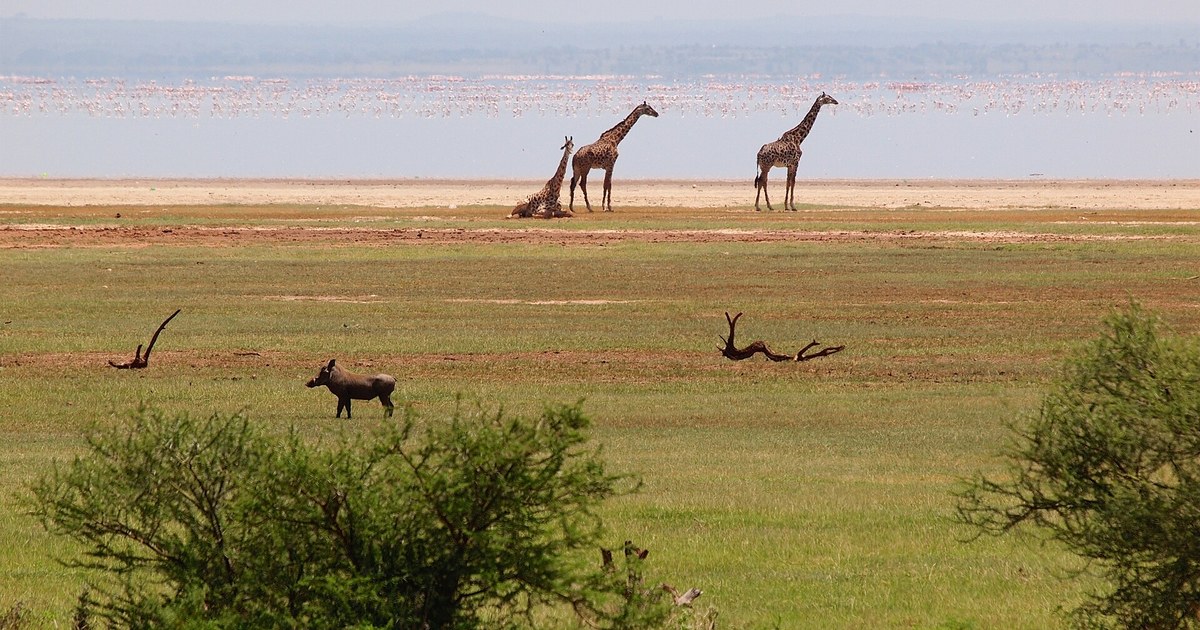
The second is flamingos. In the right conditions, large flocks gather on the shallow lake, turning parts of the shoreline pink. Flamingo numbers vary a lot with water levels and season, so a visit in one month can look completely different from a visit in another. If flamingos are your main reason for coming, check recent conditions before you travel, and plan the lake edge for the best light, early or late in the day.
Beyond those two, Manyara holds large elephant herds, especially in the forest, along with giraffe, buffalo, zebra, wildebeest, hippo, and troops of olive baboons and blue monkeys. Leopard and cheetah are present but much harder to see. For birdwatchers, the park is one of the best in Tanzania, with over 400 recorded species, including pelicans, storks, herons, hornbills, eagles, and egrets, as well as the flamingos. Bring binoculars if you have them, and ask your guide to slow down at the lakeshore, where the birdlife is densest.
Things to do in Lake Manyara
The core activity is the game drive. A half day drive, morning or afternoon, covers the forest, the floodplain, and the lakeshore, and that is enough for most visitors. A full day, with a picnic lunch inside the park, lets you reach the quieter southern sections and spend more time at the lake. Night drives are also offered in Manyara, which most Tanzanian parks do not allow, and they give you a chance to see nocturnal animals such as genets and hippos out of the water after dark. Ask in advance, as night drives need to be arranged, not just turned up for.
The treetop walkway, also called the canopy walkway, is the park’s other signature activity. It is a suspended walkway about 370 metres long, rising to about 18 metres into the forest canopy, with viewing decks along the way. Walking at canopy height gives you a completely different view of the forest, with monkeys and birds at eye level, and it is a good break from sitting in a vehicle all day. It is the first treetop walkway of its kind in Tanzania, and it suits families and birdwatchers especially well.
Canoeing on the lake is offered when water levels permit, with a guide, and it is the closest way to see hippos and water birds from the water itself. Treat canoeing as seasonal, not guaranteed: if the lake is low, it will not run, and your operator should confirm it before you count on it. Guided walking safaris are also available in some areas, and the nearby village of Mto wa Mbu, just outside the gate, offers cultural tours, market visits, and local food, which make a good half day addition before or after the park.
Best time to visit Lake Manyara
Manyara is a year round destination, but the seasons trade different things. The dry season, from June to October, is the easiest time for game viewing. Animals gather near remaining water, vegetation thins out, and tracks are in good condition. This is the best time if your priority is elephants, lions, and general wildlife, and if you want the most reliable driving conditions.
The green seasons, around November to December and March to May, bring lush scenery, fewer visitors, and exceptional birding. The park is greener, the light is softer, and the birdlife is at its most active. The trade off is muddier tracks and more changeable weather, and the long rains in March to May can make some areas harder to reach. For flamingos specifically, timing depends on water levels rather than a single month, so check recent reports rather than trusting a fixed calendar date. If you can only choose one season and you want the simplest trip, choose the dry season. If you are a birdwatcher and you do not mind rain, the green season will reward you.
How to get there from Arusha
Most visitors reach Lake Manyara from Arusha, the gateway city for Northern Circuit safaris. By road, the park is about 126 kilometres southwest of Arusha, a drive of about 2 hours on a paved road through Makuyuni and Mto wa Mbu to the main gate. The route is well kept and does not need a rugged vehicle just to reach the gate, although most visitors travel in a safari vehicle because the same vehicle then works inside the park, where tracks turn to gravel and mud. Fill up in Arusha before you set off, and treat Mto wa Mbu as a natural stop for food, fruit, and crafts before the gate.
By air, light aircraft land at Lake Manyara airstrip near the gate, with scheduled and charter flights linking Manyara with Arusha, Serengeti, and other safari destinations. Fly in options suit travellers with limited time, or travellers combining Manyara with parks further west. If you are flying into Tanzania from abroad, Kilimanjaro International Airport is the usual arrival point, with Arusha about an hour further by road, so add that leg to your first day planning.
Fees and practicalities
Park fees are charged per person for each 24 hour period inside the park, and they can change, so treat any figure as a planning baseline and confirm it with TANAPA, the Tanzania National Parks authority, before you book. Checked October 2026, most operator summaries quote Lake Manyara at $59 per adult per 24 hours in high season and $53.10 in low season, including VAT, with reduced rates for children aged 5 to 15 and free entry for children under 5. High season runs from 16 May to 14 March, and low season covers 15 March to 15 May, the long rains. Activities such as the treetop walkway, night drives, and canoeing are extra, and sleeping inside the park adds a concession fee, so ask your operator whether those items are already included in your quote or charged separately at the gate. Park gates are largely cashless, so carry a card for park fees, and keep your permit and exit documentation safe, as permits are checked on exit.
For packing: light layers, sun protection, insect repellent, binoculars for the lakeshore, closed shoes for the treetop walkway, and a light rain layer in the green season.
Where to stay
Lake Manyara Serena Safari Lodge, perched on the escarpment edge above Mto wa Mbu, is the best known lodge in the area, with views over the Rift Valley and the lake. Lake Manyara Tree Lodge, inside the park, is the high end forest option, with treehouse style rooms among the trees. Lake Manyara Kilimamoja Lodge and Lake Manyara Wildlife Lodge are also established options near the park, and Mto wa Mbu itself has smaller guesthouses and camps for a town base. This post does not rank lodges or quote lodge prices, as both change by season and operator, so check current rates and what is included before you book. For a day trip, staying in Arusha works well. For dawn and dusk drives, stay in or near the park for a night.
Frequently asked questions
Is Lake Manyara worth visiting? Yes, if you judge it for what it is: a compact, diverse park that gives you forest, lake, and escarpment in a day, with famous lions and flamingos as a bonus, not a guarantee. It is not a substitute for a multi day Serengeti trip, and it does not try to be. As a Northern Circuit stop, it is one of the best value days on the route.
When is the best time to see flamingos at Lake Manyara? Flamingo numbers depend on water levels, so there is no single guaranteed month. The dry season gives the most reliable overall wildlife viewing, while the green season is best for birding in general. Check recent conditions before you travel if flamingos are your main goal.
Will I see tree-climbing lions? You may, and Manyara is the best known place for this behaviour, but sightings are not guaranteed. Lions climb when they choose to, and guides cannot promise it. Go for the whole park, elephants, forest, lake, and birds, and a tree lion will be a highlight, not a disappointment if it does not happen.
How long should I spend at Lake Manyara? A half day, morning or afternoon, gives a satisfying introduction. A full day lets you reach the southern sections and add the treetop walkway or a night drive. One night in or near the park is enough for most visitors, with dawn and dusk drives included.
Do I need a guide? In practice, yes for most visitors. A driver guide knows where animals were last seen, how the tracks are holding up, and where the lake edge is best on the day. Self drive is possible with a suitable vehicle, but a guide adds a lot in a park this varied, especially for birding and for finding lions.
Plan Manyara as a Northern Circuit stop, check fees and water levels before you go, and a small park can still give you a full day.