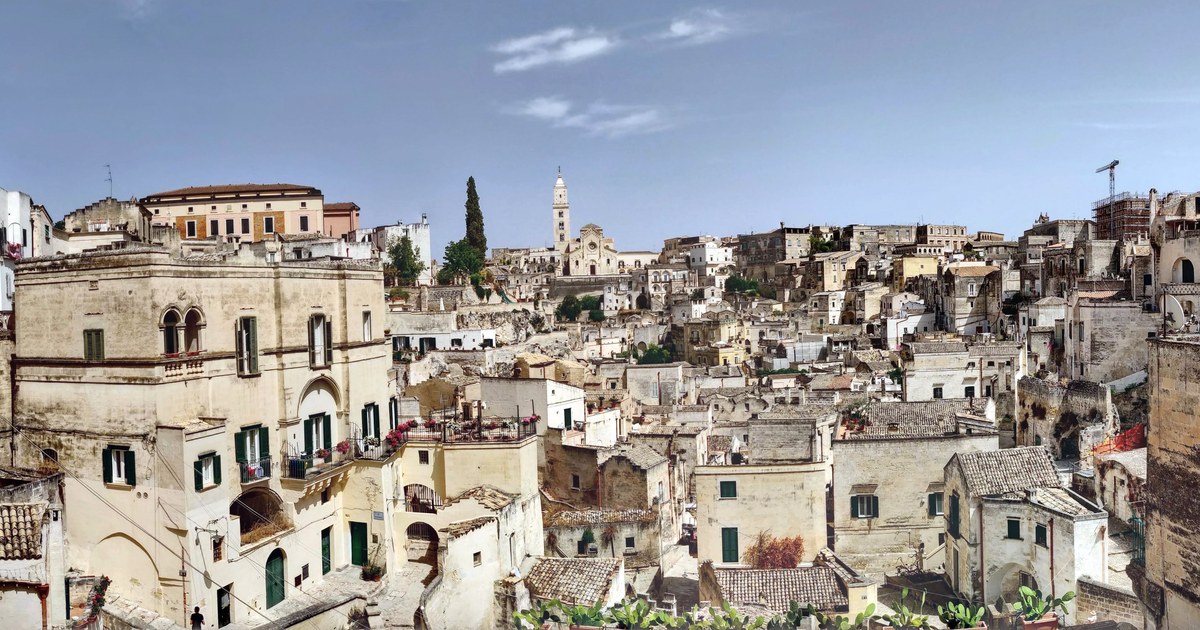
Matera is unlike anywhere else in Italy. The old town is carved directly into a limestone ravine: thousands of cave dwellings, rock churches, and stone staircases stacked across two ancient districts called the Sassi. People have lived in these caves since the Paleolithic era, making Matera one of the oldest continuously inhabited settlements on earth.
This guide to things to do in Matera, Italy covers the Sassi districts, the cave churches, the best viewpoints, museums, local food, tours, the best time to visit, and how to get here from Bari. Whether you come for a day trip or a slow weekend, Matera rewards every hour you give it.
What Are the Sassi of Matera?
The Sassi are the two ancient cave districts at the heart of Matera: Sasso Caveoso and Sasso Barisano. Sasso means stone, and the districts are exactly that, a dense honeycomb of dwellings carved into the rock face of the Gravina gorge. Families lived in these Matera caves for millennia, often in shocking poverty. In the 1950s the Italian government relocated residents to modern housing, and the Sassi sat half abandoned for decades.
Then came the turnaround. The Sassi became a UNESCO World Heritage site in 1993, Matera was named a European Capital of Culture for 2019, and film crews arrived (The Passion of the Christ, Ben-Hur, and the James Bond film No Time to Die all shot here). Today the cave dwellings house boutique hotels, restaurants, galleries, and museums, and the Sassi are the reason most travelers come.
Explore Sasso Caveoso
Sasso Caveoso is the older and wilder of the two districts, its caves spilling down toward the gorge in a cascade of stone. This is where the most atmospheric Matera sightseeing happens.
Santa Maria de Idris. A rock-hewn church perched on a rocky outcrop above the district, reached by climbing stone steps. Visiting it is one of the essential things to do in Matera. Inside are faded medieval frescoes and sweeping views over the Sassi. It is the single most iconic sight in Matera.
San Giovanni in Monterrone. Just below Santa Maria de Idris, another rupestrian church with well-preserved frescoes dating back to the 13th century.
Casa Grotta di Vico Solitario. A furnished cave house museum showing how families lived in the Sassi before the 1950s relocation: one room, animals inside, no running water. It takes 20 minutes and explains everything about Matera’s past.
Wander without a map here. The lanes dead-end at courtyards and viewpoints, and getting a little lost is the point.
Wander Sasso Barisano
Sasso Barisano is the larger district, curving around the north side of the old town. It holds more of the restored palazzi, artisan workshops, and wine bars, plus the grand staircases that connect the upper town to the cave levels.
Palazzo Lanfranchi. A 17th-century former seminary turned into the National Museum of Medieval and Modern Art of Basilicata. The building alone is worth the visit, and the collection covers eight centuries of southern Italian art.
Via Ridola and the artisan quarter. The lanes around Via Ridola hold ceramics workshops, paper-mache artisans, and small galleries. This is the best area for souvenir shopping that is actually made in Matera.
The Best Viewpoints in Matera
Matera is a city of viewpoints, and you will photograph it constantly. The essential ones:
- Piazza Vittorio Veneto. The main square of the upper town, with a terrace overlooking Sasso Barisano. Watching sunset here ranks high among things to do in Matera, when the stone glows gold.
- Belvedere di Murgia Timone. Across the Gravina gorge, reached by a short drive and an easy walk. This is the classic panoramic view of both Sassi districts at once, and the best spot for sunrise photos.
- Piazzetta Pascoli. A small terrace with a straight-on view of Sasso Caveoso and Santa Maria de Idris.
- The Palombaro Lungo. Beneath Piazza Vittorio Veneto lies a vast 16th-century cistern carved into the rock, once the city’s water supply. The guided visit is short and fascinating.
Museums Worth Your Time
MUSMA, the Museum of Contemporary Sculpture, sits inside the 16th-century Palazzo Pomarici in the Sassi. Sculptures in cave rooms is a combination that works surprisingly well.
Casa Noha. A multimedia introduction to the Sassi: a 25-minute film projected onto the walls of a historic house, explaining a thousand years of Matera history. Ideal as your first stop.
Santa Lucia alle Malve. One of the oldest rupestrian churches, with 13th-century frescoes, tucked into Sasso Caveoso near the Casa Grotta.
What to Eat in Matera
Basilicata’s cuisine is peasant food elevated by great ingredients. In Matera, order the pane di Matera, the local sourdough bread with protected status, baked in wood-fired ovens. Try orecchiette with turnip greens, peperoni cruschi (crispy sweet peppers), and lamb dishes. The local Aglianico del Vulture red wine is one of southern Italy’s best. A Matera food tour is a good way to taste widely in a few hours, since the best spots hide in the Sassi lanes.
Tours in Matera
The Sassi are easy to explore alone, but a guide adds the history that the stones do not tell. Matera walking tours run daily, including free walking tours where you tip the guide. For something different, the little Ape tuk-tuk tours zip through lanes too narrow for cars and cover both districts in about an hour. Film fans can take a James Bond tour tracing the No Time to Die chase scenes through the Sassi. Book tours a day or two ahead in high season.
Best Time to Visit Matera
The best time to visit Matera is April to June and September to October. Spring brings wildflowers and comfortable hiking weather in the gorge; early autumn brings harvest season and warm evenings. July and August are hot and crowded, though the stone lanes stay cooler than you’d expect. Winter is quiet and atmospheric, with few tourists and lower hotel rates, but some smaller sights keep shorter hours.
Getting There: Day Trip from Bari to Matera
Matera has no high-speed rail station, so most visitors arrive from Bari, about 60 kilometers away. The easiest option is the direct bus or shuttle from Bari Centrale, which takes around 90 minutes. A regional train also connects Bari to Matera on a narrow-gauge line, slower but scenic. Bari’s Karol Wojtyla Airport is the nearest airport, with rental cars available for drivers. A day trip from Bari to Matera is doable but rushed; one overnight lets you see the Sassi lit up at night, which is when Matera looks its best.
Where to Stay: Sleep in a Cave
The essential Matera experience is sleeping in a cave hotel carved into the Sassi. Rooms range from simple grotte to luxury suites with frescoed walls and plunge pools. Staying in Sasso Caveoso or Sasso Barisano puts you inside the UNESCO site itself, steps from the lanes you’ll explore. Book well ahead for spring and autumn weekends. We are putting together a full guide to the best cave hotels in Matera with booking tips.
Practical Tips for Visiting Matera
Wear shoes with grip. The Sassi lanes are stone steps and polished limestone, slippery when wet and tiring in flat sandals. Carry water in summer; fountains are scarce inside the districts. Visit the main sights early in the morning or late in the afternoon, when the light is best and the tour groups are thinnest.
Remember the Sassi are a living neighborhood, not a museum set. People live and work in these lanes, so keep noise down at night and respect private doorways. Park outside the old town and walk in; the Sassi lanes are pedestrian, and driving inside is restricted to residents.
Frequently Asked Questions
How many days do you need in Matera?
Two days is ideal: one for the Sassi districts and churches, one for the Murgia viewpoint, museums, and a slow evening. A day trip from Bari covers the highlights but misses the Sassi at night.
What are the Sassi di Matera?
The two ancient districts of cave dwellings carved into the limestone gorge, inhabited since prehistoric times and now a UNESCO World Heritage site.
Is Matera worth visiting?
Yes. It is one of the most distinctive old towns in Europe, completely different from anywhere else in Italy.
Can you do a day trip from Bari to Matera?
Yes, direct buses take about 90 minutes each way. It is a long day, so consider staying one night to see the Sassi illuminated.
What is the best time to visit Matera, Italy?
April to June and September to October for the best weather and manageable crowds.
Where was James Bond filmed in Matera?
No Time to Die filmed chase scenes through the Sassi in 2019. Local guides run Bond-themed tours of the filming locations.
The Bottom Line
If your list of things to do in Matera is short, make it the Sassi: walk both districts, climb to Santa Maria de Idris, cross the gorge for the Murgia viewpoint, eat the local bread, and sleep in a cave. Few places in Italy feel this ancient and this alive at the same time.