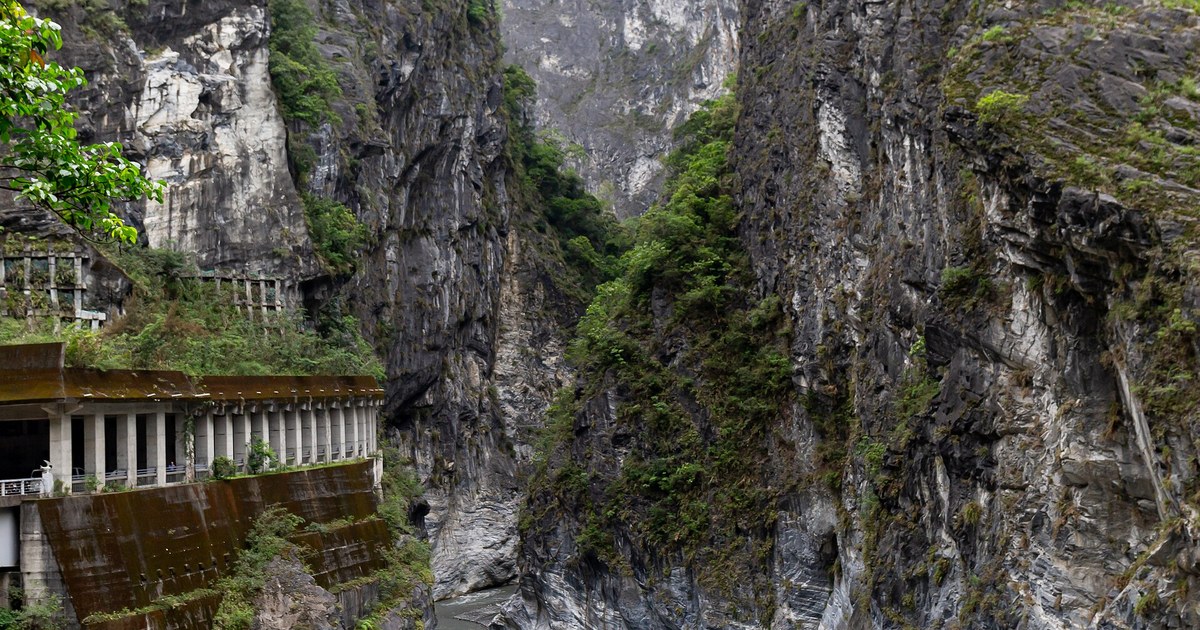
Taroko Gorge Taiwan is one of East Asia’s great canyon landscapes: marble cliffs, the Liwu River cutting deep below, and trails that run along gorge walls, across suspension bridges, and through tunnels carved into rock. This guide covers Taroko Gorge and Taroko National Park as a visitor destination, with trail types, planning pointers, and the status check that matters most for this park, in general terms, with no static claims about which trails are open. It does not try to be a Taiwan guide, a Taipei guide, or a tour-booking post: other Taiwan destinations are not covered here, and tour options are mentioned only in general terms.
Check trail status before you go: the most important step
Taroko Gorge suffered major earthquake damage in April 2024, and trail closures and phased reopening have followed since. That means the single most important step in planning a Taroko visit is to check current trail status against the official park site, Taroko National Park’s own website, before travelling, and again close to the travel date, because status changes with repair work and weather. This post deliberately gives no static open-or-closed claim for any individual trail: a trail listed here as a well-known route is not a promise that it is open, and a trail not listed here is not a promise that it is closed. If a trail’s current status cannot be verified from the official park site, treat it as unknown and plan around trails whose status is confirmed.
What the gorge is
Taroko Gorge is a deep canyon in eastern Taiwan, carved by the Liwu River through marble and other rock over a very long time, inside Taroko National Park. The park’s landscape is defined by that canyon: towering cliffs, narrow passages, river views from high above, and a road and trail network that follows the gorge. The gorge is the park’s centre, and most visitors come for the gorge itself, its viewpoints, and its trails, rather than for the park’s wider mountain areas. Understanding that centre helps with planning: a Taroko visit is a gorge visit, with the gorge’s trails and viewpoints as the main activity.
Trail types: what to expect
Taroko’s trails fall into broad types, and the type matters more for planning than any single trail name. Gorge-wall trails run along the canyon with cliff and river views, and they suit visitors who want the classic gorge experience without a long mountain hike. River-side trails run closer to the water, with a different view of the same canyon, and they suit visitors who want the river and rock at close range. Suspension-bridge and tunnel sections appear on several routes, and they suit visitors comfortable with heights and enclosed passages, while visitors who are not should check route descriptions before choosing. Longer mountain trails in the wider park suit experienced hikers with proper preparation, and they are a different activity from the gorge trails, not a longer version of the same walk. For every type, the status check above applies first: choose a trail type, then confirm which trails of that type are currently open.
Well-known routes, in general terms
Several routes are well known among Taroko visitors, and they are listed here in general terms only, with no status claim attached to any of them. Gorge-view routes along the canyon walls give the classic cliff and river views, and they are the most popular choice for first-time visitors. Shorter riverside and viewpoint routes suit visitors with limited time or limited walking ability, because they give gorge views without a long hike. Longer routes deeper into the park suit experienced hikers, and they should be planned with extra care for weather, daylight, and current status. For each route, the practical questions are the same: is it currently open, how long is it, how much height does it gain, and what are its access points? Those questions should be answered from the official park site and current visitor information at planning time, not from this post, because status and access change.
Planning a visit
Planning a Taroko visit starts with the status check, then moves to access and timing. Access to the gorge is generally from the Hualien area on Taiwan’s east coast, and the practical advice is to confirm transport options at planning time, because road and transport conditions in a mountain gorge change with weather and repair work. Timing matters in general terms: daylight is limited in a deep gorge, so start early, allow more time than a flat walk of the same distance, and carry water and sun protection. Weather matters more in a gorge than on flat ground, because rain raises river levels and increases rockfall risk, so check the weather forecast and any park advisories on the day of the visit, and do not enter a trail against a park advisory. For photography, the gorge’s light changes through the day, with morning and late afternoon generally giving softer light on the cliffs, and a photography gear guide helps with the practical side of carrying a camera on gorge trails.
Tours and independent visits
Taroko can be visited independently or on a tour, and the choice depends on transport and confidence. Independent visits suit travellers comfortable with confirming transport, trail status, and weather themselves, and they give more flexibility on timing and trail choice. Tours suit travellers who want transport and a set itinerary handled for them, and they are worth considering for a first visit, because the gorge’s access and status checks are handled by the tour operator. This post gives no tour recommendation and no tour price, because tours and prices change, and the practical advice is to check what a tour includes, especially which trails it actually visits, before booking, rather than assuming a tour covers every well-known route.
Photos and viewpoints
Photos of Taroko National Park are a major reason visitors come, and the gorge’s viewpoints give the classic images: cliffs, river, and the narrow canyon from above. The practical advice for photos is to check viewpoint access as part of the status check, because viewpoints sit on the same road and trail network as the trails, and a closed trail can also mean a closed viewpoint. For a different kind of city hike with viewpoints, the Elephant Mountain hike in Taipei is a separate destination, not part of Taroko, and it is linked here only as a related hike, never as a Taroko alternative.
Frequently asked questions
Is Taroko Gorge open?
Taroko Gorge’s trail status changes with repair work after the April 2024 earthquake and with weather, so check current status against the official park site before travelling and again close to the travel date, rather than relying on a static claim in any post, including this one.
What is the best trail in Taroko Gorge?
There is no single best trail, because the right trail depends on fitness, time, and current status. Gorge-wall trails suit first-time visitors, shorter riverside and viewpoint routes suit limited time, and longer mountain trails suit experienced hikers, always subject to the status check.
Do I need a tour for Taroko Gorge?
No, independent visits are possible, but tours suit first-time visitors who want transport and a set itinerary handled for them. Check what a tour actually includes before booking.
Final thoughts
Taroko Gorge Taiwan is worth visiting for its marble canyon, river views, and gorge trails, but it is a destination where planning matters more than usual, because of the April 2024 earthquake damage and the phased reopening that followed. Check trail status against the official park site, check weather and park advisories on the day, start early, and choose trails by type and current status, not by an older list. That check-first approach is the difference between a good Taroko visit and a wasted trip to a closed trail.