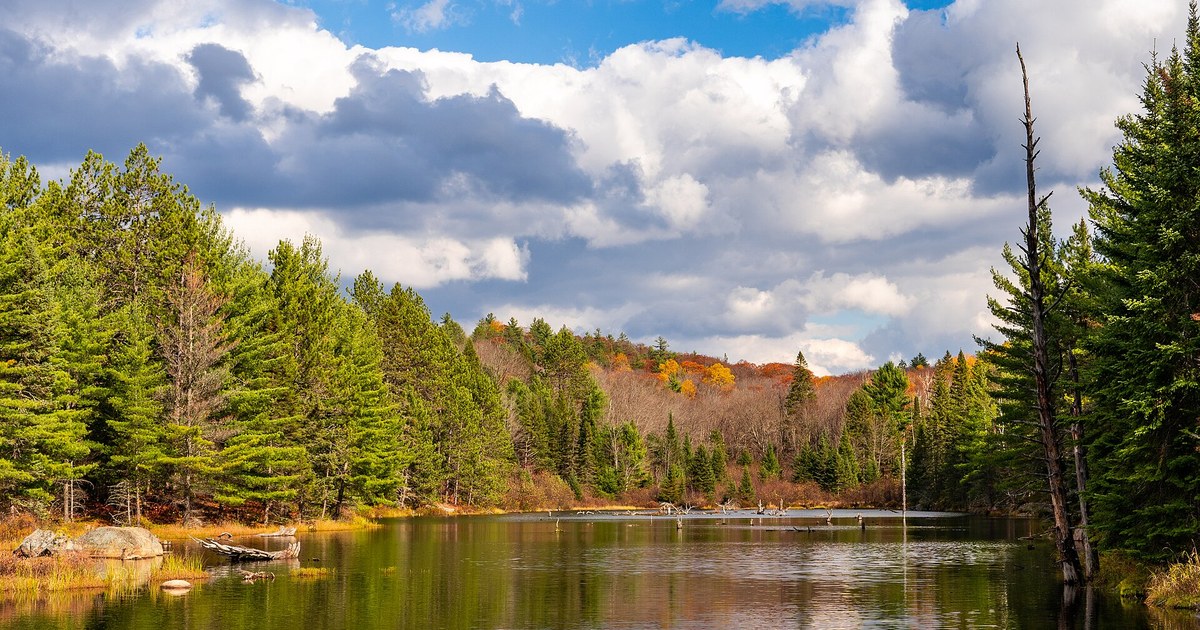
Algonquin Park Canada is a provincial park in Ontario, between Toronto and Ottawa, and it is Ontario’s oldest provincial park, established in 1893, and one of Canada’s largest provincial parks. The park is known for canoeing, with over 2,000 kilometres of canoe routes and over 1,500 lakes, and for the fall colours, with maple trees that turn red and gold in autumn. This guide covers Algonquin Park Canada, from canoeing and hiking to wildlife, the fall colours, and getting there.
Canoeing in Algonquin
Canoeing is the best way to see Algonquin Park, with over 2,000 kilometres of canoe routes and over 1,500 lakes, and the park has backcountry camping, with canoe-in sites, and portages, where you carry the canoe between lakes. The park has canoe rentals, with outfitters in the nearby towns, and it has canoe routes for all levels, from easy day trips to multi-day expeditions. The park is a good place for a canoe trip, with the lakes, the forests, and the wildlife, and it is a good place for a wilderness experience.
The park has the Highway 60 corridor, with campgrounds, trails, and the Algonquin Visitor Centre, and it has canoe access points along the highway, with parking and a put-in. The park has canoe routes with portages, and the portages are marked, with signs, and they are a good way to reach remote lakes. The park is best in summer, from June to September, for canoeing, when the weather is warm and the lakes are calm, and in fall, when the colours are out.
Hiking and the trails
Algonquin Park has hiking trails, with the Lookout Trail, a short climb with a view of the park, and Booth’s Rock Trail, with a view of Rock Lake, and the Track and Tower Trail, with a view of Cache Lake. The Mizzy Lake Trail is a longer trail, good for wildlife, with wetlands, and it is a good place for moose and birds. The park has the Algonquin Visitor Centre, with exhibits on the park’s nature and history, and it is a good place for a first visit.
The park has the Algonquin Logging Museum, with exhibits on the logging history, and it has a trail, with historic buildings and equipment, and it is a good place for a walk. The park has hiking trails for all levels, from easy walks to longer hikes, and it is a good place for a day hike, with the trails along Highway 60. The park is a good place for hiking in summer and fall, when the trails are open and the weather is good.
Wildlife
Algonquin Park has wildlife, with moose, black bears, wolves, beavers, and loons, and it is a good place for wildlife viewing. Moose are the park’s most famous animal, and they are best seen at dawn and dusk, along Highway 60 and in the wetlands, especially in spring, when they feed on aquatic plants. The park has bears, so carry bear spray, make noise, and hike in groups, and keep a safe distance from wildlife. The park has loons, with their haunting call, and they are a good sound of the park, especially in the morning.
The park has wolves, and they are heard more often than seen, with their howls at night, and the park has a wolf howl event in summer, where rangers lead a howl. The park has beavers, with dams and lodges, and it has birds, with warblers, and it is a good place for birdwatching. The park is a good place for a nature trip, and it is a good place for wildlife, with the moose, the bears, and the loons.
The fall colours
Algonquin Park is famous for the fall colours, with maple trees that turn red, orange, and gold in autumn, and the park is one of the best places in Canada to see the fall foliage. The fall colours peak in late September to early October, and the park is busiest then, with visitors from Toronto and Ottawa, and the campgrounds and the trails are crowded. The park has a fall colour report, with the current colours, and it is a good idea to check it before you go, and to book ahead, since the park is busiest in fall.
The fall colours are best seen from the trails, with the Lookout Trail and Booth’s Rock Trail, and from the canoe, with the lakes and the forests, and they are a good place for a photo. The park has the fall colours in the maples, the birches, and the tamaracks, and it is a good place for a fall trip, with the colours, the cool weather, and the wildlife. The park is a good place for a fall visit, and it is a good place for a day trip from Toronto.
Best time to visit Algonquin Park
The best time to visit Algonquin Park is summer, from June to September, when the weather is warm, the lakes are calm, and the canoeing is at its best. Summer is the busiest time, with the most visitors, and the campgrounds book up early. Fall, from late September to early October, is a good time too, with the fall colours, and it is the busiest time for the colours, so book ahead.
Spring, from April to May, is a shoulder season, with mild weather and fewer visitors, and it is a good time for moose, when they feed on aquatic plants. Winter in the park is cold and snowy, with cross-country skiing and snowshoeing, and it is a good time for a quiet visit, with the snow and the silence.
Where to stay near Algonquin Park
Disclosure: this guide contains affiliate links. If you book through them, we may earn a commission at no extra cost to you.
The best place to stay near Algonquin Park is Huntsville, a town south of the park, with hotels, inns, and rentals, and it is a good base for the park. Huntsville has hotels for every budget, and it has restaurants and shops, and it is a good place for a stay. The park has campgrounds, with sites for tents and RVs, along Highway 60, and it has backcountry camping, with canoe-in sites, and the campgrounds should be booked in advance, since they sell out in summer and fall. Book ahead in fall, when the park is busiest. Search hotels in Huntsville on Booking.com
Getting there
Algonquin Park is in Ontario, about 3 hours from Toronto, and about 3.5 hours from Ottawa, by car, on Highway 60, with the West Gate and the East Gate the two main entrances. The park is reached by car, with parking at the campgrounds and the trailheads, and a car is the best way to explore the park, since it is large and the sights are spread out. A park pass is needed for the park, and it can be bought at the gate or online, and it is a good idea to book a campsite in advance, since they sell out. For Toronto, see our guide to Attractions in Toronto Ontario Canada. For the parks, see our guide to Canada National Parks.
The park is reached by car, with parking at the campgrounds and the trailheads, and a car is the best way to explore the park, since it is large and the sights are spread out. A park pass is needed for the park, and it can be bought at the gate or online, and it is a good idea to book a campsite in advance, since they sell out.