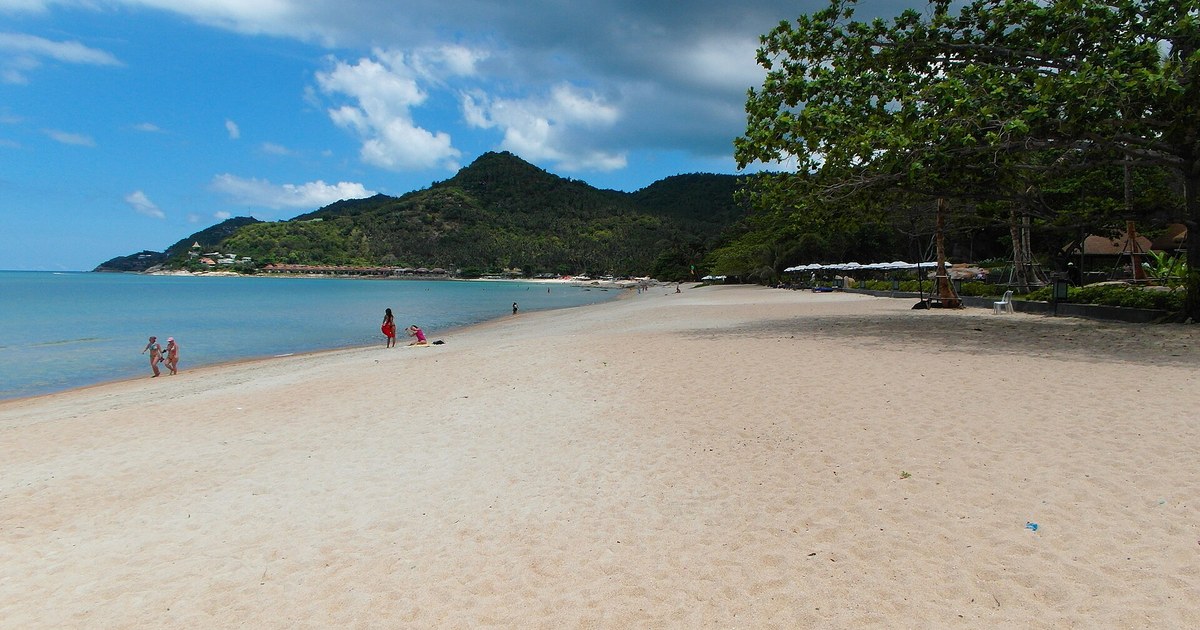
Koh Samui feels smaller and calmer than Phuket, with coconut groves, granite boulders, and warm Gulf water instead of big Andaman surf. This guide to the best beaches in Koh Samui ranks seven shores by what they are actually good for, from nightlife and family swimming to snorkeling and sunsets, so you can pick the beach that fits your trip rather than the most famous name.
East coast or west coast
The island is roughly fifteen miles across, and a paved ring road makes hopping between shores easy. The east coast holds the broad white sands, the liveliest entertainment, and the best water sports. The north coast holds sheltered family bays and the historic Fisherman’s Village. The west coast is quiet, with long sunsets over the Gulf and Ang Thong Marine Park in the distance. Koh Samui beaches on the east side suit energy and convenience, while the west side suits slow evenings. One more local note: north-coast shores like Bophut can get shallow at midday low tide, so check the tide before planning a swim there.
Pick by travel style
- All-rounder: Chaweng
- Snorkeling: Silver Beach
- Couples and dining: Bophut and Choeng Mon
- Families: Choeng Mon and Lipa Noi
- Sunsets: Lipa Noi
- Hidden and quiet: Silver Beach and Maenam
The 7 best beaches in Koh Samui, ranked by travel style
1. Silver Beach (Crystal Bay): the snorkeling cove
Between Chaweng and Lamai, Silver Beach, also called Crystal Bay or Thong Takhian, is an intimate cove of powdery silver sand and turquoise water, framed by giant granite boulders at both ends. A shallow coral reef just offshore offers the island’s best off-beach snorkeling, and sea turtles and reef fish feed around the southern rocks. If postcard scenery plus snorkeling is the priority, this is the essential stop.
2. Chaweng Beach: the vibrant heart
Chaweng is the largest and most energetic coastal strip on the island, more than three miles of white sand fronting shallow, calm swimming water. Days bring sun loungers, parasailing, and jet skis, and evenings bring beachfront bars and fire dancers. The southern end stays quieter than the center, so Chaweng works both for travelers who want the action and for those who want it within walking distance rather than on their doorstep.
3. Lamai: deep water and bohemian charm
Just south of Chaweng, Lamai is the island’s second largest tourist shoreline. Its central section stays deep enough for swimming even at low tide, and the famous Grandfather and Grandmother Rocks, Hin Ta Hin Yai, anchor the southern end. Lamai town keeps a laid-back, bohemian feel with street food stalls and smaller bars, lively without the scale of central Chaweng.
4. Bophut: Fisherman’s Village dining
On the north coast, Bophut pairs a calm, sheltered bay of coarse golden sand with the historic Fisherman’s Village promenade, where restored wooden Chinese shophouses hold shops and open-air restaurants. On Friday evenings the village becomes a pedestrian street market. Bophut is the pick for travelers who rank good dinners and a scenic stroll as highly as the swimming itself. Remember the tide note: the water here can be shallow at midday low tide.
5. Choeng Mon: the sheltered family bay
Tucked into the northeastern corner, Choeng Mon is a secluded crescent of soft, pale sand shaded by casuarina pines and coconut trees. The bay is sheltered, so the water stays calm and safe for small children, and the pace suits couples and families who want peaceful mornings and relaxed beachfront dinners.
6. Maenam: long sands and island views
Maenam stretches for more than four miles along the northern shoreline, facing neighboring Koh Phangan. The sand is a darker gold, the mood is unhurried, and the water drops off quickly for good deep swimming. It suits long-stay travelers and anyone who prefers a genuine, quiet tropical shoreline over a resort strip.
7. Lipa Noi: the sunset coast
On the remote west coast, Lipa Noi is famous for sunsets, with fine white sand free of sharp rocks and coral. The water stays shallow for hundreds of meters out, making a huge natural paddling pool for families, and in the evening travelers gather at oceanfront bars to watch the sun sink into the Gulf. It is the refreshing opposite of the high-energy eastern towns.
Seasons: the Gulf is the reverse of Phuket
Gulf weather runs opposite to the Andaman side. Koh Samui enjoys bright skies and calm seas through much of December to August, with February through April the driest and sunniest window for swimming and boat tours. Even in July and August, when Phuket faces monsoon swells, Samui is usually sunny. The heaviest rain falls late in the year, peaking in October and November, when surf turns choppy and water clarity drops. For countrywide context, see our guide to the best beaches in Thailand, compare the Andaman side in our best beaches in Phuket guide, and plan mainland trips with our best beaches near Bangkok guide.
A simple 3-day beach plan
Samui is compact enough that you do not need to move hotels to see the best of it. On day one, start on the east coast: swim at Chaweng in the morning before the crowds build, then walk the quieter southern end in the afternoon. On day two, head to Silver Beach for snorkeling, stop at Lamai for the Hin Ta Hin Yai rocks, and finish with dinner in Bophut’s Fisherman’s Village. On day three, go west for Lipa Noi’s shallow water and sunset, with a slow morning at Maenam on the way. That pattern covers energy, snorkeling, dining, and sunsets without a rushed itinerary, and it keeps every day’s travel to a short ring-road hop.
If you only have one beach day, pick by your single priority and do not try to see all seven. Families do best with Choeng Mon or Lipa Noi, snorkelers with Silver Beach, and nightlife seekers with Chaweng. Couples who want one romantic evening should aim for Bophut at dinner time, when the shophouses light up and the Friday market, if your trip lines up, adds a street-fair feel. The island rewards a slow pace: one beach done well beats three beaches rushed, especially when the tide and the afternoon heat shape the day as much as the map does.
Practical tips
Shared songthaew pickup trucks circulate the ring road through the day, and scooters or ride-hailing apps cover point-to-point trips. Island roads have steep hills and sand patches, so ride carefully if you rent. Beach vendors and songthaews rarely take cards, so carry local cash. Wear mineral sunscreen to protect the fringing coral, and wear a cover-up when walking through seaside towns or village shops.
Frequently asked questions
What is the best beach in Koh Samui for swimming? Silver Beach and central Chaweng, for clear water and soft sand bottoms without sharp rocks or heavy currents.
Which beach has the best nightlife? Chaweng, the island’s nightlife capital, with beachfront clubs and lively bars.
How does Koh Samui compare to Phuket for beaches? Samui feels more compact, with palm groves and granite boulders, while Phuket has grander limestone scenery and longer open stretches of sand.
When is the best time to visit Samui beaches? February through April for the driest, sunniest swimming, and December to August generally for calm seas. October and November bring the heaviest rain.