El Capitan in Yosemite National Park California is a granite wall that rises about 3,000 feet above Yosemite Valley, and it is one of the most famous rock faces in the world. Climbers come from everywhere to test themselves on its big walls, and visitors who never climb come to stand in El Capitan Meadow and look up at it. This guide covers El Capitan in Yosemite National Park California, from the rock itself and its climbing history to the best viewpoints and how to plan a visit.
The rock: a granite monolith
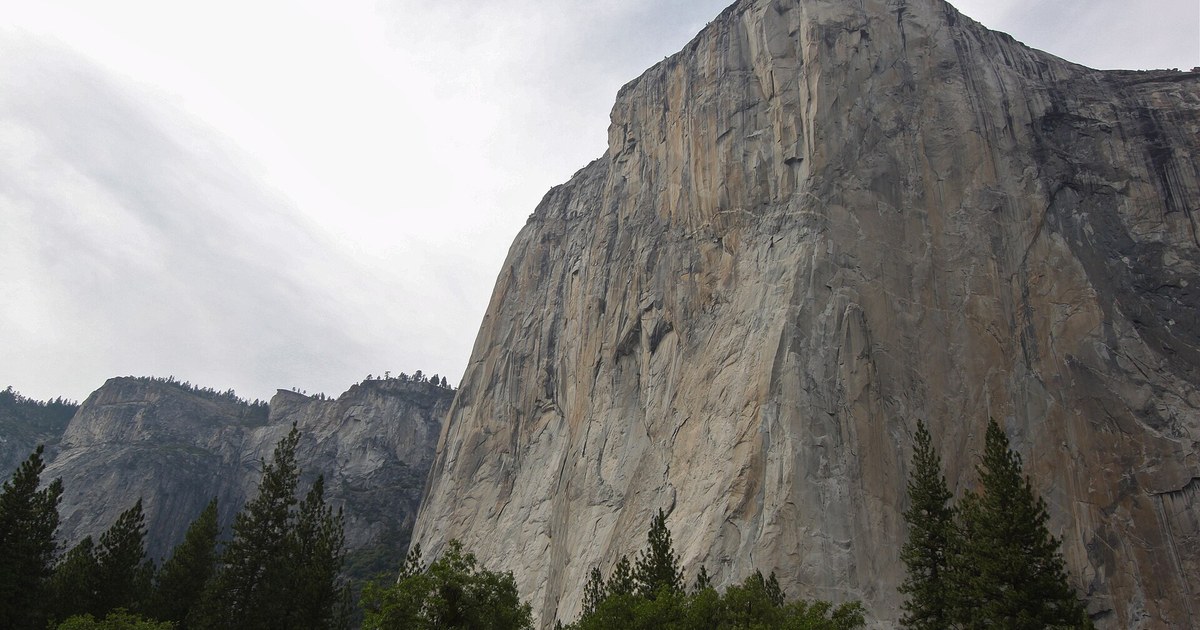
El Capitan is a vertical granite formation on the north side of Yosemite Valley, and it is one of the largest granite monoliths in the world. The rock was shaped by glaciers, which cut the valley and left the sheer face exposed. The summit sits about 3,000 feet above the valley floor, and the face is so steep that it looks almost flat from the meadow below. The name comes from the Spanish for “the captain,” and it has been a landmark for as long as people have visited the valley.
El Capitan is made of granite, the same rock that forms Half Dome and the valley’s other cliffs. The granite is pale and solid, with cracks and ledges that climbers follow upward. The rock changes color through the day, from gray in the morning to warm gold at sunset, and it is most striking in the late afternoon when the light rakes across the face. From the valley floor, the scale is hard to grasp until you spot the tiny climbers on the wall, which puts the height in perspective.
Climbing El Capitan: The Nose and Free Solo
El Capitan is the most famous big-wall climb in the world. The Nose, the ridge that runs up the center of the face, is the classic route, first climbed in 1958 by Warren Harding and his team over 47 days. Today, experienced climbers take several days to climb it, sleeping on ledges and hauling gear up the wall. The route is a test of endurance and skill, and it draws climbers from every country.
In June 2017, Alex Honnold free-soloed El Capitan, climbing the Freerider route without ropes in just under four hours, a feat filmed in the documentary Free Solo. It is one of the most famous climbs ever done, and it brought El Capitan to a much wider audience. Most visitors will never climb the wall, but the climbing history is part of what makes the rock famous, and you can watch climbers through binoculars from the meadow below.
Viewing El Capitan: meadow, Tunnel View, and Valley View
The best place to see El Capitan is El Capitan Meadow, a flat open area on the valley floor with a direct view of the face. Bring binoculars and look for climbers on the wall, who appear as small dots moving slowly upward. The meadow is also a good place for a picnic and for photos, especially in the morning when the light is on the face. In spring, the meadow is green and the waterfalls are running, and in fall, the trees turn gold.
Tunnel View, at the end of the Wawona Tunnel on the road into the valley, is the classic Yosemite viewpoint, with El Capitan on the left, Bridalveil Fall on the right, and Half Dome in the distance. Valley View, further along the valley floor, is a quieter spot with El Capitan reflected in the Merced River. Both are worth a stop, and both show El Capitan in the context of the whole valley, which is the best way to understand its scale.
For photos, the best light on El Capitan is in the late afternoon, when the sun hits the face directly and the granite turns warm gold. Morning light is softer and cooler, and the rock can look flat and gray before the sun reaches it. In spring, the meadow is green and the waterfalls are full, which makes for the best overall photos. In fall, the valley trees turn gold and the light is clear, and the crowds are smaller than in summer.
When to visit El Capitan
El Capitan is visible all year, but the best time to visit depends on what you want. Spring brings full waterfalls and green meadows, and it is the best season for the valley as a whole. Summer is the busiest season, with warm weather and full campgrounds, and the waterfalls are smaller by late summer. Fall is often the clearest season, with cool days, golden trees, and fewer visitors, and it is the best time for climbing, since the rock is dry and the temperatures are mild.
Winter brings snow to Yosemite Valley, and El Capitan looks striking with snow on its ledges and the valley floor white. Some roads close in winter, but the valley itself stays open, and the park is much quieter than in summer. Climbers favor spring and fall, when the rock is neither too hot nor too cold, and the big-wall season runs through those months. Whatever the season, the rock is worth seeing, and the meadow is open all year.
Visiting Yosemite Valley
Yosemite National Park requires reservations for entry at peak times, so check the current rules before you go. The valley is busiest in summer, when the waterfalls are full and the weather is warm, and it is quieter in spring and fall. Spring is the best time for waterfalls, and fall is the best time for clear weather and fewer visitors. Winter brings snow to the valley, and the park is open year-round, though some roads close in winter.
Once in the valley, the free shuttle buses run between the main sights, including El Capitan Meadow, Yosemite Village, and the waterfalls. Parking fills up early in summer, so arrive early or use the shuttle. The valley has lodges, campgrounds, and a village with shops and restaurants, and staying inside the park is the best way to see it without rushing. Book lodging well ahead, since it fills up months in advance.
Where to stay near Yosemite
Disclosure: this guide contains affiliate links. If you book through them, we may earn a commission at no extra cost to you.
The best place to stay is inside Yosemite Valley, at one of the park lodges, since it puts you next to El Capitan and the valley sights. If the park lodges are full, the towns outside the park, such as Mariposa, Oakhurst, and Groveland, have hotels and motels, and they are a drive from the valley. Book as early as you can, especially for summer and holiday weekends, when rooms fill up fast. Search hotels near Yosemite on Booking.com
Getting there
El Capitan is in Yosemite National Park, in the Sierra Nevada mountains of California. The usual approach is by car, on Highway 140 from Merced, Highway 120 from the Bay Area, or Highway 41 from Fresno. The drive from San Francisco takes about three to four hours, and the drive from Los Angeles takes about five to six hours, depending on traffic and the route. There is no train into the park, but buses run from Merced to Yosemite Valley. For a wider California trip, see our guide to California what to do, and for a coastal stop, see our guide to Morro Bay.