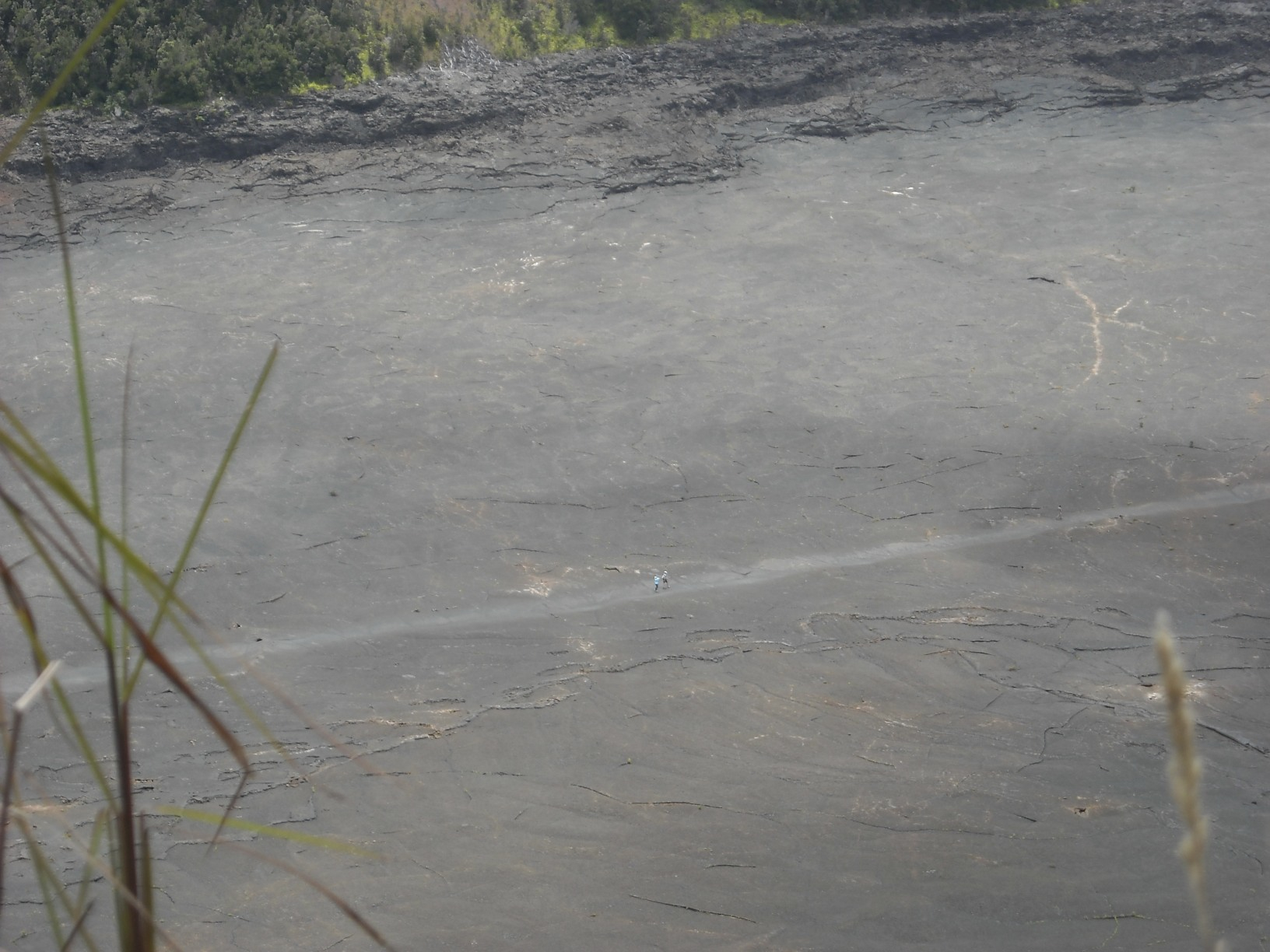
Hawaii Volcanoes National Park is the place to see how the Hawaiian islands were made. The park covers two active volcanoes, Kilauea and Mauna Loa, on the southeast side of Big Island. It has lava fields, craters, steam vents, and rainforest, all in one park. It is also a UNESCO World Heritage Site. A visit here is very different from a beach day, and it is one of the best reasons to spend time on Big Island.
Kilauea: the active volcano
Kilauea is one of the most active volcanoes on Earth. Its summit crater, Halemaumau, has held a lava lake at times, and its slopes carry the marks of past eruptions. Activity varies from year to year, and sometimes from month to month, so check the park’s current conditions before you visit. The Kilauea Visitor Center, near the park entrance, has exhibits on the volcanoes, current activity updates, and ranger advice on which areas are open. Start there, especially on a first visit.
Mauna Loa: the big volcano
Mauna Loa is the other volcano in the park, and one of the largest volcanoes on Earth by volume. It rises far above the park’s lower slopes, and its summit is often cooler and cloudier than the coast. Most visitors see Mauna Loa from the road and from viewpoints, rather than hiking to the summit, which is a long and strenuous trip. The contrast between the two volcanoes is part of the park’s interest: Kilauea is restless and changeable, Mauna Loa is vast and slow.
What to see in the park
Crater Rim Drive loops around the Kilauea summit area, with viewpoints over the crater, steam vents where groundwater meets hot rock, and short walks through forest. Thurston Lava Tube is a short walk from the road, through a tunnel left by a lava flow, with a forest trail leading to it. Chain of Craters Road runs down to the coast, past old lava flows and craters, ending near sea cliffs where lava once met the ocean. Allow a full day for the park, as the roads are slow and the sights are spread out.
Two shorter stops are worth adding to the drive. Devastation Trail is a short paved walk through a forest stripped by an eruption, where new growth is returning among the dead trees. Sulphur Banks is a boardwalk past sulphur deposits and steam vents, with a strong smell and bright yellow and orange ground. Both are easy walks, and both show how quickly the volcanic landscape changes after an eruption.
Hiking in the park
The Kilauea Iki Trail is the park’s classic hike. It drops from the crater rim into a solidified lava lake, crosses the crater floor past steam vents, and climbs back up through forest. It is a moderate hike, and the crater floor feels unlike anywhere else in Hawaii. Shorter walks include the Thurston Lava Tube trail and the steam vent viewpoints near the visitor center. Stay on marked trails and respect closures, as volcanic areas can be unstable and gases can be hazardous near vents and fissures.
Best time to visit
The park is open year round, and there is no single best season. Rain is possible at any time, especially on the windward side, and temperatures are cooler at higher elevation than on the coast. Mornings tend to be clearer, and the crater viewpoints are best early, before clouds build. If seeing lava is the priority, check current activity first, as flows and lava lakes come and go. For more on the island around the park, see our guide to things to do on Big Island and our Hawaii islands overview.
Getting there
The park sits on the southeast side of Big Island, near the town of Volcano, and is reached by road from Hilo on the east side or from Kona on the west side. A rental car is the practical way to visit, as there is no regular public transport into the park. Fill up before you go, as services inside the park are limited. Combine the park with a stay on the east side of Big Island if you want an early start, or visit as a long day trip from elsewhere on the island.
Volcano village, just outside the park entrance, has small lodges and bed and breakfasts, and is a good base for an early start. Hilo, on the east side, has more hotels and restaurants, and works well for a longer Big Island stay. Either base keeps the park within an easy drive, so you can visit in the morning and return for a second look if the weather changes.
Disclosure: This post contains affiliate links. If you book through them, we may earn a commission at no extra cost to you.
Compare hotels in Hawaii on Booking.com for your island and dates.