
Hot Springs / Arkansas
Arkansas Hot Springs: Bathhouse Row Soaks
6 dataset records led by the 47-spring national park system, with source temperatures, areas, and planning tips.
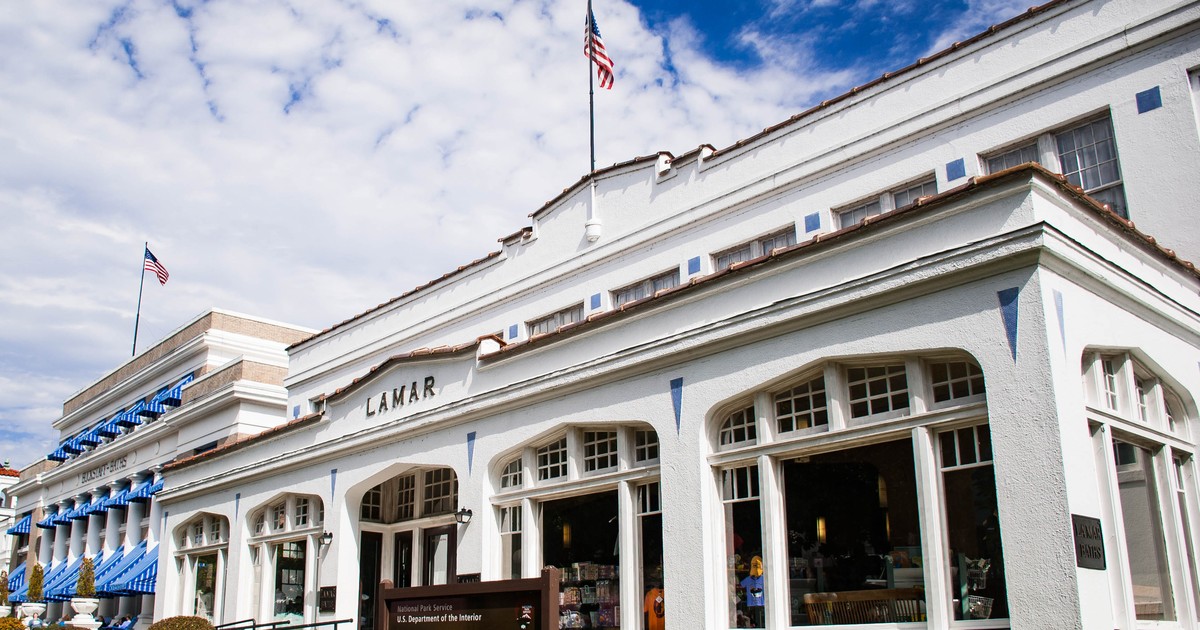
Arkansas is the bathhouse state, and that is the honest starting point. The dataset holds 6 Arkansas records. One of them is the whole story. The Hot Springs record stands for the 47 thermal springs protected inside Hot Springs National Park. It records 147 degrees at the source. The other five are quiet lukewarm springs in the Ouachita Mountains and the Ozark foothills. None of them is developed. None of them is a resort. In Arkansas you do not hike to a wild pool. You walk down Bathhouse Row, enter a bathhouse, and soak indoors in water the mountain heated 4,400 years ago. This guide maps all six. A source temperature is not a pool temperature. A mapped record is not automatically a soaking site.
We may earn a commission if you book through the links on this page, at no extra cost to you. That commission helps keep this guide free.
How to use this guide
Start with the table below for all six sites. Then open the interactive US hot springs map to see every Arkansas spring by location. Individual spring pages with directions, access notes, and photos will link from this hub as they publish. Areas in the table are broad regions, not driving distances. The dataset groups springs by region rather than by road miles. Hot Springs National Park holds the only developed soaking in the set. Base there first. Treat the other five as map entries rather than stops on one loop.
The counts behind this guide need one honest note. The dataset holds 6 Arkansas records, and the National Park Service protects 47 thermal springs inside Hot Springs National Park. The dataset carries one record for that whole system, named Hot Springs, at 147 degrees at the source. The park says its 47 springs average 143 degrees, so the dataset figure sits inside the park’s published range. That leaves 6 mapped records and, counting the park system as one site, 6 distinct sites. Of those, 1 carries soakable status, 5 carry lukewarm status, and none carries an unknown temperature. This guide claims a dataset temperature for all six sites. It claims no pool temperature for any spring. Every number here is a source temperature unless the text says otherwise.
The park has its own full guide on this site. The Hot Springs National Park guide covers the park visit in detail, and this hub covers the state set. The two do not repeat each other. Read this hub for the statewide map and the bathhouse choice. Then read the park guide for the trails, the tower, and the visitor center.
All six Arkansas thermal sites
These six are the complete Arkansas set in this guide. They are one national park spring system and five quiet wild springs. Temperatures are source temperatures from USGS data. Areas are broad regions from the dataset, not driving distances.
| Spring | Source temp | Area |
|---|---|---|
| Hot Springs (Hot Springs National Park) | 147°F | Hot Springs National Park, Garland County |
| Caddo Gap Springs | 95°F | Near Caddo Gap, Montgomery County |
| Warm Springs | 82°F | Near Warm Springs, Randolph County |
| Big Chalybeate Spring | 79°F | North edge of Hot Springs National Park, Garland County |
| Spring on Redland Mountain | 77°F | Near Glenwood, Pike County |
| Spring on Little Missouri River | 74°F | Near Caddo Gap, Montgomery County |
Hot Springs National Park: the 47-spring system
Water 4,400 years old
The water in Hot Springs National Park began as rain. It seeped down through the rock to a depth of 6,000 to 8,000 feet. The earth’s warmth heated it as it fell, and it picked up minerals on the way. The trip takes about 4,400 years, according to radiocarbon dating by the National Park Service. The heat does not come from a volcano. It comes from depth and time. The water rises again along a fault on the lower west slope of Hot Springs Mountain. It surfaces in 47 springs across about 2.8 acres near Bathhouse Row.
About 850,000 gallons of thermal water flow from the springs each day. The park collects around 700,000 gallons of it a day for the bathhouses and the free public drinking fountains. The springs average 143 degrees at the source. The dataset record for the park system carries 147 degrees, inside the park’s published range. That is the hottest mapped source in Arkansas by a wide margin. It is also far too hot to touch, let alone soak in.
The springs you can see
Most of the 47 springs are capped to protect the water, and you will not see them flowing. A couple can still be seen in motion near the promenade. The park’s displays explain the collection system that pipes the water to the bathhouses. The springs cluster where the mountain meets the town. The whole system sits within a short walk of Bathhouse Row. That closeness is the point of the park. Nowhere else in the national park system does a town street sit on top of a thermal spring field.
The park itself is the smallest national park in the country, at about 5,550 acres, and one of the oldest. Congress reserved the springs in 1832, before the national park idea existed. The reservation became a national park in 1921. The park wraps around the city of Hot Springs, and the city grew up around the springs. Walk the Grand Promenade behind Bathhouse Row and climb Hot Springs Mountain. The springs stay under your feet the whole time.
Why you cannot soak in the springs
Water at 143 degrees scalds skin in seconds, so the park does not allow bathing in the springs themselves. There are no outdoor soaking pools in the park. Every soak happens indoors, in one of the two working bathhouses. The same spring water is cooled to about 102 degrees before it reaches the tub. That is the whole of the Arkansas soak. The mountain heats the water, the bathhouse cools it to a safe temperature, and you soak inside a historic building.
You can still taste the water for free. Public jug fountains around Bathhouse Row offer the thermal water for drinking, and visitors have filled jugs there for generations. The water is the same water the bathhouses use. The fountains are the one place the spring water is free. Bring a jug, fill it, and drink it cold.
Bathhouse Row: where the soaking actually happens
Bathhouse Row is a street of eight grand bathhouses built between 1892 and 1923. It is a National Historic Landmark. Two of the eight still sell soaks. The other six hold the visitor center, shops, and offices. The soaking is the reason to come, and the two working bathhouses offer two very different versions of it.
Buckstaff: the traditional bath, unchanged since 1912
Buckstaff Bathhouse is the only bathhouse on the Row that offers a traditional bathing experience. It has run without a break since it opened on February 1, 1912. The National Park Service says it is the only bathhouse that has operated continuously since it first welcomed visitors. The ritual follows the 1800s pattern. It starts with a whirlpool tub in spring water cooled to about 102 degrees. Then comes a steam cabinet, a sitz bath, hot packs, and a massage. Men bathe on the first floor and women on the second, with same-sex attendants.
Buckstaff is walk-in only. It takes no reservations for baths. It is open every day from 8 in the morning until 3 in the afternoon. Those hours stand unless the park says otherwise. Arrive early, because the line forms before the doors open. A new concession contract takes effect on January 1, 2027. The Park Service says it will bring longer hours and advance reservations. Check the current arrangement before you travel. The building itself is part of the experience. Its marble, tile, and vintage equipment have changed little in more than a century.
Quapaw: the modern pools
Quapaw Baths and Spa is the modern answer on the Row. The building dates to 1922, in Spanish Colonial Revival style. It closed in the 1960s before reopening in 2008 as a public thermal spa. Inside are public thermal pools fed by the same spring water, kept at different temperatures for soaking. Private baths, massages, and a steam cave round out the spa. Swimwear is required in the pools. Guests must be 14 or older. The public pools are walk-in only, first come first served. Private treatments take advance reservations.
Choose Quapaw when you want a relaxed soak with other people in a bright modern room. Choose Buckstaff when you want the old ritual with an attendant guiding each step. Both use the same water from the same mountain. The difference is the room, the ritual, and the pace, not the spring.
Fordyce and the other six bathhouses
Start at the Fordyce Bathhouse, which now serves as the park visitor center. It is free to enter. The self-guided tour shows the grandest bathhouse on the Row as it ran in its heyday. You will see the stained glass, the marble, the gymnasium, and the treatment rooms. The tour is the best free hour in Hot Springs, and it explains the bathing culture that built the town.
The other bathhouses on the Row hold the park store, offices, and shops. The Lamar Bathhouse is the white building in the photo at the top of this guide. It now holds the Bathhouse Row Emporium, the park store. Walk the Row slowly. Each building has its own style, its own date, and its own story. Together they are the reason the street is a landmark.
The other five Arkansas springs
The Ouachita wild springs
Three of the five sit in the Ouachita Mountains near Glenwood and Caddo Gap, in Montgomery and Pike counties. Caddo Gap Springs records 95 degrees at the source. That makes it the warmest of the lukewarm set and the warmest Arkansas spring outside the national park. The Spring on Little Missouri River records 74 degrees, and the Spring on Redland Mountain records 77 degrees. None of the three has a developed pool claimed in this guide. None of them is a resort or a bathhouse.
Treat these three as map entries, not as destinations. They show how warm water runs through the Ouachita foothills west of Hot Springs. Most of them sit on private land with no public entry, and none of them offers a managed soak. Do not assume access, and do not enter water you cannot verify is managed. Their value is the map, not a swim.
Big Chalybeate and the far-north Warm Springs
Big Chalybeate Spring records 79 degrees at the source. It sits on the north edge of Hot Springs National Park, near Park Avenue in Garland County. Chalybeate means iron-bearing, and the spring is one of the old mineral springs around the park. This guide claims no developed pool for it. It is a dataset record on the park’s edge, not a second soak.
Warm Springs, at 82 degrees at the source, is the outlier of the set. It sits near the community of Warm Springs in Randolph County, in the Ozark foothills of northeast Arkansas. It stands close to the Missouri line and a long drive from the Ouachita springs. It is a quiet seep with no developed pool claimed in this guide. Do not confuse it with the Warm Springs in Georgia, the Roosevelt pools. Same name, different state, different water.
Springs that are not what they seem
Mammoth Spring: the biggest spring in Arkansas is cold
Mammoth Spring is the largest spring in Arkansas and one of the largest in the world. It has nothing to do with hot water. About 9 million gallons of cold water flow from it every hour at a constant 58 degrees. The water forms a 10-acre lake inside Mammoth Spring State Park in Fulton County. It is a National Natural Landmark. The cold water makes the Spring River one of the state’s best trout streams. It is not in the thermal dataset this guide maps, and it is not a hot spring. Do not drive to Mammoth Spring expecting a soak.
Lakes, towns, and the other Hot Springs
Two more name traps deserve their own warning. Lake Ouachita and Lake Hamilton, the big lakes around Hot Springs, are reservoirs, not thermal water. Swimming in them is lake swimming, not a hot soak. Heber Springs is a town on Greers Ferry Lake, not a spring at all. Hot Springs Village is a large residential community west of the city. It is a place to live, not a place to soak. The thermal water in Arkansas lives in one park, on one street, in two bathhouses. Everything else with a promising name is a different kind of water.
Planning an Arkansas hot springs trip
Base in Hot Springs first
Base in Hot Springs first, then add the rest only if you have the days. The city sits in the Ouachita Mountains of central Arkansas. Bathhouse Row, the park trails, and the mountain views are all within a short walk of each other. Book a room in town. Take a bath in the morning, tour the Fordyce in the afternoon, and walk the Grand Promenade at sunset. That is the Arkansas hot springs trip as it actually works.
The other five springs are not stops on a schedule, so do not build a day around them. Caddo Gap and Glenwood sit west of the city in the Ouachita Mountains. The Randolph County spring is a long drive in the other direction. Pick the park, give it the time, and save the wild springs for the map.
Seasons and safety
The bathhouses run year round, so there is no wrong season for the soak itself. Summer is the busiest season, with warm days and full pools. Winter is the quiet season, with thin crowds on Bathhouse Row. Spring and fall often give the best balance: manageable heat, open trails, and comfortable walking weather. No matter the season, check the park’s current alerts before you leave. Hours, closures, and access move faster than any guide can track.
Safety follows the same rule across the state. The park water at 143 degrees can scald, so never try to enter a thermal spring. Soak only in the bathhouses, where the water is cooled and managed. Test the water before getting in, and keep children close. At wild springs, stay on public roads and trails. Respect fences and private land. Treat every unmanaged source as a place to look at, not a place to soak. If a spring has no managed pool, the answer is the view, not the water.
Arkansas hot spring temperature guide
Lukewarm sources
Source temperatures in this guide are grouped the way visitors actually feel them. Lukewarm sources under 98 degrees are pleasant on a warm day but will not feel like a hot soak. They make up 5 of Arkansas’s 6 mapped records. The warmer two are Caddo Gap Springs at 95 degrees and Warm Springs at 82 degrees. The cooler three are Big Chalybeate Spring at 79 degrees, the Spring on Redland Mountain at 77 degrees, and the Spring on Little Missouri River at 74 degrees. None of the five is a developed soak.
The classic soaking range
The classic soaking range runs from the high 90s to about 110 degrees. Only the park’s system reaches it. The dataset record for the park carries 147 degrees at the source, and the park’s 47 springs average 143 degrees. The bathhouses cool that water to about 102 degrees before it reaches the tub, which sits inside the classic range. That is the only Arkansas soak, and it happens indoors, in a bathhouse, on Bathhouse Row.
Hot sources and unknown temperatures
One Arkansas site records a source above 100 degrees: the Hot Springs record at 147 degrees. It is the hottest mapped source in the state. It is the only one above the soaking range at the source. No Arkansas site carries an unknown dataset temperature. Every record in the set carries a temperature, and this guide claims no temperature it cannot source.
Etiquette and Leave No Trace
Hot springs etiquette is simple. It matters most at the small historic bathhouses, where a handful of visitors share a small space. Visit quietly. Keep your visit to a reasonable length when others are waiting, and leave the pools as you found them. At Buckstaff, follow the attendant’s lead and respect the separate bathing floors. At Quapaw, wear proper swimwear, respect the age rule, and keep voices low in the pool rooms. Pack out everything you bring in, including trash, and never leave glass, food waste, or personal items at a spring. At wild springs, stay on trails and respect closures. Remember that many Arkansas springs sit on private land where the owner sets the rules. Do not cross fences, do not block gates, and leave wildlife and livestock alone. A clean, quiet visit is what keeps these places open.
Frequently asked questions
What is the hottest hot spring in Arkansas?
The Hot Springs record carries the hottest mapped source in the Arkansas dataset at 147 degrees. That is a source temperature, not a pool temperature. The National Park Service says the park’s 47 springs average 143 degrees, and the bathhouses cool the water to about 102 degrees for soaking.
Can you soak in Hot Springs National Park?
Not in the springs themselves. The spring water averages 143 degrees, far too hot for safe bathing. Soaking happens indoors in the two working bathhouses on Bathhouse Row: Buckstaff Bathhouse for the traditional ritual and Quapaw Baths and Spa for modern thermal pools.
Which bathhouse should I choose, Buckstaff or Quapaw?
Choose Buckstaff for the traditional bathing ritual, unchanged since 1912, with an attendant guiding each step and walk-in entry only. Choose Quapaw for modern public thermal pools, swimwear required, guests 14 and older, and walk-in entry for the pools. Both use the same spring water from the same mountain.
Can you drink the spring water?
Yes. Public jug fountains around Bathhouse Row offer the thermal water for drinking at no cost, and visitors have filled jugs there for generations. The water is the same water the bathhouses use.
How many hot springs are in Arkansas?
This guide maps 6 Arkansas records. The Hot Springs record stands for the 47 thermal springs protected inside Hot Springs National Park, so the set counts 6 distinct sites. One carries soakable status, five are lukewarm, and none carries an unknown dataset temperature.
Source temperatures are measured at the spring source; pools and developed areas usually run cooler. Always check current conditions before visiting.