
Hot Springs / North Carolina
North Carolina Hot Springs: The Only One
One dataset record leads the whole state: the mineral spring at Hot Springs Resort and Spa in Madison County, with source temperature, history, and planning tips.
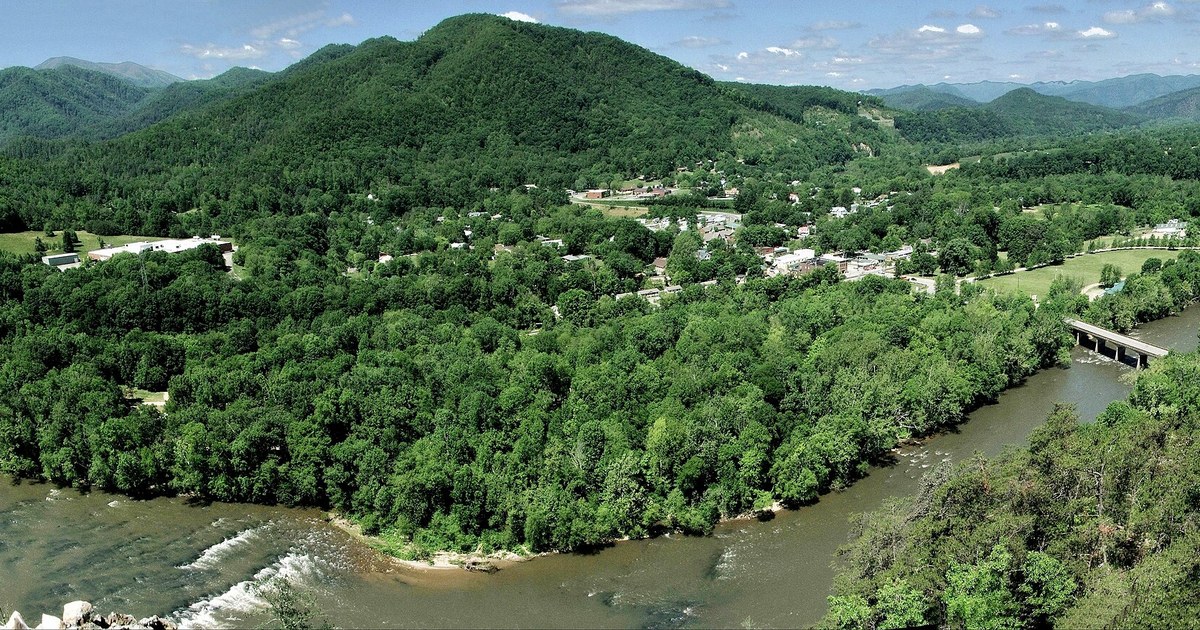
North Carolina holds one mapped thermal spring. The dataset lists a single record: Hot Springs Resort and Spa in the town of Hot Springs, in Madison County near the Tennessee line. Its source temperature is 108 degrees. That makes it the only documented thermal spring in the state, and one of the few in the Southeast. The spring is not a wild pool. Its water is piped to private outdoor tubs on the banks of the French Broad River and Spring Creek, rented by the hour, and drained after each use.
This guide maps the one record. It tells the spring’s long story, from a 1778 healing spring to a grand hotel town to a trail town rebuilding after Hurricane Helene. It explains why the state has only one spring, and where the nearest warm water sits beyond the state line. A source temperature is not a pool temperature. A mapped record is not automatically a resort.
We may earn a commission if you book through the links on this page, at no extra cost to you. That commission helps keep this guide free.
How to use this guide
Start with the table below for the one mapped spring. Then open the interactive US hot springs map to see the record by location. A spring page with directions, access notes, and photos will link from this hub when it publishes. The area in the table is a broad region, not a driving distance. The one spring is a working resort, not a wild soak, so book a tub before you drive out. Reservations can sell out weeks in advance. Base your expectations on the source temperature, not on the word hot spring.
The counts behind this guide need one honest note. The dataset holds one North Carolina record. It carries soakable status, and it is a commercial resort spring, not a public pool. The dataset gives its source temperature as 108 degrees, and published guides put the source at 108 to 110 degrees. The tubs are filled cooler, around 100 to 104 degrees by published figures. Every number here is a source temperature unless the text says otherwise.
The one North Carolina thermal spring
This one record is the whole mapped set for the state. There is no second spring to compare it with, and no hidden spring waiting in the data. The temperature is a source temperature from USGS data. The area is a broad region from the dataset, not a driving distance.
| Spring | Source temp | Area |
|---|---|---|
| Hot Springs Resort & Spa | 108°F | Hot Springs, Madison County |
Hot Springs Resort and Spa: the spring, the history, the place
What the water is
The spring is real thermal water, and it is warm rather than scalding. The dataset records the Hot Springs source at 108 degrees. Published guides put the source at 108 to 110 degrees, and one published account gives 110 degrees at a flow of about 160 gallons per minute. The figures describe the same water measured in different places and at different times. This guide keeps them separate. 108 degrees is the dataset source figure. About 110 degrees is the published figure at the source. Either way, the water sits in the classic soaking range.
The water rises from deep in the Appalachian rocks, then travels about a quarter mile down the mountain to the resort. There it is treated with ultraviolet light and piped to the tubs. It is naturally carbonated, which the resort says opens the pores, and it carries an elevated dose of magnesium. It is low in sulfur, so it smells clean rather than eggy. The tubs are filled cooler than the source, around 100 to 104 degrees by published figures, and the resort drains and sanitizes each tub after every use. The resort says its mineral waters have been famous since 1778. One published account counts about 16 outdoor tubs along the French Broad River and Spring Creek. It also counts about 70,000 guests a year taking a dip in them.
The 1778 springs and the hotel era
Native Americans were the first to discover and use the mineral waters. People were visiting the springs by 1778 for the waters’ reported healing properties. The town was first called Warm Springs. Jasper Dagy was believed to be the first owner of the springs, and he sold them to William Neilson in 1791. Neilson built an inn, and Philip Hoodenpile built an estate and a ferry across the French Broad, as well as the Jewel Hill toll road. In 1828, a major road was built through the town, the Buncombe Turnpike, making the area more accessible.
By 1831, James Patton of Asheville bought the springs. He had erected a 350 room Warm Springs Hotel with 13 tall columns representing the Thirteen Colonies in 1837. The dining room of the large hotel could seat 600 people. The railroad reached the village in 1882. The hotel burned in 1884 after 46 years of operation. Another hotel, called the Mountain Park, was built in 1886. A higher temperature spring was found, prompting the changing of the town’s name from Warm Springs to Hot Springs in 1886. Sixteen marble pools were surrounded by landscaped lawns with croquet and tennis courts. It was known as one of the most lavish resorts in the Southeast.
By May 1917, the hotel and grounds were leased to the United States Government to be used as an internment camp. Many German and Austro-Hungarian internees, noncombatant aliens, made local friends and stayed in the region after World War I. That hotel burned in 1920, and two more were built, neither as large and opulent, and both later burned as well. The grand hotel era ended, and the town went back to being a small mountain town on the road through the French Broad gap. The Hot Springs Historic District was listed on the National Register of Historic Places in 2009.
The resort today
Today the spring belongs to a working resort, and the soak is a booked hour in a private tub, not a day at a public pool. The resort sits on 100 acres at 315 Bridge Street, across the railroad tracks from the tiny downtown. Its outdoor tubs stand on wooden decks along Spring Creek and the French Broad River. They are screened for privacy, jetted, and filled with the natural mineral water. There is no day pass and no communal pool. Tubs come in three tiers: Standard, Deluxe, and Signature. The Signature cabanas add a private mineral water shower, a dressing room, a propane fire bowl, and a sundeck. Children under 12 soak free with an adult. Overnight guests book and pay for tub time like everyone else, apart from one deluxe cabin with its own mineral tub.
Mineral bath hours run noon to 7:45 pm Monday through Thursday, and noon to 9 pm Friday through Sunday. On Saturday and Sunday they run 9 am to 9 pm, with hours that may vary by weather and demand. Appointments are open to the public seven days a week, year round, including in winter. Book ahead. Published accounts say reservations can sell out weeks in advance. The baths are popular with Appalachian Trail hikers coming off the trail, and with couples and families. Call the resort at 828-622-7676 for current hours and availability. Hours move with the season and with the recovery work still under way after Hurricane Helene.
Across the road from the mineral baths sits the Hot Springs Campground, with four camping cabins, more than 50 tent sites, and full RV hookups. A comfort station offers hot showers in season and clean bathrooms. The campground remains under repair after the 2024 hurricane, and the resort’s own site still flags it. Check its status before planning a camping stay. The resort also offers other lodging, including a deluxe cabin and a three bedroom rental house with a full size outdoor jetted tub.
The town around it
Hot Springs is a town of 520 people at the 2020 census, in Madison County, at an elevation of 1,378 feet. It sits at the confluence of the French Broad River and Spring Creek, near the North Carolina and Tennessee border. It lies about 35 miles northwest of Asheville. It is part of the Asheville metropolitan area, and it is named for the thermal springs in the area. The Appalachian Trail runs along downtown’s Bridge Street and climbs the mountains on either side of the river, so hikers walk straight through town. The Lovers Leap Trail climbs above the town for the classic view down to the river and the bridge.
The town is a tourist destination, with the springs as well as abundant outdoor recreation. Rafting and kayaking are popular on the French Broad River. The nearby Pisgah National Forest holds many hiking, mountain biking, backpacking, and sightseeing opportunities. The town’s small downtown holds the trail-town essentials: places to eat, places to stay, and outfitters for the river and the trail. Come for the soak, and stay for the river and the ridge.
Why North Carolina has only one thermal spring
North Carolina has one thermal spring because the Southeast has almost nowhere to make one. A hot spring needs heat close to the surface, and that heat usually comes from recent volcanism or from young, thin crust. North Carolina has neither. Its rocks are old, its crust is thick and cold, and its last volcanoes died hundreds of millions of years ago. The ground here does not run hot. It runs cold, and it stays cold.
Hot Springs is the exception, and its own story explains why. The water does not come from hot rock near the surface. It comes from depth. It rises through faults and fractures in the Appalachian rocks and keeps the earth’s ordinary warmth on the way up. That is why the spring is warm rather than scalding, and why it is alone. The geology that makes one warm spring at Hot Springs cannot make a second one somewhere else in the state. The same old-rock pattern makes the single lukewarm springs across the region. One sits in New York, one in Massachusetts, one in West Virginia, each alone in a cold state. North Carolina’s one spring is the warmest of that eastern set, and it is still the only one the state holds.
The same geology explains the shape of this guide. A state with one warm spring, run as a private resort, cannot support a list of resorts, and this guide does not pretend otherwise. What North Carolina offers instead is a single honest story, and a trail town built around it. The history, the river, and the Appalachian Trail do the work that a dozen hot springs would do in the West.
The nearest springs beyond North Carolina
The nearest mapped spring outside North Carolina sits about 142 miles away, in a straight line. Alum Springs in Virginia records 72 degrees at the source, and it carries lukewarm status. It is the closest warm water to Hot Springs, and it is still a long drive away. After that, the map goes quiet for a long stretch.
New River White Sulphur Springs in Virginia sits about 156 miles away, at 85 degrees. Old Sweet Spring in West Virginia sits about 187 miles away, at 73 degrees. Sweet Chalybeate Spring in Virginia sits about 187 miles away, at 75 degrees. The Greenbrier at White Sulphur Springs in West Virginia sits about 192 miles away, and it carries no dataset temperature. Those distances are straight-line figures, not driving distances. They say plainly what the Southeast thermal map looks like. One warm spring sits in the French Broad gap. Then comes a long empty stretch before the next warm water. A traveler chasing hot springs does not drive north from Hot Springs looking for a second soak. They drive west, toward the Rockies, or they accept the one spring they have.
Springs that are not what they seem
Warm Springs, Georgia, is a different place
The name causes the most confusion. The North Carolina town was once called Warm Springs itself, until it changed its name to Hot Springs in 1886. The famous Warm Springs today is in Georgia, where Franklin Roosevelt built his pools, and it is a different place entirely. The Georgia springs run 88 degrees at the source, and the historic pools there are not generally open for public soaking. Our Georgia hot springs guide tells that story. Do not drive to Georgia expecting the North Carolina tubs, and do not drive to North Carolina expecting the Roosevelt pools.
Heated pools are not hot springs
North Carolina has plenty of heated pools, spa tubs, and hotel soaking tubs, especially around Asheville. None of them is a thermal spring. A heated pool is warm because a heater warms it. A thermal spring is warm because the earth warms it. The distinction matters to a traveler who searches for hot springs and finds a hotel spa instead. Hot Springs Resort and Spa is the one place in the state where the warmth comes from the ground. Everywhere else, the warmth comes from a boiler.
Private mineral wells are not public springs
A few cabins near town fill private tubs from their own mineral wells, and those tubs are for the guests of that lodging only. One published account names a cabin farm about a mile out whose tubs run from its own 92 degree mineral well. That water is mineral water, and it is warm, but it is not a public spring and it does not appear in the dataset. Book a cabin if you want a private mineral tub at your lodging. Book the resort if you want the one mapped spring in the state.
Planning a North Carolina hot springs trip
Base in Hot Springs or Asheville
Base in the town of Hot Springs itself for the soak, or in Asheville for a longer mountain trip. Hot Springs holds the resort, the campground, and the trail town, all within walking distance of each other. Asheville sits about 35 miles southeast, and it is the natural base for the Blue Ridge Parkway, the Biltmore Estate, and the city’s food and music. Hot Springs works as a day trip for the tubs. Stay in town for the springs you can book, and drive to Asheville for everything else. The two towns make a single trip: a booked hour in warm mineral water, then a mountain town evening.
Book ahead, and check the recovery
Book the tub before you book the trip. The baths are popular, and reservations can sell out weeks in advance. A tub hour is the whole soak, so there is no walk-in pool to fall back on. Call the resort for current hours, because hours move with the season and with the recovery work. Hurricane Helene flooded the town on September 27, 2024, and the town and its historic district were devastated. The baths are open seven days a week, and the trails are open again, but the campground remains under repair. Check the resort’s current notice and the town’s current guidance before you travel, and expect some businesses and services to still be rebuilding.
Seasons and safety
The season decides the trip. The tubs run year round, seven days a week, including in winter. The best soak is often the coldest day, when the air runs 30 to 40 degrees and the steam rises off 100 degree water with the ridgeline above. Summer brings warm days and a cool water mister over the premium tubs. It lets you stay in warm water on a hot day without overheating. Spring and fall bring the mildest hiking on the Appalachian Trail and the Lovers Leap Trail. Winter in the western North Carolina mountains is cold, so bring layers for the walk back from the tubs.
Safety follows the same rule as everywhere else on this site. The tubs are private and supervised, and each one is drained and sanitized after every use. The safety questions are the ordinary ones. Stay hydrated. Do not soak alone if you have a health condition that makes heat risky. Get out if you feel lightheaded. On the river, use a licensed outfitter and respect the water level. On the trail, carry water and check the weather, because mountain weather turns fast. The spring water is naturally carbonated and low in sulfur, so it smells clean. It is still mineral water, not drinking water, and the tubs are for soaking, not for drinking.
North Carolina hot spring temperature guide
The classic soaking range
Source temperatures in this guide are grouped the way visitors actually feel them. The classic soaking range runs from the high 90s to about 110 degrees. The one North Carolina source sits inside it, at 108 degrees by the dataset, with published figures at 108 to 110 degrees. The tubs are filled cooler, around 100 to 104 degrees by published figures. That is still inside the range and comfortable for an hour-long soak. The source temperature is not a pool temperature, and the tub figure is the one that decides how the soak feels.
Lukewarm sources and unknown temperatures
No North Carolina site records a lukewarm source, and no North Carolina site carries an unknown dataset temperature. The set is one record, one temperature, 108 degrees. Every record in the set carries the temperature the dataset gives it, and this guide claims no temperature it cannot source. The hottest mapped source in the state is Hot Springs Resort and Spa at 108 degrees. It is also the only mapped source in the state.
Etiquette and Leave No Trace
Hot springs etiquette is simple. It matters most at a place like Hot Springs, where the spring is a private resort and the town is small. Book your hour, show up on time, and leave the tub as you found it. The resort drains and sanitizes each tub after every use, and a clean, quiet visit is what keeps that system working for the next guest.
The spring sits on ground that was a Native gathering place for centuries before it was a resort. The town around it is still rebuilding after the 2024 flood. Visit quietly, spend locally, and leave the riverbanks and the trail as you found them. Pack out everything you bring in. Do not wade into Spring Creek or the French Broad looking for a wild soak. There is no wild soak here, only the resort tubs and the river. A clean, quiet visit is what keeps the one thermal spring in North Carolina, and the trail town around it, open to everyone.
Frequently asked questions
Is there a hot spring in North Carolina?
Yes, one mapped thermal spring: Hot Springs Resort and Spa in the town of Hot Springs, Madison County, with a source temperature of 108 degrees. It is the only documented thermal spring in the state.
Can you soak at Hot Springs Resort and Spa?
Yes. The resort rents private outdoor tubs by the hour, open to the public by appointment, with no day pass and no communal pool. Book ahead, because reservations can sell out weeks in advance.
How hot is the water at Hot Springs Resort and Spa?
The dataset records the source at 108 degrees, and published guides put the source at 108 to 110 degrees. The tubs are filled cooler, around 100 to 104 degrees by published figures. The source temperature is not a pool temperature.
Was Hot Springs damaged by Hurricane Helene?
Yes. Flooding on September 27, 2024 devastated the town and its historic district. The mineral baths are open seven days a week, and the trails are open again, but the campground remains under repair. Check current status before traveling.
Where is the nearest hot spring outside North Carolina?
Alum Springs in Virginia, about 142 miles away in a straight line, with a source temperature of 72 degrees. After that, New River White Sulphur Springs in Virginia sits about 156 miles away, at 85 degrees.
Source temperatures are measured at the spring source; pools and developed areas usually run cooler. Always check current conditions before visiting.