The trip from Osaka to Nara is one of Japan’s easiest day trips: two rail lines run directly between the cities, the ride takes under an hour, and you step off the train into a park full of free-roaming deer and some of the country’s oldest temples. This guide covers how to get to Nara from Osaka, which line suits your starting point, and a simple 1-day plan once you arrive.
JR or Kintetsu: pick by where you start
Two operators connect Osaka and Nara, and the right one depends on your hotel and whether you hold a JR Pass. Kintetsu runs from Osaka-Namba and Kintetsu-Nipponbashi, and its Rapid Express reaches Kintetsu-Nara Station in roughly 35 minutes. That station sits closest to Nara Park: you walk out of the concourse and into park pathways and temple approaches with almost no extra walking. Kintetsu is the natural pick if you stay in Namba or the southern part of central Osaka.
JR runs the Yamatoji Line from Osaka Station in Umeda and from Tennoji, reaching JR Nara Station in roughly 50 minutes from Osaka and roughly 35 minutes from Tennoji. JR is the natural pick if you hold a JR Pass, since the ride is covered, and if you stay in Umeda or near Tennoji. The trade-off is the walk: JR Nara Station sits about 15 to 20 minutes on foot from Nara Park, so budget that walk or a short bus ride into your morning. Neither line needs a seat reservation, and trains run frequently through the day.
On fares, check before you travel rather than trusting a fixed number in a guide. Published fares for this route have varied across sources, and pass coverage changes, so confirm the current fare and whether your pass covers your chosen line on the day. An IC card such as ICOCA covers both lines and removes ticket-machine queues either way. For wider pass comparisons, see our best Kansai train pass guide.
How far is Nara from Osaka, and is it closer to Osaka or Kyoto
Nara sits roughly 40 kilometers east of central Osaka, and the train ride runs under an hour on either line. Travelers often ask whether Nara is closer to Osaka or Kyoto: by train time the two are similar, with Kyoto marginally closer on the fastest connections, but the practical answer is that Nara works as a day trip from either city. From Osaka it pairs naturally with a Kyoto day trip on a separate day, not crammed into the same day. See our Kyoto day trip from Osaka guide for that route, and our Kansai guide for the three cities together.
A simple 1-day Nara plan
9:00 AM: Nara Park and the deer
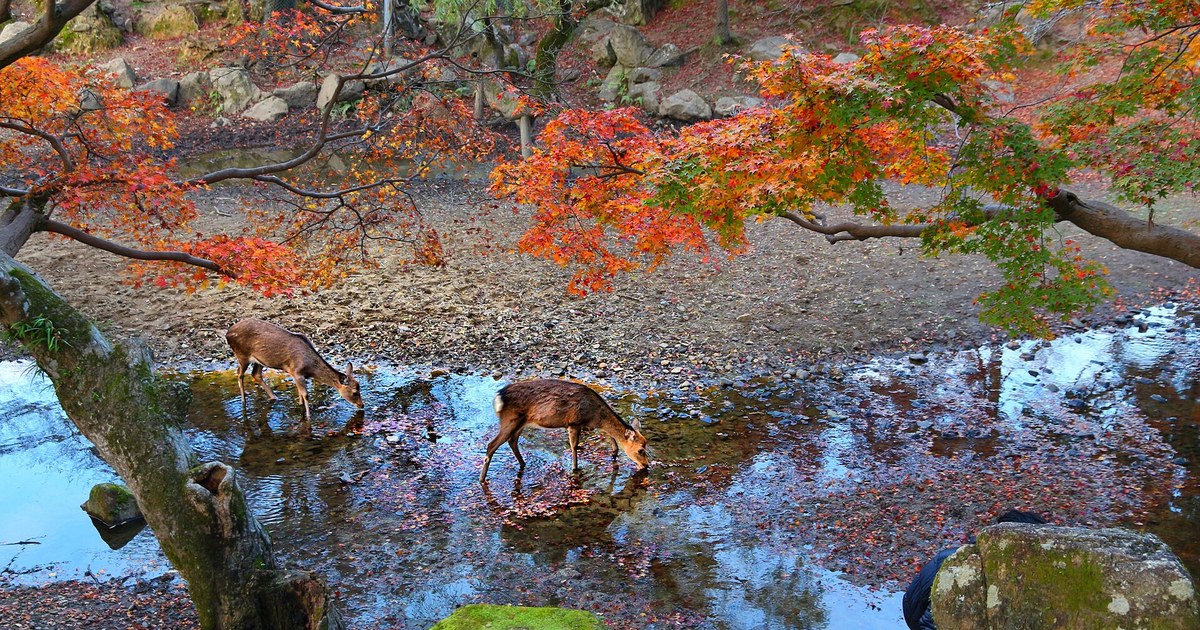
Start in Nara Park, where more than a thousand wild sika deer roam freely. In Shinto tradition the deer are sacred messengers of the gods, and many will bow their heads before accepting a cracker. Buy shika-senbei deer crackers only from licensed park vendors, bow to a deer before offering one, and keep food, maps, and bags secured, since curious deer nibble anything paper or plastic. Early morning brings calmer crowds and the best wildlife photos, and small children should stay close, since deer can be pushy around food.
10:30 AM: Todai-ji and the Great Buddha
Walk through the Nandaimon Gate, guarded by fierce wooden Nio statues, to Todai-ji’s Daibutsuden, one of the world’s largest wooden buildings. Inside stands the bronze Vairocana Buddha, about fifteen meters tall. Look for the wooden pillar with a hole carved through its base: folklore says crawling through it brings enlightenment in your next life, and the queue for it is part of the fun.
1:00 PM: Kasuga Taisha and the sacred forest
Walk east into ancient woods toward Kasuga Taisha, Nara’s most celebrated Shinto shrine. Thousands of bronze and stone lanterns line mossy approaches beneath cedar trees, and vermilion pavilions stand out against the forest canopy. The forest walk itself is half the experience, so allow unhurried time here rather than rushing to the next stop.
3:30 PM: Naramachi merchant town, then home
Finish south in Naramachi, the preserved merchant district of the old capital, where narrow lanes hold wooden machiya townhouses, craft shops, and tea parlors. Try freshly pounded yomogi mochi from a local confectionery shop, then walk back to Kintetsu-Nara Station for an evening train to Osaka. You will be back in time for dinner in Namba or Umeda.
Deer etiquette, in a little more detail
The deer are the reason most people come, and they are also the easiest part of the day to get wrong. The bowing behavior is real but conditional: a deer that has learned crackers follow a bow will often bow first, and a deer that is full or distracted will ignore you entirely. Neither reaction means anything about you, so do not chase a bow or hold food out of reach to force one. Feed only crackers bought from park vendors, never human snacks, since the wrong food harms the deer and the vendors’ crackers are made for them. If a deer nudges you hard or nibbles your bag, step back calmly and put the food away rather than pulling against it. Children should feed deer only with an adult beside them, and everyone should wash hands after feeding, since park deer are wild animals even when they seem tame.
Photography follows the same rule as feeding: slow and unforced. The best deer photos come from crouching at the edge of a group and waiting, not from surrounding a single deer with a crowd. Early morning and late afternoon give softer light and fewer people in the frame, and the temple grounds behind the park offer quieter backdrops than the main lawn in front of Todai-ji. If a deer walks into your shot, let it: the unplanned frames are usually the ones worth keeping.
Practical tips
Wear comfortable shoes: the park, temple grounds, and Naramachi lanes add up to a full day on foot. Carry water in summer and a layer in winter, when mornings in the park are cold. If you travel with children, brief them on deer etiquette before entering the park, and keep snacks hidden until you buy crackers from a vendor. Finally, decide your return line before you leave Osaka in the morning, so the evening trip home is a walk to a known station, not a tired decision at dusk.
Frequently asked questions
How long does Osaka to Nara take by train? Roughly 35 minutes on Kintetsu from Namba, roughly 50 minutes on JR from Osaka Station, and roughly 35 minutes on JR from Tennoji, plus the walk from JR Nara Station to the park.
Is the JR Pass valid on the Osaka to Nara train? Yes on the JR Yamatoji Line, but not on Kintetsu. If you hold a JR Pass and stay near a JR station, JR is the obvious pick. Otherwise compare the current fares for your line.
Can you do Nara and Kyoto in one day from Osaka? Technically yes, but poorly. Each city deserves its own day, and combining them turns both into a rushed checklist. Do them on separate days.
Are the Nara deer safe? Generally yes, with respect. They are wild animals that expect food, so keep children close, do not tease them with empty hands, and buy crackers only from licensed vendors.