Pfeiffer Beach is a wild, beautiful beach in Big Sur, on the central California coast, and it is one of the most photographed beaches in the state. The beach is known for its purple sand, its sea stacks, and Keyhole Rock, a rock formation with a natural arch that the sun shines through in winter. It is not a resort beach, and it is not easy to reach, but it rewards visitors with a rugged coastline that feels far from the crowded beaches further south. This guide covers the beach, from the purple sand and Keyhole Rock to getting there, what to do, and where to stay.
The purple sand
Pfeiffer Beach is famous for its purple sand, which comes from manganese garnet in the cliffs above the beach. The mineral washes down in the rain and mixes with the sand, giving parts of the beach a purple hue. The color is strongest after rain, when the garnet is fresh on the surface, and it is most visible in the wet sand near the cliffs. The purple is subtle, not a bright violet, but it is real, and it is one of the reasons the beach is so well known.
The sand is not purple everywhere. The best place to see it is near the base of the cliffs at the north end of the beach, where the garnet washes down. Walk the beach at low tide and look for the darker, purple-tinted patches in the wet sand. The color shows best in soft light, in the morning or late afternoon, rather than in the harsh midday sun. It is a small detail, but it is the beach’s signature.
Keyhole Rock
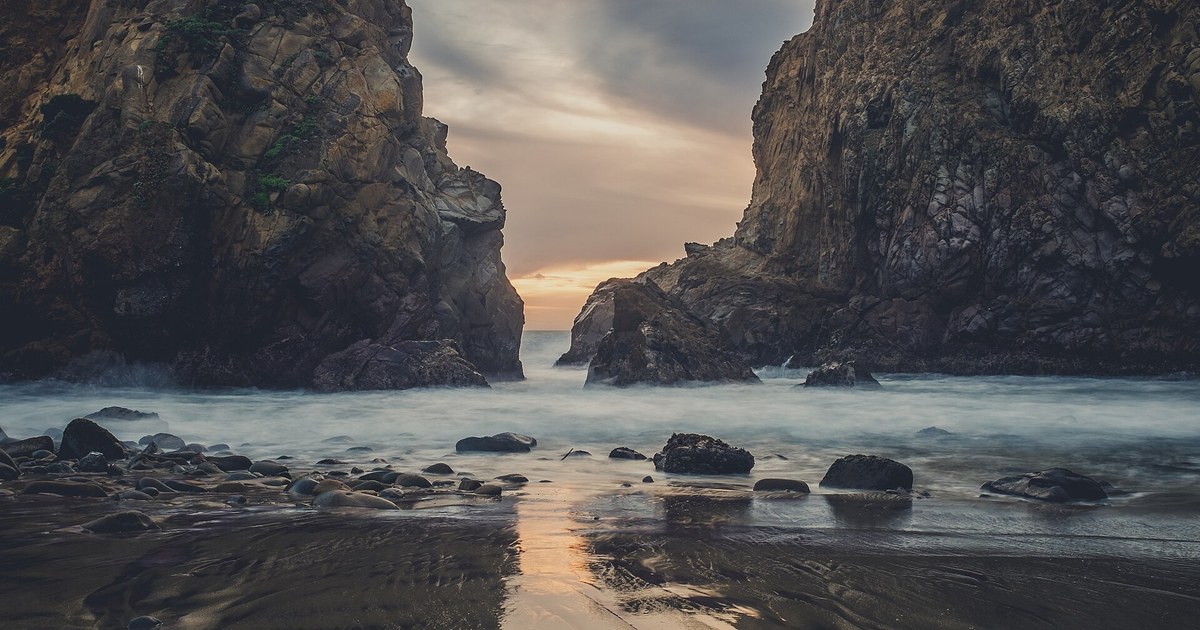
Keyhole Rock is the beach’s most famous feature. It is a large sea stack just offshore, with a natural arch, or keyhole, worn through the rock by the waves. In winter, around December and January, the sun sets through the keyhole, and photographers gather on the beach to capture the light streaming through the arch. The moment lasts only a few minutes, and it depends on clear skies, but it is one of the most photographed sunsets in California.
The rock is best seen at low tide, when more of the beach is exposed and you can walk closer to the waterline. The sea stacks offshore, including Keyhole Rock, are home to seabirds, and the waves break against them in white spray. The beach is a good place to watch the sunset at any time of year, not only in winter, since the coast faces west and the light is strong and low.
Getting there: Sycamore Canyon Road
The beach is reached by Sycamore Canyon Road, a narrow, winding, mostly unpaved road that turns off Highway 1 about two miles south of Pfeiffer Big Sur State Park. The road is narrow, with few places to pass, so drive slowly and be ready to pull over for oncoming cars. The drive takes about ten minutes from the highway, and the road ends at a small parking lot at the beach. Parking is limited, and the lot fills up on weekends and in summer, so arrive early.
There is a small day-use fee to park, and the beach is managed by the Forest Service, as part of Los Padres National Forest. This beach is not the same as Pfeiffer Big Sur State Park, which is across Highway 1 and inland, along the river. The state park has redwoods, trails, and a campground, while the beach is the ocean shore. Do not confuse the two, and do not expect to reach the beach from the state park, since they are separate places.
When to visit
The beach is best in the morning and late afternoon, when the light is low and the colors are strong. The purple sand shows best after rain, and the keyhole sunset happens in winter, around December and January. Summer brings more visitors and more fog, while fall often has the clearest skies and the warmest weather. The coast is mild all year, but the wind can be strong, so bring layers whenever you visit.
Winter is the best time for photographers, since the sun sets through Keyhole Rock and the light is low and golden. Spring brings wildflowers to the cliffs above the beach, and fall brings clear skies and fewer visitors. Avoid the middle of the day in summer, when the light is harsh and the parking lot is full. The beach is worth visiting in any season, but the early morning and the late afternoon are the best times of day. The fog can roll in fast, so check the forecast and be ready for a change in weather.
What to do at Pfeiffer Beach
It is a beach for walking, photography, and watching the waves, not for swimming. The surf is strong, the currents are dangerous, and the water is cold, so swimming is not advised. Walk the beach, look for the purple sand, photograph Keyhole Rock, and watch the sea stacks and the seabirds. The beach is also a good place for a picnic, though there are few facilities, so bring what you need.
Dogs on leash are welcome here, which is rare for a Big Sur beach, and it makes the beach a good choice for visitors traveling with a dog. The wind can be strong, and the fog can roll in, so bring layers even on a warm day. The beach is exposed to the ocean, and the weather can change fast, so check the forecast before you go and be ready for wind and cool temperatures.
Where to stay
Disclosure: this guide contains affiliate links. If you book through them, we may earn a commission at no extra cost to you.
The nearest lodging is in Big Sur, along Highway 1, where there are inns, lodges, and campgrounds, and in Carmel and Monterey to the north. Big Sur lodging is limited and books up early, especially in summer and on weekends, so book well ahead. Carmel and Monterey have more choice, from hotels to inns, and they are a scenic drive north on Highway 1. Both are good bases for a visit to the beach and for the wider Big Sur coast. Search hotels in Carmel on Booking.com
Practical tips
Check road conditions before you drive to the beach, since Highway 1 can close for repairs after storms, and the Sycamore Canyon Road is unpaved and can be rough after rain. Bring water, food, and sun protection, since there are few facilities at the beach. The parking lot is small, so arrive early on weekends. For a wider California trip, see our guide to California trip planning, and for a coastal town stop, see our guide to Morro Bay.
The beach has few facilities, so bring water, food, and a trash bag, and take everything out with you. There are no lifeguards, and the ocean is cold and the currents are strong, so stay out of the water and keep children close to the shore. The rocks and sea stacks are slippery, so wear shoes with grip and do not climb on the rocks. The beach is a wild place, and the best way to enjoy it is to walk slowly, look for the purple sand, and watch the light change.