Quick answer: The essential places to visit in Hokkaido are Sapporo (the base city), Otaru (canal town day trip), Hakodate (night view and port history), Furano and Biei (lavender and the Blue Pond), Niseko (powder skiing), Noboribetsu (the top onsen town), and, if you have the days, the wild east: Shiretoko, Kushiro and Lake Akan. One warning before the list: Hokkaido covers about 83,000 square kilometres, roughly the size of Austria. Nobody sees it all in one trip. Pick three or four bases from the 12 below and you will have a better trip than a ten-stop sprint.
1. Sapporo: The Base City
Hokkaido’s capital is where almost every trip starts, 40 minutes by rapid train from New Chitose Airport. The sights are compact: Odori Park running through the center, the Clock Tower, the Sapporo Beer Museum, the old red-brick government building, and the Susukino entertainment district for the evenings. What Sapporo does best is food: miso ramen, soup curry and jingisukan (grilled lamb) all claim the city as home. Give it: 2 to 3 nights. Best season: year-round; early February brings the Snow Festival.
2. Otaru: The Canal Town
A 30 to 40 minute train ride from Sapporo, Otaru was the port that got rich on herring and banking a century ago, and its stone warehouses and canal survive as the prettiest streetscape near the capital. Walk the canal, watch the glassblowers on Sakaimachi Street, and eat sushi where the fish come off local boats. Give it: a day trip, or one slow night. Best season: winter for the snow-light path atmosphere, summer for the harbour air.
3. Hakodate: The Southern Port
Hakodate guards the island’s south and rewards the journey down: the night view from Mount Hakodate is rated among Japan’s finest, the star-shaped Goryokaku fort sits in a park below its tower, and the morning market serves seafood breakfasts straight off the boats. The Hokkaido Shinkansen reaches Shin-Hakodate-Hokuto station, and Sapporo is about 3 hours 40 minutes by limited express. Give it: 2 nights. Best season: spring for Goryokaku’s cherry blossoms, winter for the lit-up harbour streets.
4. Furano: Lavender Country
In July, Furano’s farm fields turn into stripes of lavender, and Farm Tomita is the famous field everyone photographs. Outside flower season this is gentle farm country: melons, cheese, wine and wide skies, plus a friendly ski hill in winter. Give it: 1 to 2 nights, paired with Biei. Best season: late June to early August, peak lavender around mid-July.
5. Biei and the Blue Pond
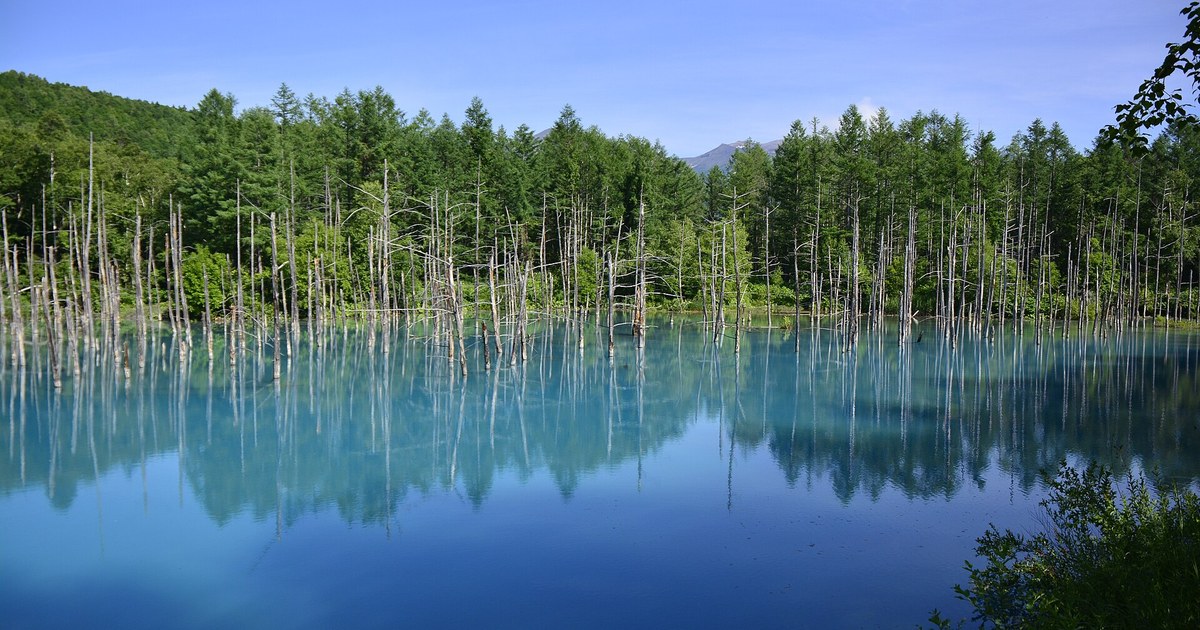
Biei is Furano’s quieter neighbour, all rolling patchwork hills and single landmark trees. Its star is the Shirogane Blue Pond, an artificial pond whose mineral water glows an unreal milky blue around standing dead larch trunks. Go early in the day before the tour buses, and treat the pond as one stop in a hills drive, not the whole day. Give it: a day with Furano, based in Asahikawa or Furano town. Best season: summer for colour, winter for the snow-lit pond.
6. Asahikawa: Zoo and Gateway
Hokkaido’s second city, about 1 hour 30 minutes from Sapporo, is famous for two things: shoyu ramen and the Asahiyama Zoo, whose behavioural enclosures (and the winter penguin walk) made it one of Japan’s most loved zoos. Asahikawa is also the practical base for the Daisetsuzan mountains and Sounkyo Gorge. Give it: 1 to 2 nights. Best season: winter for the penguins and snow; the zoo works year-round.
7. Niseko: The Powder Capital
Niseko’s resorts, spread around Mount Annupuri with Mount Yotei watching over them, get some of the most reliable powder snow on earth, which is why half the ski world winters here. In summer the crowds vanish and the same mountains turn to rafting, hiking and farm restaurants. Prices peak hard in ski season; the green season is the value play. Give it: 3 to 4 nights for skiing, 2 in summer. Best season: December to March for powder.
8. Noboribetsu: The Onsen Town
If you soak in one hot spring town in Hokkaido, make it Noboribetsu. Its Jigokudani (Hell Valley) is a steaming volcanic crater that feeds milky, sulphurous waters into the ryokan below, and the town has bathing down to an art: grand hotel baths, small inns and a natural hot river to dangle your feet in. Give it: 1 to 2 nights. Best season: year-round; autumn leaves over the valley are the bonus.
9. Lake Toya: The Caldera Lake
An hour from Noboribetsu, Lake Toya fills an ancient caldera, with the still-active Mount Usu smoking on its shore and fireworks over the water on most nights from late April to October. The lakeside onsen town makes an easy, scenic overnight between Sapporo and Hakodate. Give it: 1 night. Best season: late spring to autumn.
10. Daisetsuzan and Sounkyo Gorge
Hokkaido’s mountain roof: a vast national park of volcanic peaks reached through Sounkyo, a gorge of cliffs and waterfalls on its northern side. This is where Japan’s autumn colours arrive first, usually peaking around mid-September, and the hiking ranges from ropeway-assisted strolls to serious multi-day traverses. Give it: 1 to 2 nights in Sounkyo or Asahikawa. Best season: September for colour, July to August for alpine flowers.
11. Kushiro and Lake Akan: The Crane Country
The east is a different Hokkaido. Kushiro fronts Japan’s largest remaining marshland, and in winter the red-crowned cranes, the country’s most revered birds, dance on the snowfields around Tsurui village. Inland, Lake Akan pairs an Ainu village (the Akan Ainu Kotan, with its crafts and theatre) with marimo, the lake’s famous round algae balls. Give it: 2 nights. Best season: winter for the cranes, summer for the marshland boardwalks.
12. Shiretoko: The Wild End
The Shiretoko Peninsula, a UNESCO World Heritage site, is where Hokkaido runs out: brown bears fishing rivers, waterfalls dropping into the Sea of Okhotsk, the Five Lakes on boardwalks above bear country, and drift ice crowding the coast from late January into March (nearby Abashiri runs the icebreaker boats). It is a 6-plus hour journey from Sapporo, so it needs its own base at Utoro. Give it: 2 nights minimum if you go. Best season: summer for wildlife and lakes, deep winter for drift ice.
How to Choose Your Bases
Treat the 12 above as the best places to visit in Hokkaido shortlist, then cluster them and the map solves itself. A western loop (Sapporo, Otaru, Niseko or Lake Toya, Noboribetsu) suits a first trip of 5 to 7 days. Central Hokkaido (Asahikawa, Biei, Furano, Daisetsuzan) is a summer or autumn trip. The east (Kushiro, Akan, Shiretoko) is its own journey and the one repeat visitors graduate to. Hakodate bolts onto the start or end of any route thanks to the Shinkansen. For day-by-day routes, timing and how to get between all of this, use our Hokkaido planning guide; if winter is your season, our Hokkaido in winter guide goes deep on the cold months.
FAQ
How many days do you need in Hokkaido?
Five days covers Sapporo, Otaru and one more base. Seven to ten days lets you add a second region properly. The east (Kushiro, Shiretoko) pushes a trip toward two weeks once travel time is counted. Our planning guide turns these bases into day-by-day itineraries.
Which part of Hokkaido is best for first-time visitors?
The west: Sapporo as the base, Otaru as a day trip, and Noboribetsu or Niseko depending on whether you want hot springs or mountains. The transport is simplest there and every season has a headline act.
Do you need a car in Hokkaido?
For Sapporo, Otaru, Hakodate and the Niseko corridor, trains and buses work well. For Biei’s hills, Daisetsuzan trailheads and almost everything in the east, a car changes the trip from possible to easy. The road trip case is made in our planning guide.
What is the single most beautiful place in Hokkaido?
It depends on the season you ask in. The Blue Pond and Furano’s fields own summer, Shiretoko owns wild beauty in any month it is reachable, and the Sapporo Snow Festival turns the capital itself into the sight in February. That season-by-season spread is exactly why this island rewards a second trip.