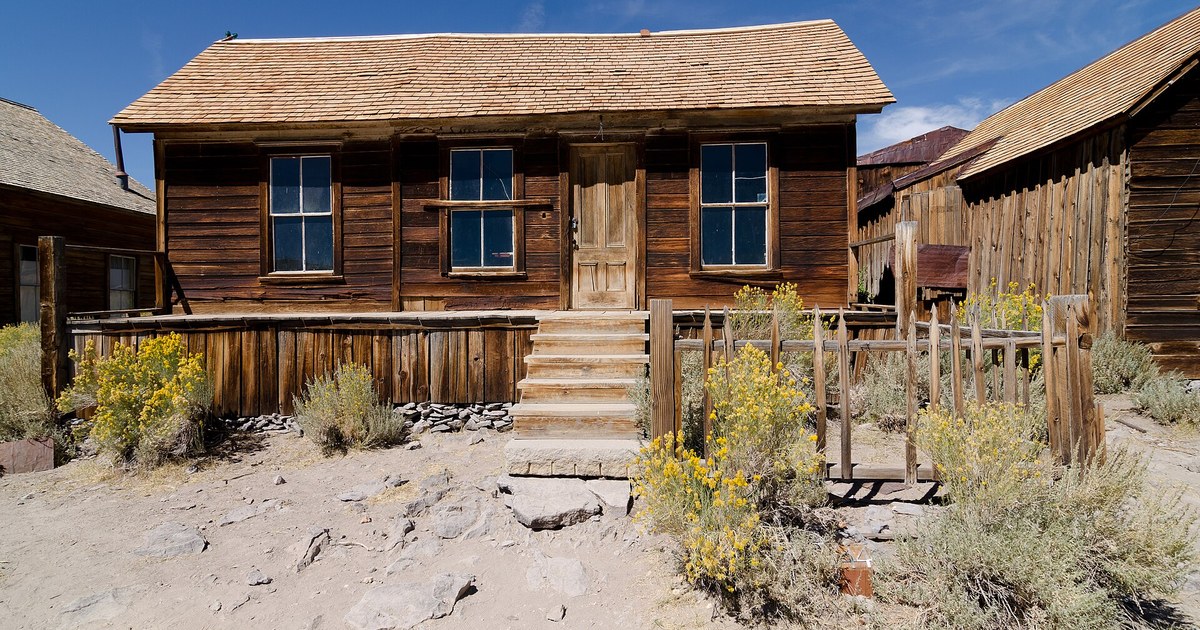
Bodie California ghost town is a gold mining town in the eastern Sierra, near Bridgeport, and it is one of the best-preserved ghost towns in the United States. The town boomed in the 1870s and 1880s, with about 10,000 people, saloons, and gunfights, then faded as the mines played out, and the last residents left in the 1940s. Today Bodie is a state historic park, preserved in a state of arrested decay, with about 100 buildings that look as they did when they were abandoned. This guide covers Bodie California ghost town, from the gold rush and the boom to what to see, visiting, and where to stay.
The gold rush and the boom
Bodie began in 1859, when gold was discovered by W.S. Bodey, and the town was named after him, though the spelling changed to Bodie. The town grew slowly at first, then boomed in the late 1870s, when a rich gold strike brought thousands of miners, merchants, and families. At its peak, Bodie had about 10,000 people, with hotels, saloons, a bank, a church, a school, and a newspaper. The town was known as a rough place, with gambling, gunfights, and a reputation for lawlessness, and it was said that a man who was killed in Bodie was said to have gone to Bodie, a phrase that became a joke about the town’s roughness.
The gold came from the mines around Bodie, especially the Standard Mine, which produced millions of dollars in gold and silver. The town had a stamp mill, the Standard Mill, which crushed the ore and extracted the gold, and the mill is still standing and can be toured. The mines were the town’s reason for being, and when they played out, the town faded. The boom lasted about a decade, from the late 1870s to the late 1880s, and then the population fell, as miners left for other strikes.
The decline and the park
Bodie declined after the 1880s, as the mines played out and the population fell. The town had a few hundred residents by the early 1900s, and the last residents left in the 1940s. The town was abandoned, and the buildings were left to decay, with furniture, dishes, and personal items still inside. In 1962, Bodie became a California State Historic Park, and it has been preserved in a state of arrested decay since, with the buildings maintained but not restored, so they look as they did when they were abandoned.
Arrested decay means the park keeps the buildings from falling down, but it does not restore them to how they looked when new. The buildings are weathered, with peeling paint and broken windows, and the interiors are visible through the windows, with beds, tables, and dishes still in place. The park is a place where visitors can see a ghost town as it really was, not a reconstruction, and it is one of the most authentic ghost towns in the United States.
What to see in Bodie
The main street is the heart of Bodie, with the old hotels, saloons, and shops lining the dirt road. The Methodist Church, built in 1882, is one of the best-preserved buildings, with its white paint and steeple, and it is a popular spot for photography. The schoolhouse, the Miners’ Union Hall, which now houses the museum, and the jail are also worth seeing. The Standard Mill, on the hill above the town, is a large stamp mill, and it can be toured with a ranger, who explains how the mill crushed the ore and extracted the gold.
The interiors are the most striking part of Bodie. Through the windows, visitors can see beds with blankets, tables with dishes, and shops with goods still on the shelves, as if the people just left. The park asks visitors not to enter the buildings, and to look through the windows, since the buildings are fragile. The town is a good place for photography, especially in the morning and late afternoon, when the light is low and the buildings cast long shadows.
Photography at Bodie
Bodie is one of the best places in California for photography. The weathered buildings, the wide streets, and the high desert light make strong images, and the town is a good place for both wide shots of the main street and close-ups of the windows and details. The light is best in the morning and late afternoon, when the sun is low and the buildings cast long shadows.
The interiors, seen through the windows, are a highlight for photographers, with beds, dishes, and personal items still in place. Bring a camera with a good zoom, since the windows can be dark inside, and be ready for wind and dust. The town is a popular spot for photographers, and it is worth spending a few hours here, not just a quick stop.
Visiting Bodie
Bodie is reached by a dirt road, 13 miles off Highway 270 from Bridgeport, and the last three miles are unpaved and rough. A high-clearance vehicle is recommended, though regular cars can make it in good weather, if driven slowly. The town is at about 8,400 feet elevation, so it can be cold and windy, even in summer, and visitors should bring layers, water, and sun protection. The park is open in summer, and the road closes in winter with snow, so check the park’s website for current conditions before you visit.
The park has a museum, in the Miners’ Union Hall, with exhibits on the town’s history and the people who lived there. The park offers ranger-led tours, including the Standard Mill tour, and it has a visitor center with information and a bookstore. The park is a good day trip from Mammoth Lakes, Lee Vining, or Bridgeport, and it pairs well with Mono Lake, which is nearby. The park is a quiet place, and it is best visited in the morning, when the light is good and the crowds are fewer.
Where to stay near Bodie
Disclosure: this guide contains affiliate links. If you book through them, we may earn a commission at no extra cost to you.
The nearest town is Bridgeport, a small town with motels, a few restaurants, and a historic courthouse. Mammoth Lakes, to the south, has more hotels, restaurants, and services, and it is a good base for the eastern Sierra, including Bodie, Mono Lake, and the road to Yosemite. Lee Vining, on Mono Lake, has motels and is a good base for Bodie and the lake. Book ahead in summer, when the park is open and visitors are most numerous, since lodging in the eastern Sierra is limited. Search hotels in Mammoth Lakes on Booking.com
Getting there
Bodie is in Mono County, in the eastern Sierra, near Bridgeport, and it is reached by Highway 270, a road that turns off Highway 395. The drive from Bridgeport takes about 30 minutes, with 13 miles of dirt road, and the last three miles are unpaved and rough. The town is about a five-hour drive from San Francisco and about a six-hour drive from Los Angeles, depending on the route. A car is essential, since there is no public transport to Bodie. For a wider California trip, see our guide to California trip planning, and for a nearby lake, see our guide to Mono Lake California.