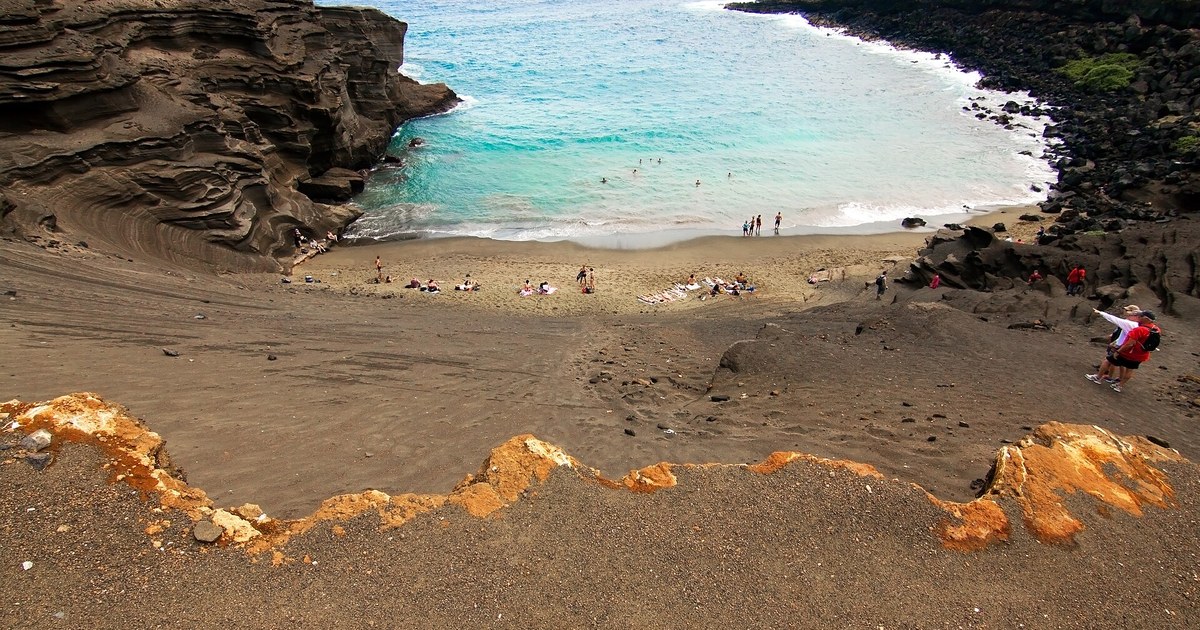
Papakolea Beach, better known as Green Sand Beach, sits on the south shore of Big Island near South Point, the southernmost point in the United States. It is one of only a handful of green sand beaches in the world, tucked into a collapsed volcanic cinder cone, and it takes effort to reach. This guide covers why the sand is green, how to get there, what the hike is like, and what to know before you go.
Why the sand is green
The green comes from olivine, a green mineral found in the volcanic rock of the cinder cone that rings the beach. Over time, waves broke down the cone and left olivine crystals mixed into the sand, giving it an olive green color. Set expectations before you go. The green is olive, not bright neon green, and it shows most clearly in sunlight and up close, especially where the sand is wet. It is still unmistakably different from a normal beach, and that is what makes Papakolea worth the trip, not a postcard perfect color.
Getting there: South Point, then the hike
To reach Papakolea, drive to South Point, known as Ka Lae, at the end of South Point Road on Big Island. Park at the South Point parking area, then hike from there to the beach, about 2.5 miles each way, or about an hour on foot depending on pace. The trail is exposed, with little shade, and it crosses rough ground, so wear sturdy shoes, bring water, and allow time for the return. Locals offer 4×4 rides from the parking area to the beach for a fee, which is an option if you do not want to hike. Do not drive a rental car on the rough track to the beach, it is not built for it, and rental agreements often forbid off road driving.
The beach itself
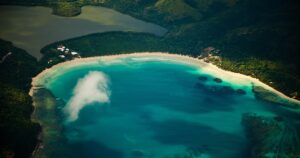
Papakolea is a small cove inside the cinder cone, with green sand, steep walls, and open ocean beyond. Swimming can be rough, since this is the south shore with currents and surf, so check conditions on arrival and do not enter the water if surf is up. There are no facilities at the beach, no shade, no shops, and no lifeguard, so bring water, sun protection, and food, and carry everything out. Do not take sand home. Leave it for the next visitors, and for the beach itself, which depends on that olivine sand staying in place.
Reaching the sand itself takes a final climb down into the cove. The trail ends at the top of the cinder cone, and a steep path leads down to the beach below. Take your time on the way down, wear shoes with grip, and watch your footing, especially if the path is dusty or wet. Once down, look for the greenest sand near the waterline, where wet sand shows the olive color most clearly, and where waves have freshly sorted the olivine crystals from the darker volcanic sand.
When to go
Summer, roughly May to September, is the calmest time for the south shore, with gentler surf and better swimming conditions, though Papakolea is never a guaranteed calm swim spot. Winter brings larger surf and stronger currents, so check conditions and be ready to enjoy the beach from shore rather than swimming. Morning is the best time for the hike, before the midday heat builds on the exposed trail, and early visits also mean fewer people at the beach itself. Whatever the season, start with water, sun protection, and a plan for the return hike, since there is no shade or shop at the end of the trail.
Combine it with South Point
Since you are already at South Point, take time to see Ka Lae itself, the southernmost point in the 50 states, marked by wind turbines on the cliffs above the ocean. It is a short stop from the parking area, and it pairs naturally with Papakolea, since both are on the same remote southern tip of Big Island. The drive to South Point is long from Kona or Hilo, so plan Papakolea as a half day or full day trip, not a quick stop, and start early to avoid hiking in the midday heat.
Disclosure: This post contains affiliate links. If you book through them, we may earn a commission at no extra cost to you.
Compare hotels on Big Island on Booking.com for your dates.
Papakolea is one of Big Island’s unique beaches. See our guide to things to do on Big Island for the island’s other sights, our guide to Punaluu Black Sand Beach for Big Island’s other colored sand beach, and our guides to the Hawaii islands and Hawaii Volcanoes National Park for wider Hawaii planning.