Hawaii has two national parks, Hawaii Volcanoes on Big Island and Haleakala on Maui, plus national historical parks that preserve Hawaiian history, including Pu’uhonua o Honaunau and Pu’ukohola Heiau, both on Big Island. Together they cover volcanoes, craters, sacred sites, and royal grounds, across two islands. This guide gives an overview of each park site, with links to our detailed guides, so you can plan which ones to visit and how to fit them into a Hawaii trip.
Hawaii Volcanoes National Park, Big Island
Hawaii Volcanoes National Park, on Big Island, is home to Kilauea, one of the most active volcanoes in the world, and to Mauna Loa, the largest volcano on Earth by volume. The park offers crater views, lava fields, rainforest hikes, and a visitor center with current eruption information. Volcanic activity changes, so check park alerts before you go, and follow all closures, since lava flows and gas can make areas unsafe. See our full guide to Hawaii Volcanoes National Park for trails, viewpoints, and planning tips.
Haleakala National Park, Maui
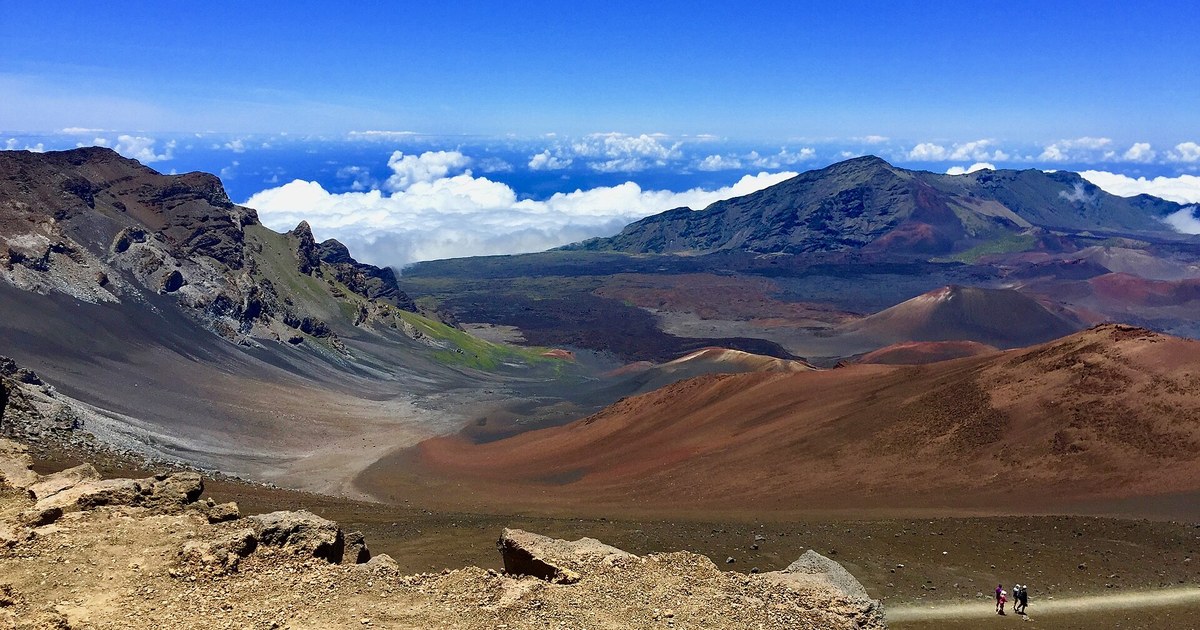
Haleakala National Park, on Maui, centers on Haleakala, the dormant volcano that forms the eastern half of the island. The summit is famous for sunrise, which requires advance reservations, and for sunset, which is quieter, plus crater hikes and views above the clouds. The summit is cold, even in summer, so bring a warm layer. See our guide to things to do in Maui for Haleakala sunrise, sunset, and how to fit the volcano into a Maui trip.
Pu’uhonua o Honaunau, Big Island
Pu’uhonua o Honaunau National Historical Park, on Big Island’s Kona coast, preserves a place of refuge in ancient Hawaii. In Hawaiian tradition, those who broke sacred laws, known as kapu, could seek safety here, and if they reached the refuge, they were forgiven. The park includes royal grounds, a reconstructed temple, and carved wooden images, plus a rocky shore for snorkeling when conditions are calm. It is a quiet, reflective stop, very different from the volcano parks, and it shows a side of Hawaiian history that the beaches and resorts do not.
Pu’ukohola Heiau, Big Island
Pu’ukohola Heiau National Historic Site, on Big Island’s Kohala coast, preserves a temple built by Kamehameha I, the chief who united the Hawaiian Islands. The heiau, a stone temple platform, overlooks the coast, and the site includes a visitor center with exhibits on Kamehameha and Hawaiian history. It is a short stop, but an important one for understanding how Hawaii became one kingdom, and it pairs well with a Kohala coast drive. Check current hours before you go, since historic sites can have shorter hours than the larger national parks.
Planning tips for Hawaii park sites
A national parks pass covers entry to the national parks and many historic sites, which can save money if you visit more than one park on a trip. Check National Park Service alerts before each visit, especially for Volcanoes, where volcanic activity can close trails and viewpoints at short notice. Volcanoes and Haleakala are on different islands, Big Island and Maui, so plan inter island flights if you want to see both, and allow a full day for each park, not a quick stop, since both reward slow exploring. See our guides to things to do on Big Island and the Hawaii islands for how the parks fit into wider island itineraries.
Disclosure: This post contains affiliate links. If you book through them, we may earn a commission at no extra cost to you.
Compare hotels in Hawaii on Booking.com for your dates.
Hawaii parks span two islands and centuries of history. Start with our guide to Hawaii Volcanoes National Park for Big Island, our guide to things to do in Maui for Haleakala, and our guides to things to do on Big Island and the Hawaii islands for planning the rest of your trip.